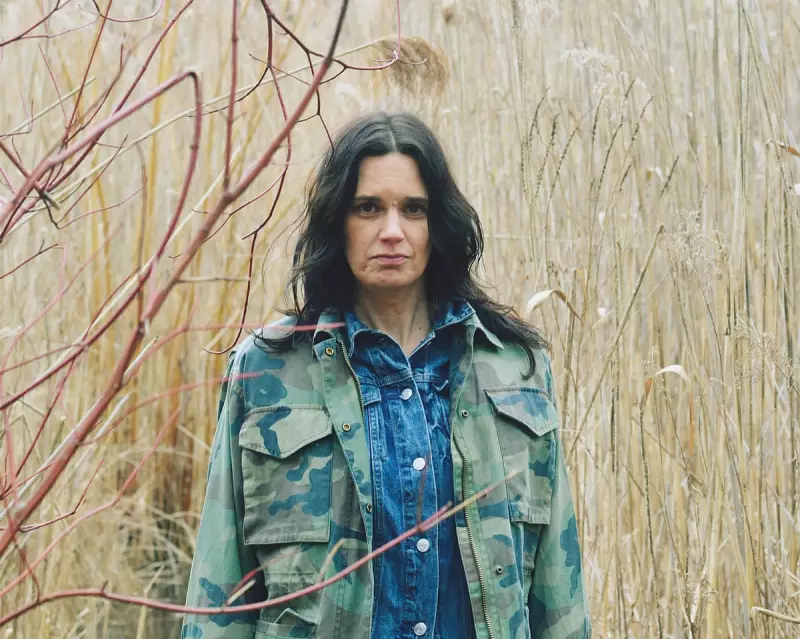
An Indigenous Canadian author's groundbreaking work, now published for the first time in the UK, is challenging literary conventions and colonial narratives with startling originality. Leanne Betasamosake Simpson's novel 'Noopiming: The Cure for White Ladies' presents a radical, interconnected worldview rooted in Ojibwe thought, serving as a powerful antidote to centuries of settler-colonial perspective.
A Direct Response to Colonial Legacy
The book's title, meaning 'in the bush' in the Ojibwe language, offers an ironic counterpoint to a foundational text of Canadian literature. It directly references Susanna Moodie's 1852 settler memoir, 'Roughing It in the Bush; or, Forest Life in Canada'. Moodie, a British settler on Lake Ontario's north shore—land belonging to Simpson's ancestors—framed Indigenous people through a colonial, extractivist lens. While Margaret Atwood later adopted Moodie's voice, Simpson's approach is fundamentally different. Rather than a simple rebuttal, 'Noopiming' constructs an entire world on its own, distinctly Indigenous, terms. First published in Canada in 2020 and shortlisted for the 2022 Dublin Literary Award, the book itself is presented as the 'cure' for Moodie's blinkered vision.
Immersion in an Interconnected World
For readers unfamiliar with Ojibwe culture, the novel is an immersive experience. It introduces a storytelling aesthetic where humans, animals, and plants coexist and communicate as equals. The narrative, which fluidly shifts between prose and poetry, unfolds across urban Toronto, the reserve, and the resilient wild spaces between. The central figure is Mashkawaji, who is frozen in lake ice following a tragedy. She is visited by seven characters, each representing a different part of her being.

These characters include Akiwenzii (her will), an Elder fisherman, and Mindimooyenh (her conscience), an Elder woman searching supermarket discount bins. The young lovers Asin and Lucy, representing the narrator's eyes, ears, and brain, suffer a modern alienation, finding solace only by sleeping outdoors. The novel thoughtfully explores themes of cultural loss and recovery, as when Lucy laments that 'no one on the reserve remembers how to tan hides with brains'.
Language, Gender, and Defiant Survival
Simpson, who left academia over two decades ago to relearn her ancestral language, makes a deliberate stylistic choice. Ojibwe words appear unitalicised and untranslated within the main text, a act of recentring that refuses to pander to a 'white gaze'. The book also normalises queerness, with all characters referred to by the neutral they/them pronouns, reflecting Nishnaabeg culture's recognition of more than two genders.
The characters themselves blur the lines between human and non-human. Ninaatig is both a maple tree and a person pushing a shopping cart. Adik, a caribou with hooves sore from asphalt, records the sound of hooves on ice. This profound interdependence is paired with sharp, darkly satirical humour aimed at 'white people in canoes' and 'tree cops' managing dwindling parkland. Ultimately, the narrative champions defiant survival, symbolised by the stubborn raccoon that moves back into gentrified habitat. The characters, forging 'flyways through the grief', demonstrate healing care and connection in the face of ecological and cultural disaster.
By building this intricate, animate world, Leanne Betasamosake Simpson's 'Noopiming' provides a profound corrective not just to Moodie's 19th-century territorial worldview, but to the very foundations of colonial thought. It is a vital, original work that redefines the relationship between story, land, and being.