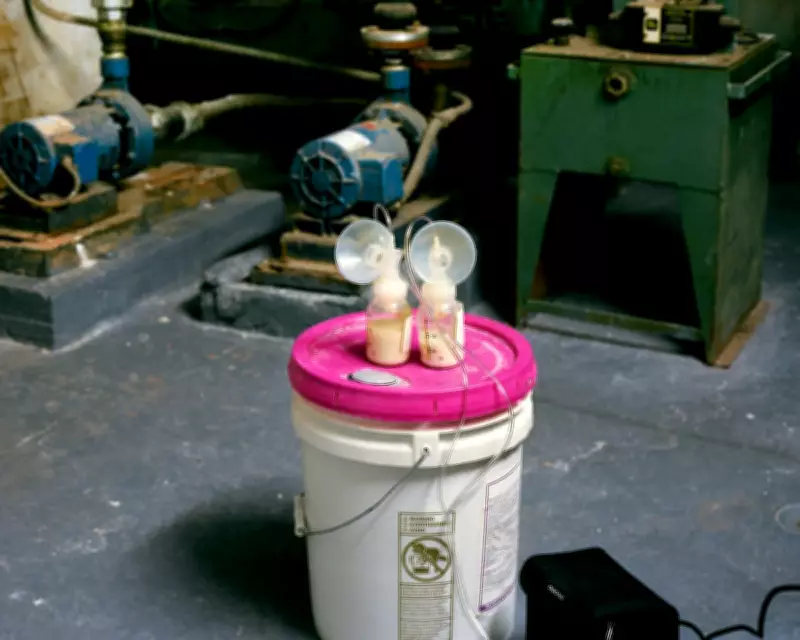
The United States remains the only high-income country in the world without paid family leave, forcing many new mothers to return to work shortly after childbirth. This policy gap has made pumping breast milk in the workplace a widespread practice. Lactation rooms, often tucked away in offices, highlight the tension between productivity demands and the expectations of maternal care. A new book, Milk Factory, by Corinne May Botz, uses stark photographs to make this hidden labor visible.
Pumping as a Symbol of Modern Motherhood
Botz explains, 'My goal with Milk Factory was to create an unconventional portrait of motherhood through photographs, a short film, and this book. The act of pumping underscores the ongoing negotiation between connection and autonomy in motherhood, as well as the ideological contradictions in modern parenthood and public policies.' The images capture a range of spaces, from cozy and bright to starkly depressing, reflecting the diverse experiences of new mothers.
Personal Stories Behind the Photos
One mother, an administrative associate at an opera house, recalls rushing from her third-floor classroom across the street to a government-mandated lactation room. 'The guards often struggled to locate the oversized key, and many were unaware their building even had a lactation room,' she says. Another mother, a building manager, found her lactation room surprisingly large, with barren bookshelves and fake trees. She used a hands-free pumping bra to simultaneously pump milk, eat lunch, and video chat with her mother watching her daughter.

A legal scholar shares her experience of waking at dawn to pump before commuting, and sometimes pumping on the train or bus, covered with a scarf. 'I realized I wasn’t protecting my modesty but protecting others from what I thought they didn’t want to see,' she reflects. A bartender pumps in a disabled bathroom or coat closet, the only place without cameras. Customers often question her breaks, with some asking if she's going to put on makeup.
The Broader Context
The book also includes stories from incarcerated mothers in Alabama, who pump every two to three hours despite being shackled during birth. 'Their mistakes don’t have to define them,' says the co-director of the Alabama Prison Birth Project. A dairy farmer draws parallels between human and animal lactation, noting that raising calves with their mothers is rare but produces healthier animals.
Botz emphasizes the social relevance of her project: 'When I started, I thought it would be about women in public space. Now, with abortion rights under threat, rising pregnancy-related deaths, and a parental stress crisis, the book feels more urgent than ever.'
Milk Factory by Corinne May Botz is published by Saint Lucy Books.