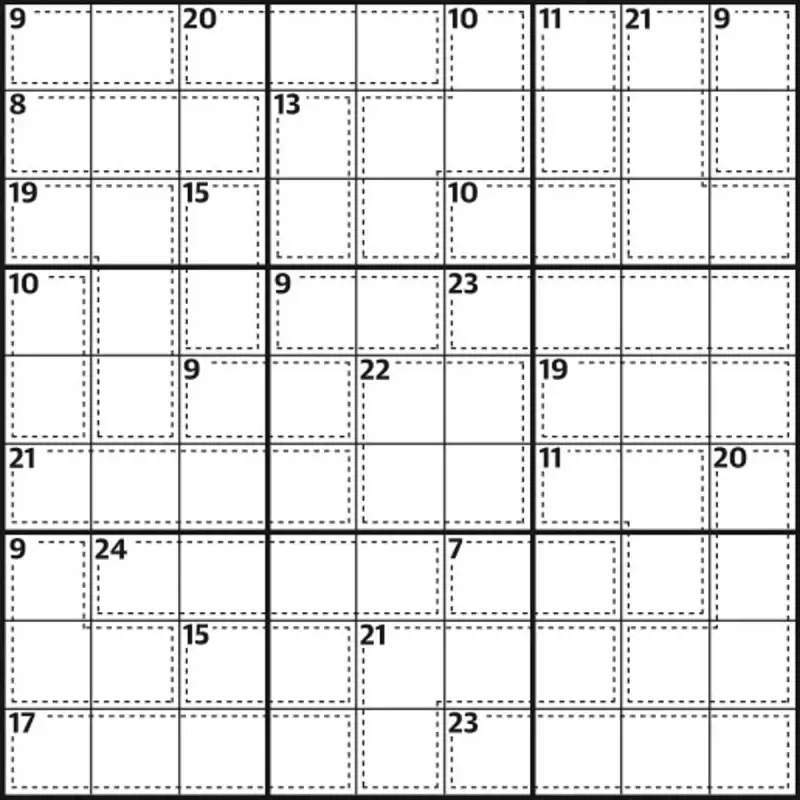
Move over, classic Sudoku. A new, more devious variant of the beloved number puzzle is taking the nation by storm, promising to challenge even the sharpest minds. The source of this craze is a single, formidable volume: 'Killer Sudoku: 1001' by David J. Bodycombe, a book that has become a surprise publishing hit and a staple on coffee tables from Cornwall to the Cairngorms.
What Makes Killer Sudoku So Addictive?
For the uninitiated, Killer Sudoku combines the classic 9x9 grid rules of traditional Sudoku with an extra layer of mathematical cunning. While standard Sudoku requires filling the grid so that each row, column, and 3x3 box contains the digits 1 to 9, Killer Sudoku adds 'cages'. These are dotted outlines grouping several cells together, with a small number in the corner indicating the total sum of the numbers within that cage. No number can repeat within a cage, adding a complex web of logical constraints that must be untangled.
This fusion of pure logic and basic arithmetic creates a uniquely satisfying and often fiendishly difficult puzzle. As Bodycombe himself notes, the format demands a different kind of thinking. 'It’s a logic puzzle, but it uses sums,' he explains, highlighting the dual mental engagement it provides. The book, published by Puzzler Media, capitalises on this growing appetite for more sophisticated cerebral challenges, offering a staggering one thousand and one puzzles graded from 'Gentle' to 'Diabolical'.

The Man Behind the Puzzles
The architect of this puzzle empire, David J. Bodycombe, is no stranger to the world of brainteasers. A veteran puzzle creator, he has been crafting conundrums for decades, contributing to newspapers, magazines, and television shows like 'The Crystal Maze'. His expertise is evident in the carefully curated progression within 'Killer Sudoku: 1001'. The book is designed not just to test, but to teach, guiding solvers from foundational techniques needed for the simpler puzzles to the advanced strategies required to conquer the most brutal grids.
The book's success speaks to a broader cultural trend. In an age of digital distraction and fleeting social media content, there is a resurgent appreciation for deep, focused engagement. Sitting down with a pencil and a Killer Sudoku puzzle represents a form of mindful, offline escapism that many find restorative. It is a deliberate and rewarding cognitive workout, a world away from the passive consumption of a smartphone screen.
A Publishing Phenomenon and Cultural Shift
The remarkable sales of 'Killer Sudoku: 1001' underscore its status as more than just a niche product. It has tapped into a substantial market of puzzle enthusiasts who crave consistent, high-quality content. For many, the book represents incredible value, providing months or even years of entertainment and mental stimulation. Its physical format is also key; the tactile experience of pencilling in answers, the ability to flip pages, and the sheer satisfaction of completing a thick volume are pleasures that digital apps cannot fully replicate.
This puzzle renaissance reflects a shift in how people choose to spend their leisure time. Activities that offer tangible progress, skill development, and a sense of accomplishment are increasingly prized. The Killer Sudoku craze sits alongside the renewed popularity of board games, jigsaw puzzles, and craft hobbies as part of a movement towards more engaged and satisfying pastimes. It proves that in our hyper-connected world, there is still a profound market for simple, silent concentration.
So, the next time you see someone frowning intently over a grid of numbers, they might not just be doing Sudoku. They could be deep in the layered logic of a Killer puzzle, wrestling with cages and sums, fully absorbed in the quiet battle of wits that has made David J. Bodycombe's book a modern classic. With a thousand and one challenges awaiting, it seems this particular craze is far from being solved.