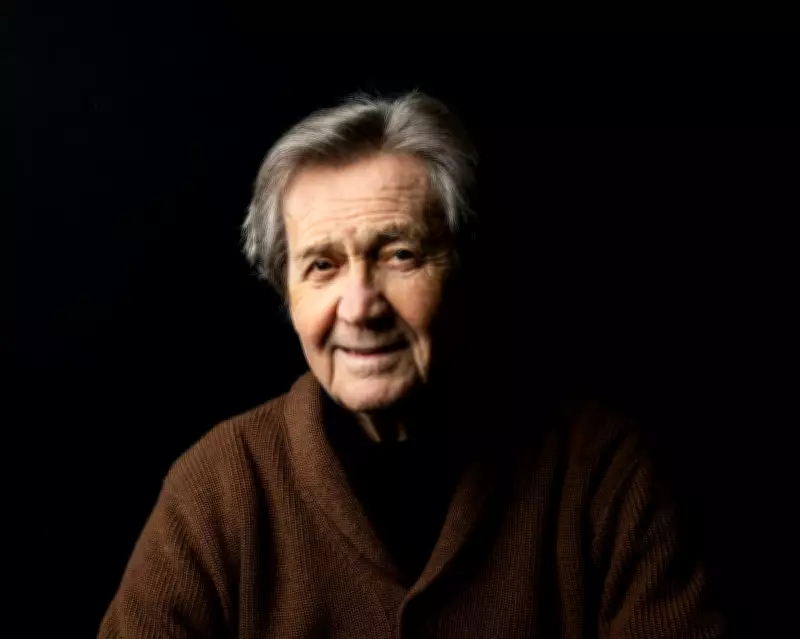
Melvyn Bragg's Oxford Odyssey: A Memoir of Transformation
In October 1958, a young Melvyn Bragg stood on Wigton railway station platform, bidding farewell to his childhood sweetheart Sarah as he embarked on a journey that would define his life. At nearly nineteen years old, Bragg was heading to Wadham College, Oxford, to read history, becoming one of the youngest in his cohort due to the phasing out of national service. This pivotal moment serves as the starting point for his latest memoir, Another World, which continues the narrative from his previous work Back in the Day about his Cumbrian upbringing.
Oxford: A Theatrical Landscape of Learning
To Bragg, Oxford initially appeared "more a theatre than a city, a spectacle rather than a habitation." After completing his preliminary examinations in his second term, he found himself with considerable freedom until his finals. This period became one of intellectual discovery and cultural immersion, where he explored the films of Ingmar Bergman and engaged in earnest pub debates about whether Pasternak would receive the Nobel Prize or if jazz truly surpassed rock'n'roll in artistic merit.
The young student's political consciousness awakened during these years as he participated in the Aldermaston march and joined the anti-apartheid movement. In retrospect, Bragg recognizes these activities were partly inspired by a residual faith in empire, viewing South Africa as Britain's moral responsibility. Even after the Suez Crisis, he maintained a pencil sharpener shaped like a globe where the empire appeared as "a continuous governing blur of pink."

Navigating Class and Conformity
Fortunately for Bragg's university experience but perhaps less so for narrative tension, he adapted remarkably well to Oxford life. The city's network of narrow streets and alleyways reminded him of his hometown Wigton, while Wadham's dining hall evoked memories of family holidays at Butlin's with its "shovel them in, feed them up and usher them out" ethos.
Physical transformation accompanied this adaptation as Bragg abandoned his Elvis Presley-inspired quiff for the neat crop favored by his peers, adopting the unofficial undergraduate uniform of grey flannels or cords paired with sports jackets or blazers. His ability to connect with diverse personalities, from conventional Tories to artistic bohemians, served him well throughout his three years.
The Oxford Experience Through an Anthropological Lens
Another World shines brightest when Bragg employs his outsider perspective as an amateur anthropologist observing Oxford's unique culture. This was truly another world, existing before the great university expansion of the 1960s when the term "student" was scarcely used. Bragg proved particularly astute at reading the semiotics of his rooms overlooking the quad and interpreting the weekly tutorial dynamic with his tutor, early-modern historian Lawrence Stone.
These tutorials involved reading essays aloud and awaiting reactions, which Bragg describes as resembling "the versicle and responses in medieval prayer." The book would have benefited from maintaining this anthropological focus throughout rather than transitioning into a more conventional autobiography format with digressions about his peers' subsequent careers.
Class Dynamics and University Life
Despite fitting in relatively smoothly, Bragg still encountered the British class system in subtle forms. Variations in dress codes revealed social standing, with cavalry twills serving as telltale signs of aristocratic background. Room allocations within college also reflected social hierarchies.
One memorable encounter brought Bragg face-to-face with future television dramatist Dennis Potter, who declared in his distinctive Gloucestershire accent: "They say there's three real working-class men here. There's me. And you. Where's the other bugger?" Bragg, however, distanced himself from the class resentment evident in Potter's 1960 book The Glittering Coffin, finding Oxford's class system largely suspended for scholarly purposes.

Aside from the Bullingdon Club's occasional casual cruelty, Bragg determined the university's snobbery was "neither bruising nor even mildly offensive" and "easy to ignore." His three years passed without major calamity, with his greatest challenges being an out-of-body experience while reciting Latin grace before dinner and a brief depressive episode following his breakup with Sarah.
A Portrait of the Young Broadcaster
Throughout Another World, the young Bragg emerges as a winning protagonist who shares qualities with his older self: thoughtful, open-minded, and generous in celebrating his contemporaries' talents while forgiving their shortcomings. His tutor Lawrence Stone proved scrupulous and kind, though college warden Maurice Bowra's admissions policy explanation—"Clever boys. Pretty boys. No shits!"—would certainly raise eyebrows today.
The memoir captures a specific moment in British history when traditional structures were beginning to shift but remained largely intact. Bragg's journey from Cumbria to Oxford represents not just geographical movement but social and intellectual transformation during Britain's late 1950s cultural transition.
Another World by Melvyn Bragg offers readers a nuanced portrait of university life during a transformative period, exploring themes of class, identity, and personal growth against the backdrop of a changing Britain.