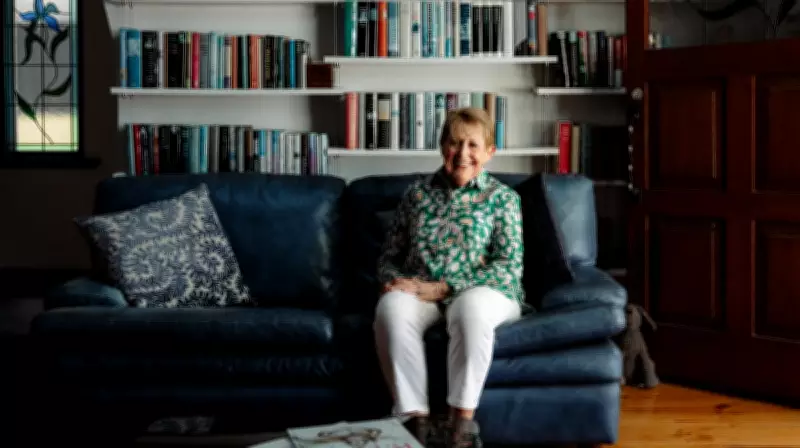
Mem Fox has published more than 50 books since her award-winning debut, Possum Magic, launched in 1983. After facing rejection from nine publishers, this first book went on to sell an astonishing 5 million copies, with readers instantly connecting to its vivid depiction of Australian foods, animals, and place names.
Early Aspirations and the Path to Writing
In 1968, while studying drama in London, Mem Fox made a pivotal note in her journal: "I don't want to be an actress, I want to be a writer." She was 22 at the time, and Possum Magic would not be published until she was 37. Reflecting from her home in Adelaide, Fox recalls knowing long before her breakthrough that writing was her true calling.
Much like Hush, the marsupial protagonist of Possum Magic, Fox took a circuitous route to success. By the mid-1970s, she had moved from London to Adelaide, South Australia, where she lectured in drama at a teacher's college and raised her young daughter, Chloë. Fox noticed a significant gap in the market: while there were plenty of English and American picture books, Australian stories were scarce.

The Birth of a Classic
Reading to Chloë provided Fox with a "subliminal" introduction to children's literature, which led her to enrol in a children's literature course at Flinders University. An early assignment required her to write her own book, a task the 31-year-old mature student initially dismissed as "beneath me" because she thought it would be easy.
Fox soon discovered that writing a children's book was far more challenging than anticipated. She persisted, collaborating with Sydney-based illustrator Julie Vivas to enhance her manuscript, originally titled Hush the Invisible Mouse. Their efforts earned a high distinction, but the publishing industry remained sceptical.
Nine publishers rejected the book before a tenth agreed to take it on, with conditions: Fox had to shorten the text and change the central character to something more distinctly Australian. Thus, Possum Magic was born. Upon its 1983 release, it became an instant classic, winning Australia's Children's Book of the Year in 1984 and achieving massive sales.
"It sold out its first printing before it was launched – just word of mouth," Fox recalls. "People were starving for it. They just wanted an Australian book. They wanted to be able to read about themselves. And suddenly it was all there, all the foods, all the animals, all the capital cities. And then a major reason for its success was the illustrations – I mean, they're from heaven!"
Building a Legacy
Following Possum Magic, Fox continued to produce beloved picture books. In 1984, she teamed up with Vivas again for Wilfrid Gordon McDonald Partridge. Later works include 2004's Where Is the Green Sheep, illustrated by Judy Horacek, and 2008's Ten Little Fingers and Ten Little Toes, illustrated by Helen Oxenbury. All have become bestsellers, cherished by generations of children and adults alike.
These titles, along with Possum Magic, feature in the Top 50 Australian children's picture books as nominated by Guardian readers. Fox expresses pride in seeing so many Australian authors on the shortlist, reflecting on how the landscape has evolved from having "nothing" to "a lot."
The Art of Writing for Children
Despite her extensive catalogue, Fox admits that writing for children remains deceptively difficult. "You can see the rubbish that you have written, and you say to yourself, I couldn't have written that, my name is Mem Fox," she says with a laugh.
The challenge lies in the genre's brevity, where every word and syllable must count. For instance, Where Is the Green Sheep? is just 191 words long. Fox emphasises the need for "the most beautiful, rhythmic, lyrical, musical use of words," ensuring that reading flows smoothly without any jerks or fumbles.
Her love of language was partly shaped by the King James Bible, which she describes as "sonorous and perfect, and there isn't a beat out of place." Like many children's books, it was designed to be read aloud, a principle Fox carries into her own work.

Philosophy and Industry Insights
Fox strives to avoid being preachy in her books, a lesson she learned early from reading to her daughter. "She didn't like being taught a lesson," Fox recalls, noting that overt messages can turn young readers away. Instead, she focuses on stating facts subtly, as seen in books like Ten Little Fingers and Ten Little Toes, which promotes themes of equality without direct instruction.
She also comments on changes in Australian publishing, such as the rise of children's books by celebrities. "Because people buy it because of the writer, not the writing – it doesn't last," she observes. However, she acknowledges that such trends can bring revenue to publishers, enabling them to support authors like herself who may not have massive social media followings.
When writing, Fox keeps two audiences in mind: a child sitting close by, such as on a couch or in bed, and a group of children listening to a teacher read aloud in a classroom. This helps her avoid the trap of writing "beautiful" books that appeal only to adults but fail to resonate with young readers.
Looking Ahead
As Fox approaches her 80th birthday in March, she remains active in her craft. "I've got some books in the pipeline," she says, noting that the illustration process can sometimes take two years. With a touch of humour, she adds, "And I'm thinking, 'I might be dead before they come out!'"
Four decades after Possum Magic fulfilled her writerly dreams, Mem Fox continues to inspire with her dedication to creating meaningful, engaging stories for children, cementing her legacy as a cornerstone of Australian children's literature.