ML Stedman's Long-Awaited Second Novel Delivers a Poignant Family Saga
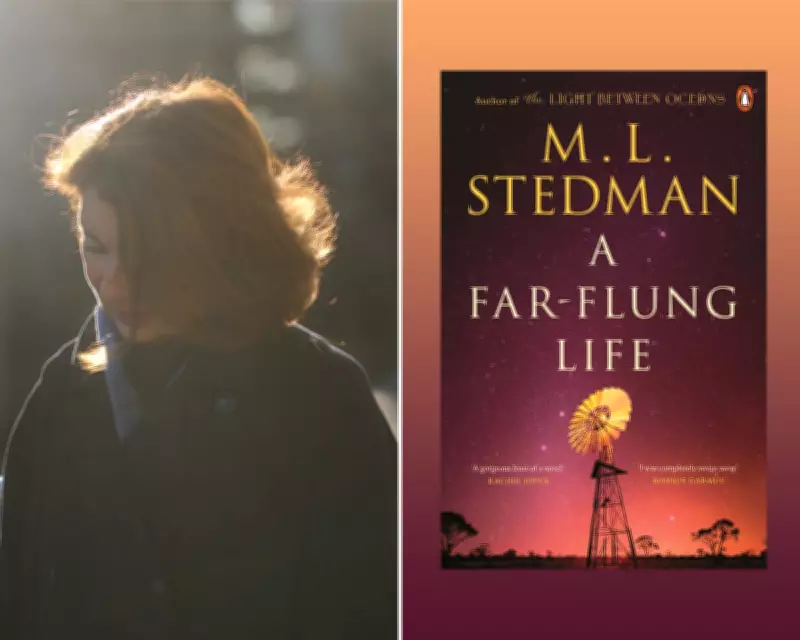
Twelve years after her acclaimed debut The Light Between Oceans, Western Australian author ML Stedman returns with A Far-flung Life, a masterful examination of loss, memory, and moral ambiguity set against the vast landscapes of rural Australia. This deeply human story follows multiple generations of the MacBride family as they navigate catastrophic events that reshape their identities and relationships.
A Family Shattered by Tragedy
The novel opens in 1958 on Meredith Downs, a million-acre sheep ranch in Western Australia. Patriarch Phil MacBride's decision to swerve his truck to avoid a kangaroo sets in motion a tragedy that claims his life and that of his eldest son Warren. Youngest son Matt survives with a head injury that erases his memory, forcing him to reconstruct his identity from fragments.
Suddenly widowed, Lorna MacBride must assume control of the ranch while parenting both Matt and her fiery daughter Rosie. As Stedman writes, "small decisions have vast consequences" in this remote landscape where the land itself can "rearrange itself without warning or permission."

Complex Characters and Their Burdens
Stedman populates the MacBride orbit with richly drawn characters, each carrying their own secrets and burdens:
- Pete Peachey, a taciturn former prisoner of war who culls kangaroos on the property
- Miles Beaumont, a dapper English aristocrat learning station management
- Rosie MacBride, whose own choices lead her to flee to the outback and return with a newborn
Each character's decisions ripple through the decades, particularly affecting Matt, who must learn to live a life "indelibly marked by unfathomable events."
The Philosophy of Memory and Forgetting
Central to the novel is Stedman's concept of "forgetments" - not forgotten memories, but "things you forget." This inventive coinage explores how we construct our narratives when they've been violently altered, and how we're shaped as much by what we consciously know as by what we unknow.
"The struggle of writing our own narrative when it is violently altered and the way we are shaped as much by conscious knowing as by unknowing," Stedman writes, "these richly human notions are handled with deft care."
Time's Elastic Nature
Stedman offers profound insights into time's subjective experience, particularly in grief. She contrasts human-made measurements of time with natural markers like "the gradual curl of a ram's horns" or "the stretching and shrinking of the light."
For Matt, trapped in the cataclysmic moment of the accident, "maybe the roo was always going to bound in front of the truck; was still bounding in some eternal present." This temporal warping stands against the indifferent, relentless passage of time on the land.
Avoiding Sentimentality in Tragedy
Remarkably, despite being "racked with calamity," A Far-flung Life rarely approaches mawkish sentimentality. Stedman's skill ensures that every loss feels earned, transforming what could have been a syrupy saga into "a palpable examination of loss, memory and identity."
Her extensive research manifests in expansive detail - from the intimately rendered Western Australian landscape to the quotidian realities of station life. The author's masterful control of perspective, shifting between characters across decades, creates a cohesive, emotionally resonant narrative.
Moral Ambiguity and Forgiveness
Like her debut, Stedman's second novel grapples with moral ambiguity, particularly regarding "which things are best left buried" and "which parts of a life are allowed to become 'forgetments.'" This inquiry extends beyond feigned ignorance to explore forgetting's role in forgiveness - of others and oneself.
Stedman holds this question "up like a glimmering piece of quartz, illuminating its shadowed recesses and fractures." Ultimately, she suggests the answers matter less than "the life lived in pursuit of them."

Published by Penguin, A Far-flung Life represents a significant literary achievement that confirms Stedman's place among Australia's most thoughtful contemporary novelists. The novel demonstrates how "the herculean labour of weathering change" constitutes not an interruption of life but an essential part of it.