The Enduring Debate: What Truly Defines 'Cool'?
The age-old question of what constitutes being 'cool' has sparked a lively debate in the Guardian's letters pages, with readers drawing on everything from political philosophy to 1980s pop music to make their case.
Obama's Powerful Commencement Address
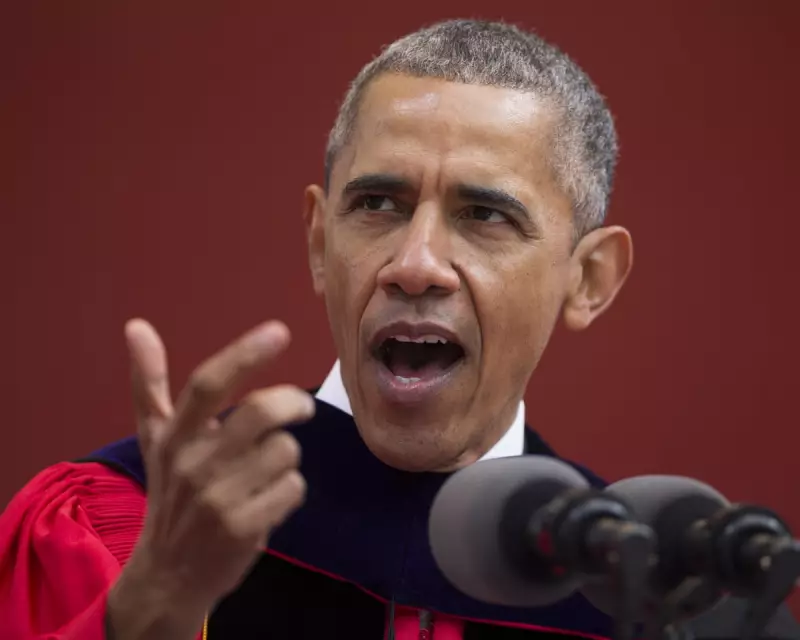
One correspondent, Ian Dawson from Heywood, Lancashire, powerfully recalled the 2016 commencement address delivered by former US President Barack Obama at Rutgers University in Piscataway, New Jersey. He highlighted Obama's timeless wisdom, where the President told graduating students that in politics and in life, "ignorance is not a virtue."
Obama firmly dismantled the notion that being uninformed is a form of authenticity, stating: "It is not cool to not know what you are talking about. Not knowing what you’re talking about is not keeping it real, telling it like it is, or challenging political correctness. It’s just not knowing what you’re talking about." This sentiment, shared in May 2016, resonates strongly in today's information-saturated world.

Musical Icons and Historical Queries
Other readers proposed their own icons of cool. Susan Baillie from Weymouth, Dorset, nominated singer-songwriter Nick Lowe as "the ultimate in cool," pointing to his appropriately titled album, 'Jesus of Cool'.
Meanwhile, David Hodgetts from Morpeth, Northumberland, looked to the world of 1980s rock, reminding everyone that the band Huey Lewis and the News declared it "hip to be square" back in 1986.
The correspondence also took a historical turn, with Martin Pilgrim from Hoath, Kent, offering a correction on Roman invasions. He noted that when Julius Caesar invaded in 55BCE and Emperor Claudius in 43CE, they did not invade England or Britain as a political entity, but rather the ancient iron age Celtic Kingdom of Cantium, known today as Kent.
Awkward Street Names and a Call for Opinions
Adding a touch of contemporary awkwardness, David Edwards from Hulme, Stockport, drew attention to the residents of Epstein Road in Thamesmead, London, suggesting they face an embarrassing situation amidst calls to change contentious street names elsewhere.
The Guardian continues to invite readers to contribute to the conversation, encouraging them to email their opinions on anything they have read for potential publication in the letters section.