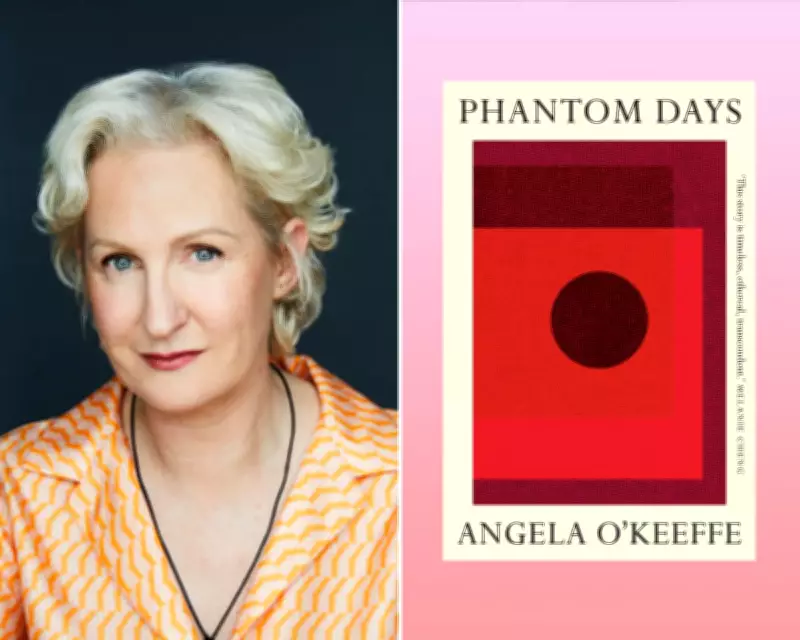
Angela O'Keeffe's third novel, Phantom Days, employs an unconventional narrator to explore themes of human creativity, connection, and longing. The story centers on Isabel, a woman in her mid-30s who is child-free, single, and working the same arts job she has held for a decade. She has a few close friends and a complex relationship with her mother, Maggie, who is recovering from chemotherapy. Though outwardly content, Isabel feels something is missing, prompting her to ask, "If I were to create a thing outside of myself, what would it be?"
A Journey to London
This gap leads Isabel to fly from Sydney to London with her new boyfriend, Lewis, a man she barely knows but feels a strange pull toward. In London, they have sex, walk along the river, and visit restaurants, but struggle to bond. They eat in silence or bicker, avoid eye contact, and fail to see one another as whole people.
The Unconventional Narrator
Following a tradition of "it-narratives," Phantom Days unfolds partly through the eyes of "Book," a seemingly sentient object that Isabel bought from its author at a book signing. Book has its own voice, origin story, and cosmology: "In the beginning, the sky was yellow and did not change for years on end." As Book is handed from its author to Isabel, it feels a "bright and all-consuming" connection; Isabel brings color, life, and meaning. The relationship between reader and Book becomes deep and intimate, with the pair speaking to one another tenderly and conspiratorially.

A Story About Love and Connection
This is not just a story about human love, but also a love letter to books and readers. As Isabel and Book take turns narrating Isabel's story, their bond deepens. However, something sinister begins to unfold. Lewis, described as having neat hair and smelling of "washing detergent and the sun," is in turns golden, childish, innocent, and menacing. Isabel studies him for clues to her strange feelings, wondering if something is wrong with him or with her. Book watches them constantly, but is it a friend, a protector, or something else?
The Layering of Relationships
As we learn more about Lewis and Isabel, we see the reverberations of childhood and how connections shape people. O'Keeffe writes, "No life is entirely its own; each is layered onto other lives." The intricate layering of relationships throughout the novel shows a deep understanding of this statement. When Isabel leaves Book behind in a taxi, Book's understanding of itself and human life expands, revealing that stories and narration are part of complex networks of relationality.
Strengths and Weaknesses
At times, Phantom Days lacks subtlety. Some practical elements remain unexplained, such as how Book sees, hears, and smells without eyes. Hints at a bigger secret come across as melodramatic, while other aspects of Isabel and Lewis's behavior seem understated. However, O'Keeffe's characterization is charming enough to suspend disbelief. The novel is intensely physical and rich with detail: colors, sounds, processes, and movements are all noted and described in lovely lyrical sentences. This specificity creates a strange and marvelous realm where inanimate objects become sentient and bodies manifest miracles.
A Human Story
Though told through the "eyes" of a book, Phantom Days is a wonderfully human story about the act of creation. It explores how we deal with the loss of a life never lived and the ways in which stories connect us. The novel is out now in Australia.