

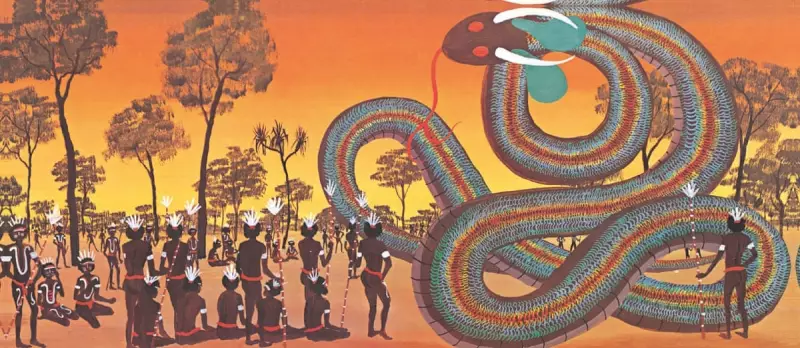
Five Decades of Cultural Legacy: The Rainbow Serpent's Enduring Power
This year marks a significant milestone in Australian literary history, as Dick Roughsey's seminal work The Rainbow Serpent celebrates its fiftieth anniversary since first publication. This beloved children's picture book, originally released in 1975, continues to hold a cherished place in the nation's cultural consciousness, currently featuring in Guardian Australia's reader poll to determine the best Australian children's picture book of all time.
The Creation Story That Shaped a Nation's Imagination
The book presents the powerful creation narrative of the Rainbow Serpent, known traditionally as Goorialla, from the perspective of Roughsey himself – a senior Lardil man from Mornington Island in the Gulf of Carpentaria whose traditional name was Goobalathaldin, meaning "rough seas." Born in 1920 and passing in 1985, Roughsey was not only a gifted author but also a remarkable artist who shared his cultural heritage with extraordinary generosity.
Through vivid storytelling and splendid artwork, The Rainbow Serpent introduces readers to the ancestral being who shaped the Australian landscape through dramatic movements, creating mountains, rivers, and valleys. The serpent's presence caused people to transform into Australia's rich variety of birds and animals, including emus, turkeys, brolgas, barramundi, tortoises, and possums, establishing the fundamental laws of human society and demonstrating how to care for country and community.

A Vision of Indigenous Spirituality and Connection
What makes this work particularly significant is how it presents Indigenous spiritual beliefs that connect people to the power of the Australian continent. The stories of the Rainbow Serpent remain at the heart of Aboriginal cultural identity, representing deep spiritual beliefs that have remained steadfast across millennia. As Roughsey himself wrote in the book, "Now the remaining people have to look after all the animals, all the living things which were men and women in the beginning but who were too afraid of old Goorialla to remain as people."
The book represents a groundbreaking achievement in Australian publishing – the first work to create a comprehensive visual representation of the Rainbow Serpent from an Indigenous imagination. Roughsey provided readers with the licence to visualise what their minds had never been trained to see, offering a magnificent vision of the divine forces that shape the Australian continent and revealing what is sacred in this ancient land.
The Man Behind the Masterpiece: Dick Roughsey's Remarkable Journey
Dick Roughsey's personal story adds profound depth to his literary achievement. As a child growing up under Queensland's repressive laws that dominated Aboriginal and Torres Strait Islander lives, he was separated from his family at approximately eight years old and placed in the boys' dormitory on the Mornington Island Mission. This systematic removal of Aboriginal children from their families aimed to lessen cultural influence and facilitate assimilation into white Australian society.
Despite these challenging circumstances, Roughsey emerged as a man of remarkable sophistication and intellect. Those who knew him describe someone who carried himself with refined ease – cosmopolitan, well-travelled, and speaking with the diction of an English gentleman. He maintained pride in speaking what he called "the Queen's English" better than most of her subjects, while never losing his fluency in Lardil or his connection to traditional law stories passed down through generations.
A Living Legacy That Continues to Inspire
What shines through most powerfully in The Rainbow Serpent is Roughsey's graciousness and generosity in sharing the spirit of his country. The book represents a gift that continues to be read to children around the world, maintaining its place in print and in Australian hearts five decades after its initial publication. Families and teachers have shared Goobalathaldin's ancient creation story with thousands of children, ensuring its continued relevance in the national psyche.

As celebrated author Alexis Wright, who met Roughsey during her time on Mornington Island in the 1970s, reflects: "I feel immense joy in knowing this book has remained in the Australian psyche – for all who live here and call this country home." The work stands as testament to Roughsey's multifocal vision, enabling him to bridge cultural worlds and share important stories from his homeland with a wider audience.
Cultural Wealth and Contemporary Relevance
Roughsey came from what he described as a "very wealthy place culturally" – deeply connected to the richness of Lardil traditional land and sea culture, its knowledge and bounty. His work continues the wisdom of generations, belonging to what Gangalidda elder and leader Murrandoo Yanner describes as giving "our humanity" to the world.
The Rainbow Serpent, though telling of events from the distant past when the world was being made, continues to live in the life of its people today. The shooting star racing across the night sky represents the eye of Goorialla, watching everyone and maintaining the connection between ancient law and contemporary life. This enduring presence speaks to the timeless relevance of Indigenous cultural principles and their importance for all who call Australia home.
As The Rainbow Serpent celebrates its golden anniversary, its continued popularity serves as powerful evidence of the book's significance in Australian cultural life. It remains not just a children's classic but a vital bridge between cultures, a celebration of Indigenous heritage, and a testament to the enduring power of storytelling to connect people to country, community, and cultural legacy.





