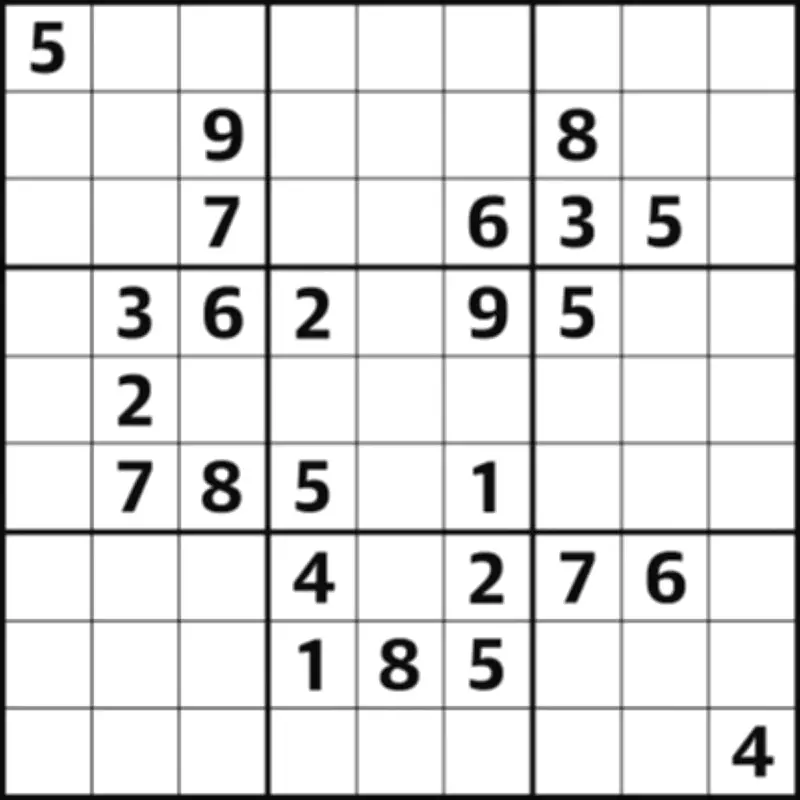
The Guardian's Sudoku 7232 hard puzzle presents a formidable challenge for enthusiasts of logic-based games, requiring advanced problem-solving skills and strategic thinking to complete. This particular puzzle, part of a long-running series, is designed to test the limits of players' deductive reasoning and patience.
Complex Grid Structure and Strategic Demands
Sudoku 7232 features a standard 9x9 grid, but its difficulty lies in the intricate placement of numbers and the need for careful elimination techniques. Players must fill each row, column, and 3x3 subgrid with digits from 1 to 9 without repetition, a task that becomes increasingly complex as the puzzle progresses.
Key Elements of the Hard Difficulty Level
The hard classification indicates that Sudoku 7232 includes fewer given numbers at the start, forcing players to rely more heavily on logic and inference rather than simple pattern recognition. This level often involves advanced strategies such as X-Wing, Swordfish, or coloring techniques to resolve ambiguities.

Engaging with puzzles like Sudoku 7232 can enhance cognitive functions, including memory, concentration, and analytical thinking. Regular practice with challenging Sudoku grids is known to improve mental agility and provide a satisfying sense of accomplishment upon completion.
Broader Context of Puzzle Culture
Sudoku, originating from Japan, has become a global phenomenon, with publications like The Guardian offering daily puzzles to a wide audience. The hard variants, such as number 7232, cater to experienced players seeking to sharpen their skills and enjoy a more demanding intellectual exercise.
This puzzle not only serves as entertainment but also as a tool for mental stimulation, appealing to individuals of all ages who value logic and precision. The Guardian's commitment to providing diverse difficulty levels ensures that both novices and experts can find suitable challenges.