The Sinister Rise of the Tradwife: From Social Media to Societal Warning
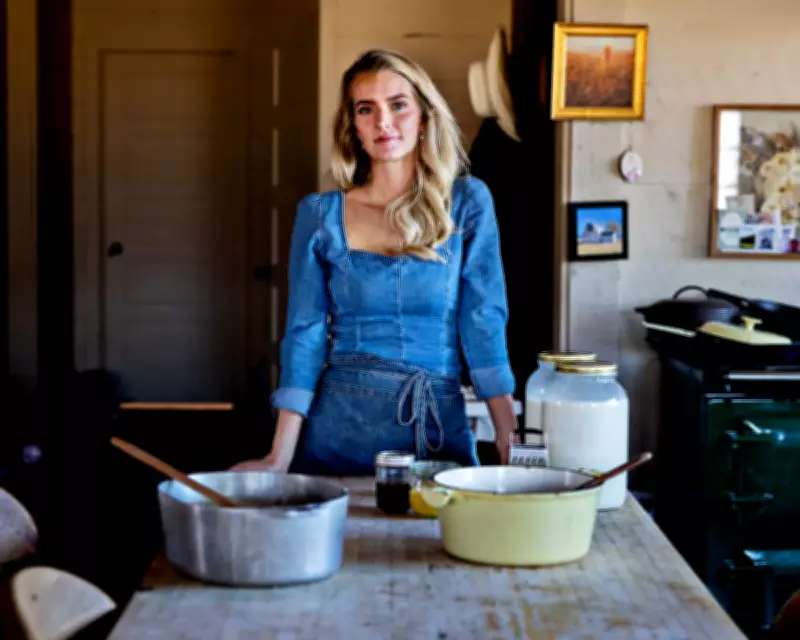
Social media star Hannah Neeleman frequently posts about her idyllic life at Ballerina Farm in Utah, where she resides with her husband and nine children. Her content, along with that of influencers like Nara Smith, showcases a world of gingham dresses, homemade bubblegum, and perfectly styled family moments. This aesthetic has become synonymous with the "tradwife" phenomenon, a trend that author Caro Claire Burke examines with a critical eye in her dark debut novel, Yesteryear, now being adapted into a film by Anne Hathaway.
Uncovering the Dark Origins
Burke reveals that the term "tradwife" did not emerge from wholesome family values but from the murky depths of online incel forums. Initially coined by men, it promoted a vision of a submissive wife who manages the household, bears children, and asks for nothing in return. This grubby origin is often overlooked in mainstream media, which tends to focus on the day-bright social media presence of influencers who have turned this image into lucrative empires.
In conversations with experts and industry professionals, Burke has repeatedly faced the question: How long will this cultural trend last? She argues that the tradwife is not merely a passing fad but a curated performance designed to advertise a specific ideal of womanhood. Unlike the handmaid from Margaret Atwood's dystopian novel, which served as a warning against oppression, the tradwife was created as a blueprint by the oppressor, making it difficult for feminist movements to subvert.

A Grim Reflection of Societal Issues
The rise of the tradwife coincides with significant setbacks for women in society. By 2025, over 450,000 women dropped out of the U.S. labor workforce, the steepest decline on record, largely due to caregiving responsibilities. The wage gap has remained stagnant since 2002, and the childcare crisis has escalated into a full-blown hemorrhage. Burke points out that the tradwife did not become popular because women were at a breaking point; rather, it emerged after they had already been broken by systemic failures.
This trend serves as a reminder of an ideal way for women to relent to their own disappearance: with silence and a smile. Burke emphasizes that the purpose was never for women to choose this lifestyle but to normalize submission in the face of adversity. The escalation in gendered violence in recent months underscores the dangerous implications of such ideologies, echoing Anton Chekhov's principle that a gun introduced onstage must eventually go off.
Beyond the Surface: The True Aims of the Movement
Burke challenges the notion that the tradwife is a real person or a benign trend. Instead, she describes it as an advertisement—a performance with a link in bio for purchases—that reinforces traditional gender roles. In her novel Yesteryear, she subverts this world by placing a tradwife in the past, exploring how long it takes before she starts to scream against her constraints.
Despite pressure to focus on lighter aspects like milkmaid fashion or apron trends, Burke insists on addressing the darker truths. She references real-world consequences, such as the shooting of Renee Good by ICE agents, to highlight the stakes involved. The tradwife movement, she argues, is a rudderless propaganda campaign that exploits societal vulnerabilities, reminding women of their "true purpose" to serve, smile, procreate, and purchase.
As Yesteryear hits shelves, Burke's work invites readers to look beyond the curated images and question the sinister forces shaping modern womanhood. The tradwife may appear as a soft, aesthetic ideal, but its foundations are rooted in control and regression, making it a critical topic for contemporary discourse.