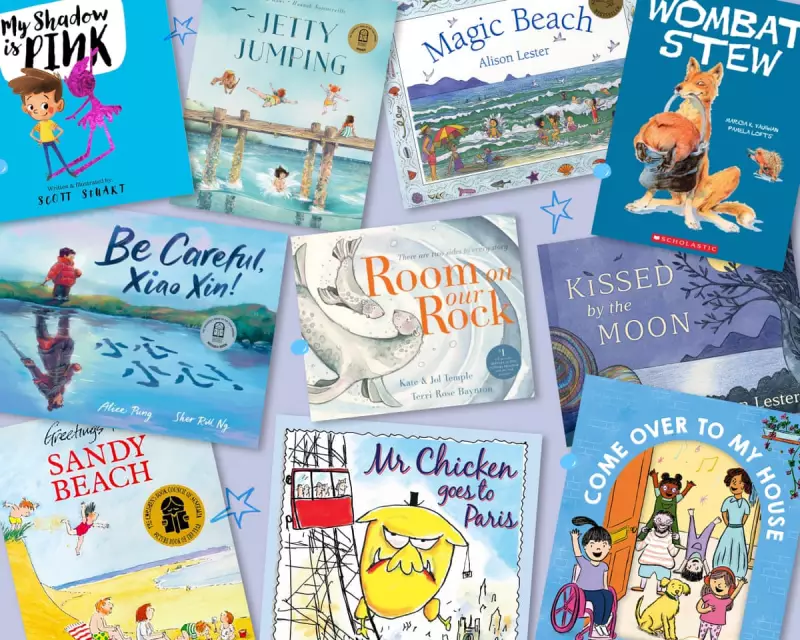
Guardian Readers Reveal Top 50 Australian Picture Books
In a heartfelt celebration of childhood nostalgia, Guardian readers have nominated their favourite Australian children's picture books, compiling a list of the top 50 titles that resonate across generations. This collection, described as representing a cherished time in our childhoods, underscores the enduring power of these stories to shape young minds and foster lifelong connections.
The Lifelong Benefits of Reading Aloud
Author Sally Rippin, an award-winning children's writer and the outgoing Australian children's laureate for 2024-25, passionately advocates for parents to continue reading to their children, even as they develop independent reading skills. She emphasises that a great picture book can profoundly change a child's life, helping them develop imagination, empathy, and pride in their uniqueness.
Rippin notes that picture books are primarily designed to be read aloud, making them a vital tool for early literacy. Reading aloud expands vocabulary, enhances brain development, and builds phonological awareness by familiarising children with language rhythms and patterns. Research consistently shows that regular read-aloud sessions from a young age provide a significant advantage when children start school.

Beyond Babyhood: The Sophistication of Picture Books
Contrary to the misconception that picture books are only for babies, Rippin points out that many authors use more complex vocabulary and sophisticated storytelling in these works compared to early chapter books. The latter often aim to introduce a limited, familiar vocabulary and simple storylines for independent decoding, whereas picture books offer richer narratives.
Moreover, the illustrations in picture books add a crucial layer of meaning, often carrying the emotional weight of the story. In the Guardian's top 50 list, children can explore diverse perspectives, imagining life as a wombat, fox, possum, or bunyip, and learning to appreciate differences and similarities in others.
Diversity and Representation in Australian Picture Books
The selection highlights a growing diversity in Australian children's literature, with books that act as both mirrors and windows for young readers. Rippin shares insights from her co-author Eliza Hull, who recalls not seeing herself represented in picture books as a child with a disability, and illustrator Daniel Gray-Barnett, who discovered his Autism Spectrum Disorder while working on their book Come Over to My House.
This book, a rhyming exploration of home lives for children and parents who are d/Deaf or disabled, exemplifies how picture books can foster inclusion and self-understanding. Gray-Barnett reflects that the project changed his life by explaining how his brain works, underscoring the transformative potential of these stories.
A Call to Action: Vote and Keep Reading
As the Guardian's poll for the best Australian children's picture book continues, Rippin encourages readers to participate and reflect on the impact of these titles. She reminds us that picture books are not just for children; they hold memories of cuddles on laps and funny voices that fill rooms, creating bonds that last a lifetime.
Ultimately, this list serves as a reminder that you never know which book might change your child's life—or even your own. By preserving the tradition of reading aloud, we nurture empathy, literacy, and a love for stories that transcend generations.