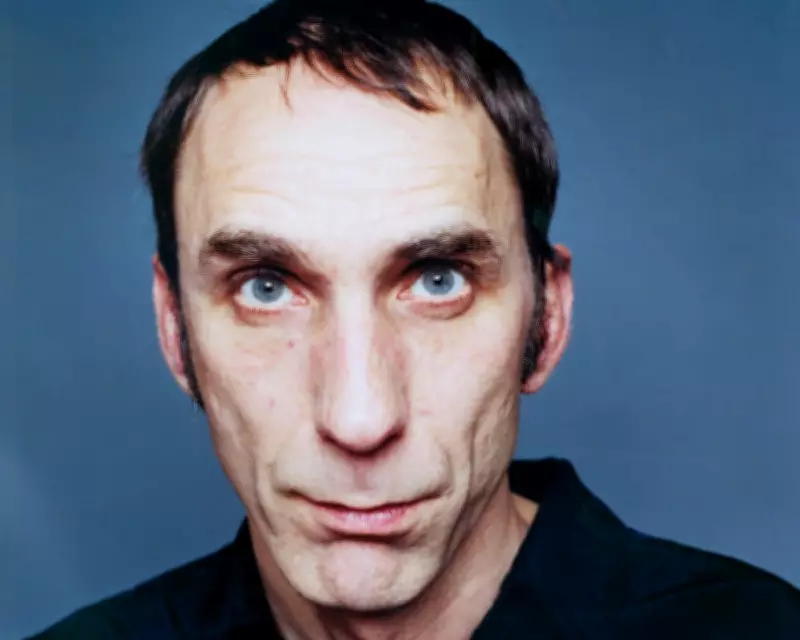
Will Self's Latest Novel Offers Raucous State-of-the-Nation Satire
Thirty-five years after his groundbreaking debut collection The Quantity Theory of Insanity, Will Self returns with The Quantity Theory of Morality, a blistering new work that takes aim at London's chattering classes with excoriating precision. This novel presents a vision of moral decline through the lens of Self's recurring character, psychiatrist Zack Busner, who now warns that society's goodness exists in finite quantities.
The Evolution of a Literary Hypothesis
In Self's 1991 debut, Busner first tested the theory that "the surface of the collective psyche was like the worn, stripy ticking of an old mattress." The psychiatrist proposed that "if you punched into its coiled hide at any point, another part would spring up – there was no action without reaction, no laughter without tears, no normality without its pissing accompanist."
Now, in this long-awaited follow-up, Busner has aged into his dotage but maintains his analytical edge. He presents a chilling new hypothesis: "I estimate that when a social group's morality quotient begins to decline, a sequel of bad behaviour will inevitably be bad feeling, as well." The theory applies universally, whether examining juries, jewellers, or Jewish communities.

A Hampstead Dinner Party Unravels
The novel opens at a Hampstead dinner party where writer Will observes the assembled company with creator-like knowledge. Guests include Johnny Freedman, who entertains with plans to farm vicuña in the Aylesbury Hundreds, and Cathy McCluskey, who worries about her husband's potential infidelity. Phil Szabo mixes cocktails while rumors circulate about his possible espionage connections, though Will dismisses him as merely "a Foreign Office functionary."
Self writes of his narrator: "Although ostensibly the narrator, and so omniscient within this tale masquerading as a life – I was undoubtedly the most minor of all. After all, what did anyone know about me, besides the fact that I painted in watercolours, had a studio conversion and consorted with these cyphers?"
Structural Innovation and Narrative Repetition
The Quantity Theory of Morality contains multitudes through its innovative structure. The novel unfolds across five distinct parts, each repeating similar scenarios with crucial variations:
- A Hampstead dinner party
- An opera performance at Glyndebourne
- A New Year's gathering in Dorset
- A holiday in La Spezia
- A disastrous funeral
These set pieces replay with word-for-word dialogue repetition while shifting perspectives dramatically. In one iteration, all characters are male and identified by penis size. In another, they transform into female counterparts, with "Willa" becoming an erotic fiction writer and Phillipa Szabo taking over cocktail duties.
Escalating Tension and Ballardian Violence
With each narrative repetition comes a ratcheting up of tension and what the novel describes as "an underhum of violence that is unmistakably Ballardian." Busner issues a dire warning: "I'm fairly confident when I say one of you is going to die, and die due to the moral dereliction of the group as a whole."
The psychiatrist enlists Bettina Haussmann, a high-ranking Swiss bank executive, to employ her company's semi-sentient data-modelling technology to predict the moment of maximum danger. When Bettina returns from Zurich, she discovers a Britain transformed beyond recognition.
A Dystopian Britain Emerges
The new Home Office Visitor Inspection Service (HOVIS) has replaced the old Border Inspection Force, with Dvořák's Ninth Symphony playing ominously over airport sound systems. Bettina receives orders to report to Balls Pond Road alongside other Jewish citizens. Poundbury has become the new Theresienstadt under control of the Nationalist Trust.
Busner's predictions materialize tragically as he takes his own life in despair. The morality quotient plummets to such depths that government documents now bear the chilling sign-off: "Perish the Jews."
Political Engagement Without Preachiness
Despite its raucous political engagement, Self avoids didacticism through masterful storytelling. The novel tackles numerous contemporary issues:

- Trans rights and gender politics
- Environmental concerns and green issues
- Holocaust memory and historical trauma
- The Gaza conflict and Middle East tensions
- Moral failings of the neoliberal elite
Self excoriates society's slide toward the abyss while maintaining entertainment value through his preoccupation with language and fictionality. The work demonstrates what one critic describes as "Nabokovian" qualities – barbed, provocative, and virtuosic in its execution of linguistic jokes.
Personal Pathos and Literary Legacy
Beyond its satirical edge, the novel contains genuine pathos, particularly in its elegiac coda that references Self's own health struggles: "Will had been ill for a long time before he died. I wasn't sure altogether how long – but at least a decade. He'd had a blood disorder which eventually mutated into the inevitable cancer."
While readers might worry this represents a valediction, the work stands as testament to Self's belief in art's enduring power. The novel celebrates London itself as enduring material, capturing "that smell, a synthesis of a sepia tone, with the taint of damp flannel, and the stench of singed rubber, and the desiccation of antediluvian soot, and the Googleplex glimpses of a million, billion cigarettes" – what the author identifies as "the inimitable savour of the underground at Hampstead tube."
The Quantity Theory of Morality confirms Will Self's position as one of Britain's most inventive and necessary literary voices, offering both entertainment and urgent social commentary in equal measure.