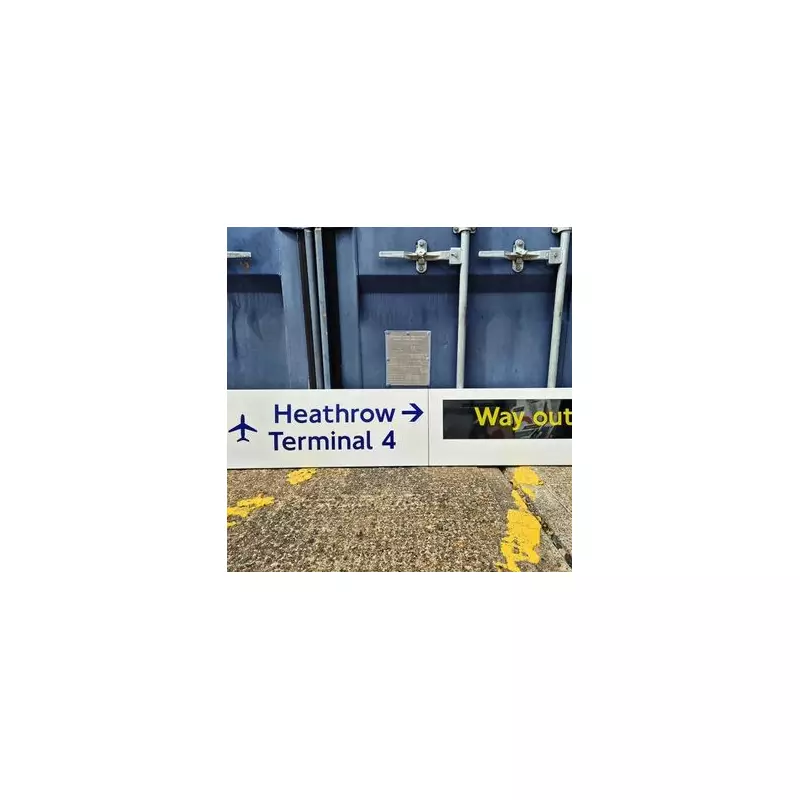
London Transport Museum is selling off pieces of the capital's iconic transport network, with prices for original signs reaching a staggering £2,000. The collection offers a unique slice of London history, directly salvaged from stations across the network.
A Pricey Piece of London's Past
The museum's online shop currently lists 35 former Transport for London signs, with costs varying dramatically. At the more accessible end, a simple 'Lift to Platform 1' sign can be purchased for £100. However, the premium items command eye-watering sums. A fully illuminated Heathrow Terminal 4 'Arrow Right - Way Out' light box is priced at £2,000.
Classic roundel signs are also highly sought after. One for Bank Station carries the top-tier £2,000 price tag, while a Moorgate roundel is listed at £995. The museum promotes the sale as a rare opportunity for enthusiasts, stating: "This is your opportunity to take a piece of London transport history home with you."

Renewed Interest from Overground Rebranding
The availability of these signs has been partly driven by a recent major rebranding project on the London Overground network. Previously unnamed lines have been given new identities honouring aspects of London's culture, including the Windrush, Lioness, and Suffragette lines. This overhaul has led to a fresh batch of decommissioned signage entering the market.
Despite the hefty price tags, which range from £150 to £950 for many items, demand appears strong. A significant number of the signs listed on the London Transport Museum's website have already been marked as sold out.
Divided Opinions from the Public
The sale has sparked a lively debate online, particularly on forums like Reddit, where opinions are sharply divided. Some long-time observers lament the steep increase in prices. One user recalled, "Man, I remember when they used to sell off station name signs for like £30 each." Another commented wryly on the cost, "Cost of living crisis who?"
Yet, many defend the value of these unique artefacts. A supporter argued, "£700 for a piece of transport history is a bargain." Another pointed out the dedicated collector market, stating, "There are enough wealthy nerds in the country... I know people who would actually kill for these signs." The museum clearly positions them as ideal for pubs, train enthusiasts, and those seeking a distinctive conversational piece for their home or office.
The sale underscores the enduring cultural value and design appeal of London's transport iconography, transforming utilitarian objects into coveted collector's items.