Reimagining Holocaust Memorials: When Personal Trauma Meets Cinematic Insight
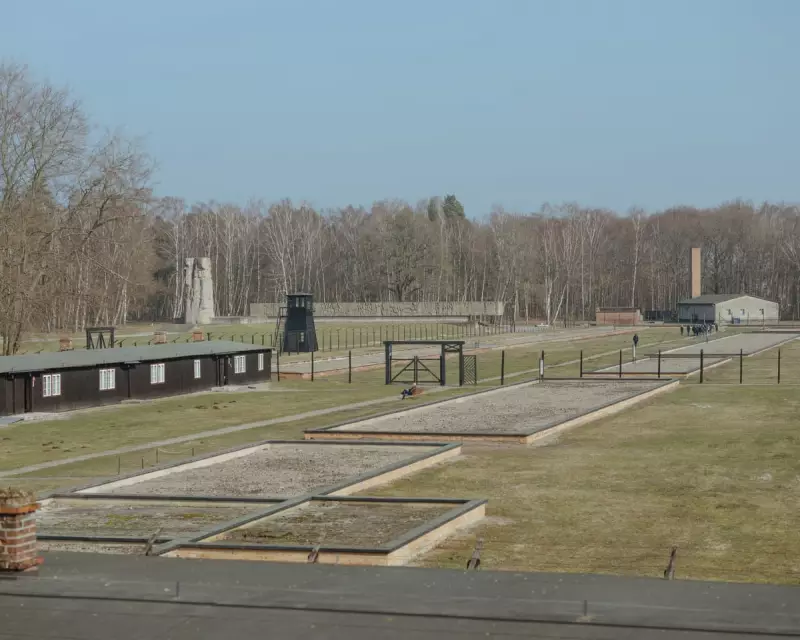
At the age of nine, I accompanied my grandfather to the museum at the former Stutthof concentration camp near Gdańsk in northern Poland. This site, established by the Nazis in the German-annexed territory of the Free City of Danzig, was where he had been imprisoned as a teenager. It marked his first return since the second world war. As we passed through the gate, he was overcome with emotion—crying, shouting, and reconstructing scenes from his past. The trauma resurfaced violently; during his imprisonment, he had been tasked with carrying bodies from the camp infirmary, a burden that haunted him for decades.
The Limitations of Traditional Memorial Sites
Most infamous Nazi death camps, including Stutthof, have been transformed into memorials with the noble aim of educating future generations and preventing a recurrence of such atrocities. However, it is a stark reality that few visitors to Auschwitz-Birkenau, Dachau, or Stutthof experience the profound emotional upheaval my grandfather endured. These sites of memory increasingly struggle to connect with new generations. Visitors often depart with a catalogue of facts, dates, and perpetrator names, yet this knowledge alone does not inherently safeguard against future crimes.
Many institutions inadvertently impart a comforting narrative: evil existed in the past, it was defeated, and we are fundamentally different today. This perspective places evil safely at a distance, allowing visitors to leave feeling morally unscathed. But does this approach truly serve the purpose of remembrance and prevention?

A Cinematic Shift in Perspective
Jonathan Glazer's Oscar-winning film, The Zone of Interest, has prompted a much-needed reevaluation of how we engage with Holocaust history. By depicting the banality of Auschwitz commandant Rudolf Höss's family life in a villa adjacent to the death camp, the film redirects focus from the machinery of killing to the unsettling normality that surrounded it. This narrative shift has already had tangible effects; the villa, once a private residence, has been purchased by the Counter Extremism Project with support from the Auschwitz-Birkenau museum and opened to the public.
Across Europe, similar conversations are unfolding. At Sachsenhausen in Germany, the commandant's house is integrated into educational programmes about perpetrators. In Bełżec, Poland, the former commandant's residence functions as a research centre. These spaces share a common intuition: they confront us not with spectacular evil, but with its proximity and the human capacity for adaptation. They illustrate how violence can coexist with domestic routines—gardens, children, meals—and how easily one can cross a moral boundary.
The Unmarked Villa at Stutthof
At Stutthof, the commandant's villa presents a particularly poignant case. Constructed by prisoners and directly bordering the museum grounds, it now serves as municipal housing for several Polish families. This building stands mere metres from where approximately 65,000 people were murdered, yet it remains unmarked and uncontextualised, indistinguishable from any ordinary residential property.
The current residents are not the issue; their dignity must take precedence over historical arguments, and any actions should avoid causing harm. However, with recent leadership changes at the museum, there is an opportunity for thorough public consultation on whether some form of reflection around this building is feasible. Options might include digital reconstructions, archival research, or limited curated access—or perhaps the honest conclusion that nothing should be done. The very act of questioning is crucial, as it engages with how historical memory resonates in the present.

Learning from David Lynch's Intimate Portrayals of Evil
Beyond Glazer's work, memorial directors could draw inspiration from the late filmmaker David Lynch. His series Twin Peaks disturbed audiences deeply by making evil feel intimate and local, demonstrating how violence lurks within routine and familiarity. In one memorable scene, Dale Cooper looks into a mirror and sees something unsettling reflected back—a simple moment with profound implications. Institutions often falter when they encase evil behind glass, explanations, and distance, whereas Lynch's approach fosters a more visceral connection.
The villa at Stutthof is not merely a metaphor; it is a tangible fact situated next to a site of starvation, beatings, humiliation, and murder. Nearly half of Stutthof's victims were Jewish, yet the camp often functions primarily as a museum of Polish martyrdom, leaving Jewish narratives and artefacts like victims' shoes inadequately represented. Such selective storytelling creates blind spots that are far from neutral.
Mirrors for Contemporary Complicity
In today's world, we are inundated with images of mass killing from Ukraine, Gaza, and Sudan. We scroll through newsfeeds and continue with our daily lives—not indifferent, but increasingly accustomed to horror. The critical question extends beyond identifying perpetrators to examining the role of watchers. The commandants' villas at Auschwitz and Stutthof can serve as mirrors for analysis rather than accusation. While everyone wishes to believe they stand on the side of good, the real challenge lies in recognising the moment when ordinary life slips into complicity.
By embracing lessons from film and rethinking memorial practices, we can foster a more impactful engagement with history—one that not only informs but truly transforms our understanding of evil and our place within its narratives.