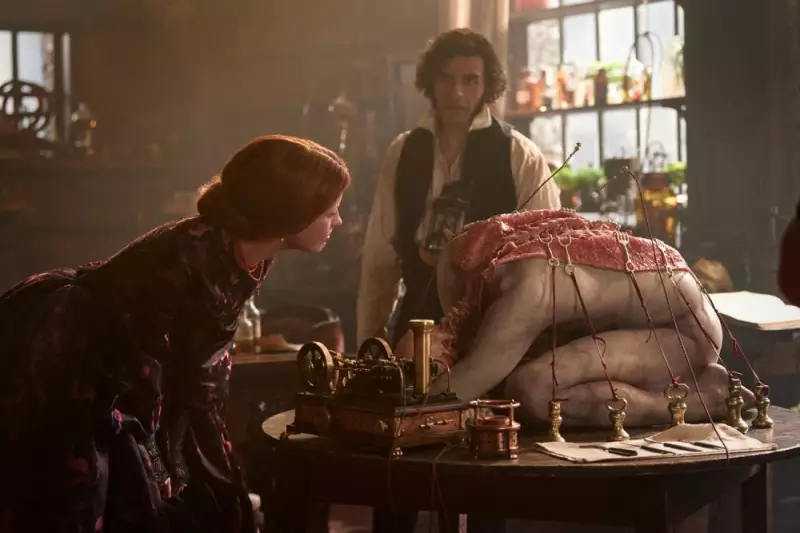
Acclaimed director Guillermo del Toro's latest cinematic masterpiece, Frankenstein, has taken Netflix by storm, captivating audiences with its stunning production design that seamlessly blends body horror, science fiction, and gothic romanticism. The film's immersive early 19th-century world didn't materialise from thin air - it was carefully crafted through extensive research in some of London's most fascinating and lesser-known museums.
The London Locations Behind Frankenstein's World
Production designer Tamara Deverell collaborated closely with del Toro to create the film's rich visual landscape, embarking on what can only be described as a historical treasure hunt across the capital. The team visited five specific London institutions to gather references and absorb the atmosphere that would eventually shape the film's distinctive aesthetic.
Sir John Soane's Museum: A Georgian Treasure Trove
This remarkable museum, founded by 18th-century architect Sir John Soane, provided immense inspiration for the production team. Described as resembling the British Museum compressed into a single Georgian townhouse, the collection features an overwhelming array of Ancient Egyptian antiquities, Roman sculptures, and architectural models. Deverell specifically noted that del Toro directed her to visit this location, and she found every aspect of it creatively stimulating.

Hunterian Museum: Grisly Medical History
Located in Lincoln's Inn Fields and operated by the Royal College of Surgeons, the Hunterian Museum became crucial for developing Victor Frankenstein's scientific tools and laboratory aesthetics. The museum preserves the legacy of 18th-century surgeon John Hunter and contains extraordinary medical artefacts. The production team had the rare opportunity to visit two days before the museum reopened after renovations, witnessing staff arranging preserved body parts in jars. The museum's Evelyn table, a genuine 17th-century anatomical chart, was directly replicated in the film.
Crossness Pumping Station: Victorian Industrial Marvel
This Victorian architectural wonder in Abbey Wood had previously featured in the 2015 film Victor Frankenstein and plays an informational role in del Toro's new interpretation. Deverell was particularly taken with the building's high-arched windows featuring circular motifs that she knew would appeal to del Toro's sensibilities. These distinctive windows were incorporated into Victor's laboratory design. Despite the surrounding area still functioning as an active sewage treatment plant, the historical section proved invaluable for the art department.
Dennis Severs' House: A Georgian Time Capsule
This Grade II-listed Georgian terrace in Spitalfields was transformed by Californian Anglophile Dennis Severs in 1979 into a silent snapshot of London life for a fictional Huguenot family. The house, filled with Georgian and Victorian artefacts, provided essential inspiration for the film's historical period and colour palette. Deverell praised the ambient tones, plaster and wood textures, and the creative use of draped fabrics throughout the property.
The Cutty Sark: Nautical Inspiration
The legendary tea clipper docked at Greenwich, along with the Tall Ship Glenlee in Glasgow, informed the design of Frankenstein's ice-bound vessel, The Horisont. Deverell spent considerable time studying the Cutty Sark, capturing 84 reference photographs during her April 2023 visit that directly contributed to designing the fictional ship's wooden decking, masts, sails, and brass fittings.
Experience the Inspiration Behind the Horror
Guillermo del Toro's Frankenstein is now available to stream worldwide on Netflix. For those captivated by the film's distinctive visual style, these five London museums offer the perfect opportunity to immerse yourself in the historical and aesthetic influences that shaped this horror blockbuster. Each location provides a unique glimpse into the creative process behind one of the year's most visually striking films.