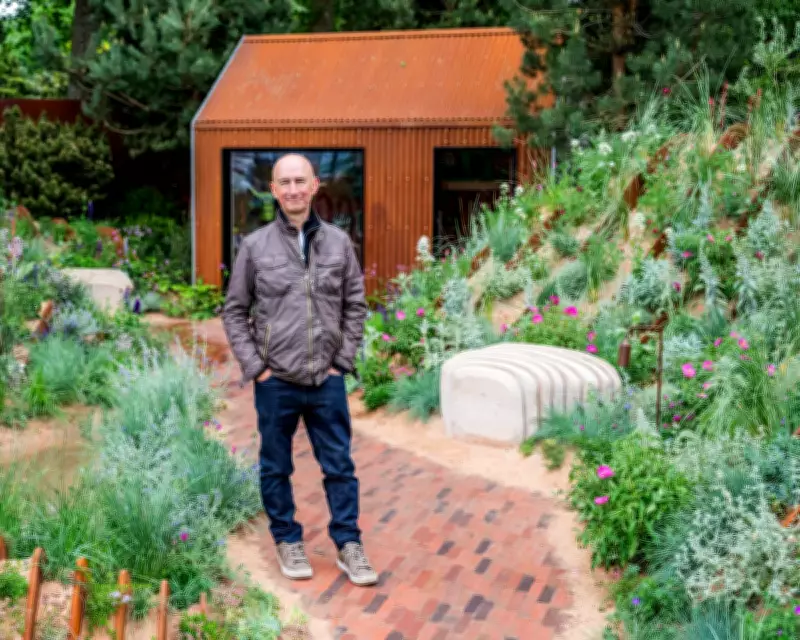
Nigel Dunnett, the influential landscape designer, horticulturist, and educator whose naturalistic schemes transformed public spaces and community gardens, has died aged 63 from cancer. His work, ranging from a flower-filled moat at the Tower of London to a rooftop community garden on the Old Kent Road, demonstrated how urban landscapes could be visually dramatic, ecologically rich, and experientially uplifting.
Pioneering Ecological Design
Dunnett's deep plant knowledge, design acumen, and advocacy of biodiversity helped change how cities, institutions, and public audiences understand landscaping and naturalistic planting. As a pioneer of ecological and sustainable approaches, he saw planting not as a cosmetic afterthought but as a living, evolving part of urban life.
Superbloom at the Tower of London
His Superbloom project for Queen Elizabeth II's platinum jubilee in 2022 involved 20 million carefully selected seeds, including poppies, corn marigolds, and cornflowers, sown in the vast moat around the Tower of London. Inspired by his travels to California in 2019, where a rare superbloom of wildflowers transformed the American south-west, the project generated a vibrant, changing panoply of flowers over the summer months, demonstrating the appeal of seed-based, naturalistic planting at one of the UK's most historically resonant landmarks.

London 2012 Olympic Park
Another major project was the planting design of the Queen Elizabeth Olympic Park for the London 2012 Olympics. This brought large-scale perennial meadows and long-season planting to global attention, becoming a reference point for how public landscapes could cultivate biodiversity and resilience while making an indisputably dramatic visual impact. He also installed a garden for the Queen's diamond jubilee at Buckingham Palace, conceived as a stretched diamond grid, and attended its opening alongside the monarch.
Community and Urban Projects
Dunnett's approach blended horticultural depth with ecological purpose, using perennials, meadows, seed mixes, and layered planting systems to devise landscapes that changed through the seasons. Beyond nationally significant locales, he worked on a more modest scale: gardens, urban parks, and neglected spaces. His planting scheme for Peveril Gardens in Southwark transformed a disused playground above derelict garages into a rooftop community space overlooking a busy roundabout on Old Kent Road.
Working with architects Sanchez Benton and Mexican artist Gabriel Kuri, Dunnett selected plants from around the world to reflect the local community's richness: kniphofias from Africa, nandinas and bergenias from Asia, and astelias from New Zealand. He encouraged self-seeders and blown-in plants, and walls of eye-popping tangerine recalled the buildings of Mexican architect Luis Barragán.
Wider Portfolio
His wider portfolio included designs for Battersea Power Station, the Barbican, and landscaping for the Italian city of Bergamo. A major scheme for Grosvenor Square in Mayfair, introducing flowering lawns and new woodland planting, is due for completion later this summer. He also designed several award-winning RHS Chelsea Flower Show gardens, including the 2025 Hospitalfield Arts Garden, a dunescape inspired by the sand dunes of east Scotland, reflecting current interest in using sand and mineral materials as growing media.
Education and Advocacy
Throughout his career, Dunnett was an energetic advocate of public engagement, becoming well known through broadcasting and television appearances, including regular stints on BBC's Gardeners' World. Born in Ipswich, he was the eldest of three siblings. His parents, Robert and Margaret, were keen gardeners who opened their garden to the public. At age five, they gave him a small patch to cultivate salad plants. He discovered Christopher Lloyd's The Well-Tempered Garden early on, which changed his view of gardening.

His family later moved to Selling, Kent, where a village school nature walk sparked his love of wildflowers. He studied botany at the University of Bristol, graduating in 1984, followed by a master's in landscape ecology at Wye College. In 1994, he joined the University of Sheffield's landscape department, obtaining a PhD in 1996, and became professor of planting design and urban horticulture in 2011. Alongside Professor James Hitchmough, he trained landscape architects and managers, researching green roofs, rain gardens, and ecological monitoring.
Legacy in Sheffield and Beyond
Sheffield was close to his heart. He was involved in the Grey to Green project, converting 1.6 km of former highways into Europe's biggest retrofitted sustainable drainage system, creating the UK's largest urban green street. He said the idea was to make Sheffield a garden city. In 2020, he became an honorary fellow of the Landscape Institute, and in 2023, a Royal Designer for Industry. He also received a lifetime fellowship of the Royal Society of Arts. He wrote several books, including Naturalistic Planting Design (2019) and The Dynamic Landscape (2004, revised 2025).
Recently completed is a roof garden for patients in King's College Hospital's critical care unit, conceived as a ward in a meadow. Dunnett regarded gardening as an expressive process: not just practical or scientific, but artful. He is survived by his second wife, Marta Herrero, an academic, and two children, Alex and Jack, from his first marriage.