Rome Church Angel Restoration Sparks Controversy Over Alleged Meloni Likeness
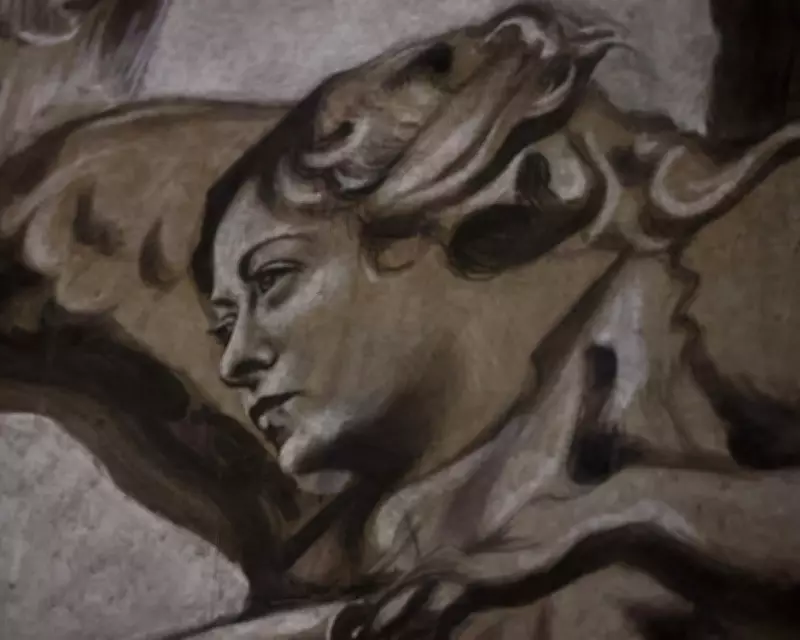
Investigations have been launched by Italy's culture ministry and the Diocese of Rome following claims that a restored angel in a landmark Roman church bears a striking resemblance to Prime Minister Giorgia Meloni. The controversy has created significant ecclesiastical and political uproar, with opposition politicians calling for immediate action.
Newspaper Revelation Triggers Immediate Response
The resemblance was first highlighted by the newspaper La Repubblica, which reported that one of two angels flanking a marble bust of Italy's last king in the Basilica of St Lawrence in Lucina now possessed "a familiar, astonishingly contemporary face." The publication noted that before restoration work began, the angel had featured a generic cherub appearance, but now appeared to depict "the most powerful woman in the country."
This front-page revelation prompted immediate action from cultural authorities. The Ministry of Culture dispatched technicians to inspect the winged figure, instructing them to "establish the nature of the work carried out" and determine appropriate next steps. The swift response underscores the sensitivity surrounding potential political influence in religious art restoration.

Mixed Reactions from Church and Political Figures
Parish priest Daniele Micheletti acknowledged the resemblance when questioned by reporters but expressed uncertainty about its origins. "There is indeed a certain resemblance, but you would have to ask the restorer why it was done that way," he told the Ansa news agency. "I asked for the chapel to be restored exactly as it was, I don't know."
Micheletti explained that restoration became necessary after water damage affected the chapel containing the painting. He emphasized that the original artwork dated from 2000, meaning it fell outside heritage protection regulations. The priest defended the sacristan who performed the restoration, stating "He's not a house painter; he's very good."
Meanwhile, the Diocese of Rome expressed disappointment through vicar general Baldassare Reina, who promised to "immediately initiate the necessary investigations" to identify responsibility. The diocese strongly reiterated that "images of sacred art and Christian tradition cannot be misused or exploited" for purposes beyond supporting liturgical life and prayer.
Political Fallout and Public Reaction
Opposition politicians seized upon the controversy as evidence of potential cultural manipulation. Irene Manzi of the centre-left Partito Democratico declared the situation "unacceptable" and demanded investigation into possible heritage regulation breaches. Members of the Five Star Movement warned against allowing "art and culture to risk becoming a tool for propaganda" regardless of whose likeness might be depicted.
Prime Minister Meloni herself responded with apparent amusement, posting the restored angel's image on Instagram with the caption: "No, I definitely do not look like an angel," accompanied by laughter. Her lighthearted approach contrasted with the serious institutional responses unfolding around her.
The Restorer's Perspective and Historical Context
Bruno Valentinetti, the octogenarian pensioner who performed the restoration, spent two years on the project and completed work approximately one year ago. He insisted he had simply returned the paintings to their original state, explaining that "In restoration, you strip away the layers and the original design reappears."
Valentinetti vehemently denied any intentional resemblance to the prime minister, stating "It's not Meloni. I restored the faces to how they were 25 years ago." He performed the work voluntarily as gratitude to the parish priest for hosting him and rejected suggestions of political motivation, noting he couldn't recall when he last voted.

Despite the controversy, Valentinetti observed one positive outcome: "In the past years we've never seen so many people in this church." The increased attention has brought unprecedented visitors to the fourth-century basilica, creating an unexpected cultural moment from what began as routine restoration work.
The situation continues to develop as investigations proceed, highlighting ongoing tensions between artistic restoration, cultural heritage protection, and potential political symbolism in Italy's rich religious landscape.