Samurai Exhibition Review: Japan's Lethal Warrior Class Revealed in All Their Glory
The British Museum in London presents a scintillating journey into the world of Japan's pre-modern warrior elite with its Samurai exhibition, running from 3 February to 4 May. This extraordinary show brilliantly captures the theatrical and artistic dimensions of a chivalrous yet brutal epoch, where glamour meets lethality in stunning displays of armour, weaponry and art.
Armour That Breathes With Menace
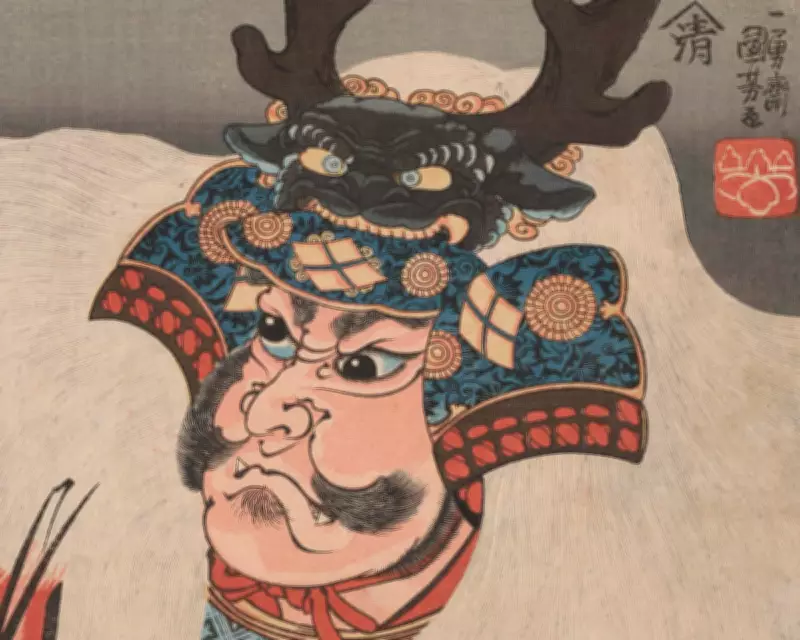
Visitors are immediately struck by the vital, electric presence of samurai armour, which seems almost alive despite being empty. The suits feature grimacing, moustached black face masks and full-body plating of metal and fabric, with helmet crests incorporating eagles, dragons, goblins and even a clenched metal fist emerging from one warrior's head. This intensity creates an eerie feeling that the warriors' ghosts still inhabit their carapaces.
One particularly menacing 17th-century suit of armour with a bullet-proof cuirass has been lent by the Royal Collection. Originally a gift to James VI of Scotland and I of England from a son of the second shōgun of the Tokugawa dynasty, this opulently crafted piece of lacquer, silk, deerskin and metal served as a barbed diplomatic message to Britain: mess with Japan at your peril.

The Artistry of Bloodshed
No culture has ever invested quite as much creativity into blood-lust as Japan did from the 13th century, when samurai courage repelled Mongol invaders, until the class's abolition in the 1800s. The exhibition showcases this through extraordinary battle scenes depicted in painted screens, scrolls and books.
In Imamura Zuigaku Yoshitsugu's battle scene, a rider studded with arrows remains protected by thick armour while his horse bleeds from an arrow wound. Nearby, a warrior lies in glorious armour rendered useless by decapitation, demonstrating the purpose of the elegantly curved blades displayed throughout the exhibition.
Beyond Warfare: Love, Peace and Sensibility
The British Museum's exhibition doesn't merely honour the art of war but embraces love, peace and artistic patronage. We encounter the warlord with a song in his heart through Kano Eishun's 19th-century painting of a samurai riding among orange blossoms, literally stopping to smell the flowers.
Samurai nobles were the most prestigious clients of Edo's pleasure quarter, the "floating world," as depicted in Chōbunsai Eishi's 1790s handscroll Twelve Erotic Scenes in Edo. This shunga art piece shows a samurai's silhouette making love to a courtesan while women caress his unsheathed sword, capturing the perverse glamour of samurai culture where violence meets sexuality.
The End of an Era and Modern Echoes
The exhibition's final sections explore the abolition of the samurai elite as Japan modernised in the 1800s, with photographs of the last samurai marking the passing of something wondrous. The 20th century's mechanised mass warfare left no place for myth or chivalry, especially after the atomic bombs dropped on Hiroshima and Nagasaki.
The finale includes a life-sized Darth Vader presented as a modern-day samurai, though arguably less scary than the originals. More poignant is the display on Yukio Mishima, whose novels explored samurai violence and passion in modern society before his ritual suicide by seppuku.
A Lasting Legacy
The samurai emerge here as far more than mere killers – they were patrons of the arts, sensitive to nature, and masters of civilised ways. Yet the exhibition's true power lies in those empty suits of armour that dominate the space, their steel, silk and lacquer creating portraits more expressive than any painting.
This extraordinary encounter at the British Museum reveals how samurai armour embodies a merciless truth about the human condition and what it can become when artistry meets annihilation.