The Great Museum Debate: Should International Tourists Pay for Entry?
A recent independent review of Arts Council England has ignited a fierce debate across the cultural sector, proposing that international tourists should be charged entry fees to help save Britain's financially struggling museums. This controversial suggestion has divided experts, with strong arguments on both sides regarding funding models, cultural accessibility, and practical implementation.
The Case for Charging: Financial Sustainability First
Mark Brown, co-founder of LetMeShowYouLondon.com, presents a compelling argument for implementing tourist charges. His business hosts thousands of visitors annually at London's museums and galleries, yet he supports the change because "the free entry model isn't working." Brown points to the National Gallery's predicted £8.2 million deficit for 2026 as evidence of systemic funding problems.
"The concept of visitors paying to access museums and fund their upkeep is widely accepted internationally," Brown emphasizes, noting that both the Louvre in Paris and the Metropolitan Museum of Art in New York already charge non-residents. He argues that Britain's free-for-all approach has become an outlier in the global museum landscape.

V&A director Tristram Hunt supports a visitor levy, stating that government funding "has not kept pace with the costs museums face." Brown proposes a practical solution: a modest tourist tax collected at booking, ringfenced specifically for the cultural sector, with transparent accounting and clear signage showing what improvements it funds.
"Paris and Amsterdam already implement similar tourist taxes," Brown notes. "Combining this with existing funding could preserve free entry for residents while ensuring these institutions can keep their lights on."
The Case Against: Cultural Access as a Right
Bernard Donoghue OBE, director of the Association of Leading Visitor Attractions, presents a passionate counterargument. He reminds us that free access to national museums and galleries was implemented by a Labour government 25 years ago and has been "a huge success" that makes the UK a must-visit destination.
"Access to culture is a right, not a privilege," Donoghue asserts. "And shouldn't the people of the world have the right to see their own things free of charge?" He highlights that many artifacts in UK museums come from around the globe and were acquired with promises that they would remain freely accessible.
Donoghue raises practical concerns about implementation, asking: "Will we require you to bring a passport when you visit a gallery?" He also notes economic considerations, pointing out that the UK is already "one of the most taxed visitor destinations in the world" with 20% VAT, Air Passenger Duty, and proposed overnight visitor levies.
"If we charge for museum entry, we will lose visitors and competitiveness," Donoghue warns. "Our cultural assets are a gift to the world, and limiting access to only those who can afford it means everyone loses."
Practical Challenges and Moral Questions
Both debaters acknowledge significant logistical hurdles. Brown questions how his Czech wife, who has lived in the UK for 15 years, pays taxes, and runs a business, would prove she's not an international tourist. Similar questions arise for British expats visiting from abroad or international students studying at UK universities.
Labour peer Margaret Hodge, who authored the review, has clarified that any charging system would require "the introduction of a universal ID card system"—a substantial caveate that adds complexity to implementation.
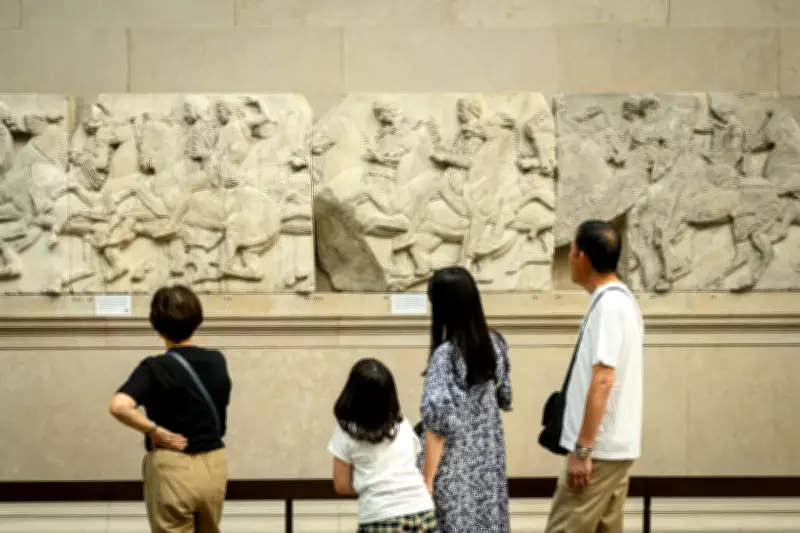
The debate also touches on deeper moral questions. Donoghue raises the provocative example of charging Greek visitors to see the Elgin Marbles, highlighting how such policies could reopen historical controversies about artifact ownership and display.
The Verdict: A Complex Balancing Act
The arts sector's financial struggles are longstanding, and efforts to find sustainable funding solutions are undoubtedly necessary. However, the proposal to charge international tourists presents significant challenges beyond mere revenue generation.

While the financial argument has merit—particularly as museums face rising costs and stagnant government funding—the practical implementation problems are substantial. The potential damage to the UK's reputation as a culturally accessible destination and the moral questions about charging for global heritage cannot be ignored.
As this debate continues, what remains clear is that Britain's museums need sustainable funding solutions that preserve both their financial viability and their role as freely accessible cultural treasures. The conversation has only just begun, but it strikes at the heart of what we value in our cultural institutions and how we choose to support them for future generations.