From Brontë to Ballard: The Best Songs Inspired by Literature Ranked
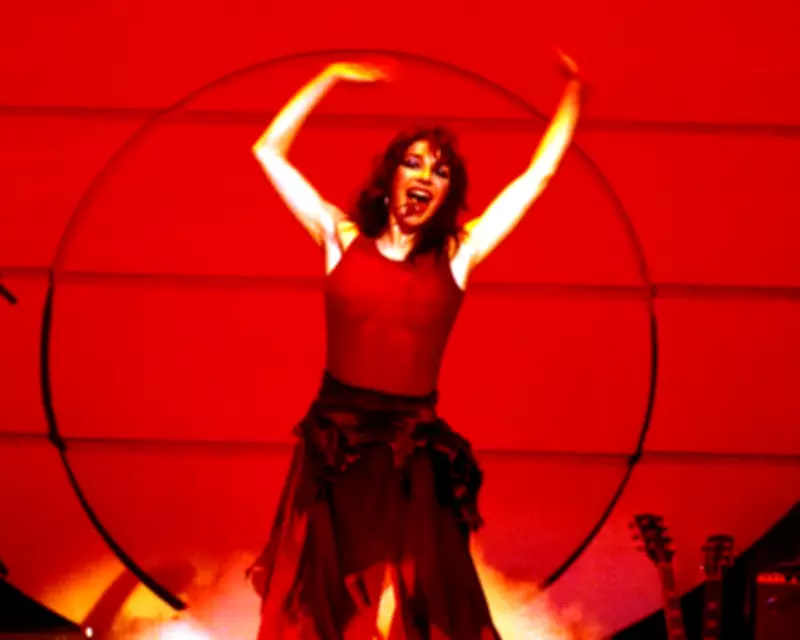
As Kate Bush's iconic Wuthering Heights experiences renewed popularity through recent film adaptations, we embark on a comprehensive exploration of the surprising, seditious, and sensual ways in which prose has profoundly influenced popular music. This definitive ranking celebrates twenty remarkable songs that transformed literary inspiration into musical masterpieces.
20. Katy Perry – Firework (2010)
The oeuvre of Katy Perry occasionally reveals profoundly unexpected literary connections. While California Gurls pays homage to Big Star's September Gurls, Firework draws direct inspiration from Jack Kerouac's seminal novel On the Road. The song specifically references Kerouac's evocative line about individuals who "burn like fabulous yellow roman candles," transforming Beat Generation philosophy into mainstream pop anthem.
19. Japanese Breakfast – Magic Mountain (2025)
Michelle Zauner, a bestselling author in her own right, channels multiple literary giants through her musical project Japanese Breakfast. Her latest album references Virginia Woolf, John Cheever, and Thomas Mann's monumental sanatorium-based novel The Magic Mountain. The album's sweet yet melancholic acoustic closing track employs Mann's imagery to explore Zauner's complex relationship with fame and artistic creativity.

18. Bomb the Bass – Bug Powder Dust (1994)
While William Burroughs' influence permeates numerous musical works, from Duran Duran's Wild Boys to Throbbing Gristle's experimental compositions, Bug Powder Dust stands as arguably the funkiest homage. Justin Warfield delivers a Naked Lunch-themed rap over a writhing bass line and immense breakbeat, creating a sonic landscape worthy of Burroughs' transgressive literature.
17. Taylor Swift – The Bolter (2024)
Taylor Swift has embraced her role as "your favorite English teacher" through increasingly sophisticated literary references. The expanded edition of The Tortured Poets Department features The Bolter, inspired by a recurring villain in Nancy Mitford's novels who was herself based on five-times-married British aristocrat Idina Sackville. Swift identifies with this complex character, weaving literary archetypes into contemporary pop narrative.
16. Killer Mike – Willie Burke Sherwood (2012)
Hip-hop contains abundant literary allusions, but Willie Burke Sherwood represents a particularly skillful integration. Killer Mike's first collaboration with El-P skillfully entwines references to William Golding's Lord of the Flies throughout an autobiographical saga of growing up "addicted to literature" in challenging urban circumstances.
15. The Cure – Charlotte Sometimes (1981)
While The Cure's Killing an Arab draws from Albert Camus, the marvelous goth-pop masterpiece Charlotte Sometimes takes its title and thematic essence from Penelope Farmer's splendidly creepy 1969 children's novel. The story clearly occupied Robert Smith's creative consciousness, also inspiring the band's 1984 album track The Empty World.
14. Black Star – Thieves in the Night (1998)
In the sleeve notes of Mos Def and Talib Kweli's debut album as Black Star, Kweli writes about discovering Toni Morrison's groundbreaking novel The Bluest Eye. The chorus of Thieves in the Night essentially adapts a passage from Morrison's work, creating a musically mellow yet lyrically barbed exploration of racial identity and hip-hop's perpetuation of stereotypes.
13. Nirvana – Scentless Apprentice (1993)
At the height of his unhappy celebrity, Kurt Cobain identified profoundly with the anti-hero of Patrick Süskind's Perfume, a character devoured by his own acolytes. The frankly terrifying repetition of "go away" in Scentless Apprentice captures the sound of someone at their absolute limit, translating literary alienation into grunge masterpiece.

12. Radiohead – Street Spirit (Fade Out) (1995)
Ben Okri's Booker-winning novel The Famished Road inspired the drift of disturbing, dream-like images on The Bends' closing track. This artistic breakthrough pointed toward OK Computer while striking a rare optimistic note at its conclusion with the poignant line: "Immerse your soul in love."
11. Rosalía – Pienso en Tu Mirá (2018)
Rosalía established her distinctive artistic identity from the outset by basing every track on her first album of original material on chapters from the 13th-century Occitan romance Flamenca. Pienso en Tu Mirá's amazing confection of flamenco rhythms, dancefloor bass, and spectral pop corresponds to chapter three of this medieval literary work.
10. David Bowie – We Are the Dead (1974)
David Bowie famously attempted to create a musical based on George Orwell's Nineteen Eighty-Four, though the writer's estate refused permission. Among the fragments that survived on Diamond Dogs, We Are the Dead stands out as the most thrillingly diseased, decadent-sounding five minutes the glam era produced.
9. The Normal – Warm Leatherette (1978)
JG Ballard's dystopian science fiction heavily influenced post-punk, but Daniel Miller's groundbreaking single Warm Leatherette represents the most pointed adaptation. Inspired by Ballard's 1973 novel Crash, this unsettling yet danceable track perfectly captures the novel's disturbingly cold treatment of violence, horror, and sexual arousal.
8. Kendrick Lamar – King Kunta (2015)
King Kunta delivers a masterclass in African American literature compressed into four minutes of firecracker rapping set to superlatively funky backing. While the title references Alex Haley's 1976 novel Roots, the lyrics diverge into allusions to Ralph Ellison's Invisible Man and Chinua Achebe's Things Fall Apart.
7. Magazine – A Song From Under the Floorboards (1980)
Some songs maintain only tangential connections to their literary inspirations, but Magazine's masterpiece of tense, brooding post-punk existential dread draws so clearly from Dostoevsky's novella Notes From Underground that the Russian author arguably deserves a co-writing credit. Compare their respective opening lines for undeniable parallels.
6. Kate Bush – The Sensual World (1989)
While Wuthering Heights remains better known, The Sensual World equals its brilliance in rendering classic literature into musical form. Inspired by James Joyce's Ulysses, Bush translated Molly Bloom's reverie into a beautiful, drowsy, amatory song after being denied rights to Joyce's actual text. Remarkably, this version surpasses her subsequent authorized adaptation.
5. Joni Mitchell – Both Sides Now (1969)
The lyrics of this timeless classic were sparked by Mitchell reading Saul Bellow's 1959 novel Henderson the Rain King during a flight. A passage about clouds inspired the opening verses, creating a song Mitchell has grown into throughout her career. For the most emotionally impactful version, hear her perform it at age 79 on her Live at Newport album.
4. Jefferson Airplane – White Rabbit (1967)
Lewis Carroll's Alice's Adventures in Wonderland transforms into one of the jewels of parent-scaring American psychedelia through White Rabbit. In a slightly foreboding tone, the song jumbles Carroll's imagery to evoke a jarring, brain-scrambling departure from normality, effectively presenting the Merry Pranksters' challenge in musical form.
3. Joy Division – Dead Souls (1980)
The late Ian Curtis's literary interests ranged from Sven Hassel to Kafka, Burroughs, and Ballard, all of which permeated his songwriting. On Dead Souls, the titular deceased of Nikolai Gogol's satirical novel crowd into Curtis's consciousness, "calling" him against his will as he desperately pleads, "Someone take these dreams away," with chilling effect.
2. The Velvet Underground – Venus in Furs (1967)
Lou Reed's stated ambition to invest rock'n'roll with literary quality achieved its pinnacle with Venus in Furs, inspired by Leopold Von Sacher-Masoch's infamous 1870 novel. A wall of detuned guitar and scraping, droning viola creates music that is simultaneously menacing and hypnotically alluring, perfectly embodying its literary subject matter.
1. The Rolling Stones – Sympathy for the Devil (1968)
Marianne Faithfull's suggestion that Mick Jagger read Mikhail Bulgakov's The Master and Margarita may represent the most fortuitous literary recommendation in rock history. The resulting song magnificently amplifies the malevolence and amorality of Jagger's lyric through music featuring samba-derived rhythms and ecstatic whoops. The song proved remarkably timely as psychedelic optimism eroded and the world darkened, with Jagger pluralizing a line about President Kennedy's assassination to reflect his brother Bobby's murder. Sympathy for the Devil provided the perfect soundtrack to the curdling of the 1960s and remains incredible fifty-eight years later.
This exploration reveals the profound and enduring connection between literary inspiration and musical creation, demonstrating how great writing continues to resonate through popular culture across generations and genres.