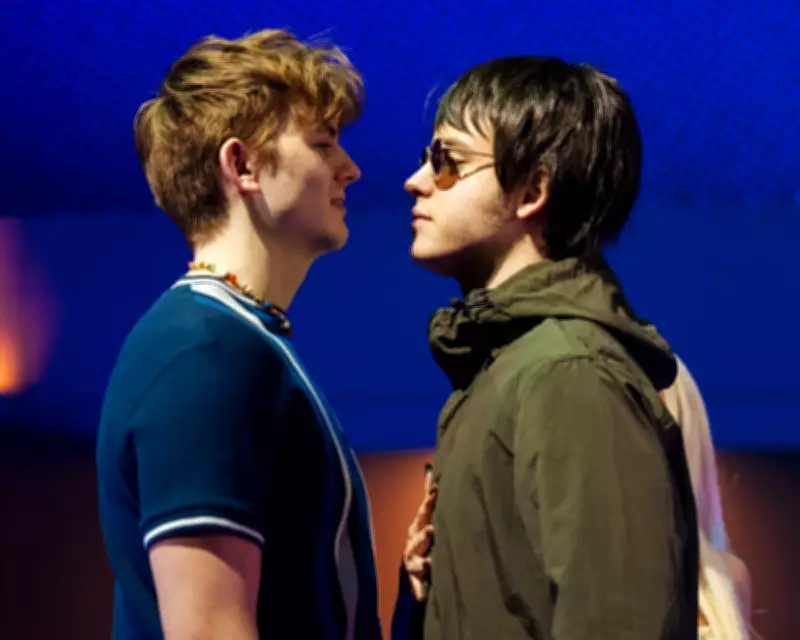
The Battle: A Theatrical Journey Through Britpop's Defining Rivalry
In the sweltering summer of 1995, British popular culture witnessed one of its most memorable confrontations: the chart battle between Blur and Oasis for the coveted number one spot. This cultural moment, steeped in class tensions and regional divides, has now been resurrected in John Niven's new theatrical production, The Battle, currently captivating audiences at Birmingham Rep before its upcoming transfer to Manchester's Opera House.
Class Warfare on the Charts
The production vividly captures how the Blur-Oasis rivalry became a proxy for Britain's enduring class divisions. As Niven's script cleverly illustrates through sharp dialogue and cultural signifiers, the media framed the conflict as "art-school trendies versus working-class heroes" or "clean-cut middle-class southern boys" battling "rebellious working-class northern lads." This class consciousness permeated every aspect of the rivalry, from musical styles to personal relationships.
One particularly telling moment in the play features Noel Gallagher dismissing Damon Albarn's culinary preferences with characteristic bluntness: "Her and Damon, right, they've got degrees and that. They're sat round reading the Sunday Times and making fucking risotto or whatever." This seemingly trivial detail becomes a running joke that encapsulates the cultural divide between the two bands.

The 1995 Chart Battle: Strategy Over Artistry
The actual chart confrontation centered on two singles that many critics consider far from either band's best work. Blur's "Country House" concealed lyrics about depression beneath its cheerful oompah-oompah arrangement, while Oasis's "Roll With It" combined Beatles-inspired energy with what Albarn mockingly described as "the leaden vibes of Status Quo." Yet artistic merit became secondary to commercial strategy and public perception.
The battle commenced when Blur's management learned Oasis planned to release "Roll With It" a week before "Country House," potentially blocking their path to number one. As Andy Ross, co-founder of Blur's record label Food, later explained: "We thought they were being mad. But the thing is, a No 1 record tends to have a better-than-evens chance of being No 1 the week after... We had to move the release date." This decision transformed what might have been separate successes into a head-to-head confrontation that captured the nation's imagination.
Behind the Scenes of Britpop's Civil War
The production draws on Niven's experience as a former musician and music industry insider, offering authentic insights into the period's excesses and tensions. The play portrays how the initial friendship between the bands curdled into "poisonous loathing," particularly on the Oasis side. In one shocking real-life incident that the play references, Noel Gallagher told an interviewer: "The bass player and singer, I hope the pair of them catch Aids and die, cos I fuckin' hate them two."
Despite such animosity, the rivalry remained largely pantomimic compared to today's polarized climate. As one character observes in the play: "At this point, it's Israel/Palestine. Rangers/Celtic. No one remembers how it got started. All they know is, 'I like this team and I don't like that team.' The whole country's gone fucking mad."
Cultural Legacy and Contemporary Resonance
The Battle suggests this musical confrontation foreshadowed Britain's later divisions, from the Brexit referendum to contemporary culture wars. The play presents the Blur-Oasis clash as a comparatively innocent moment when such differences could be played out through pop music rather than political polarization.
While Blur won the initial battle with "Country House" selling 274,000 copies to "Roll With It"'s 216,000, Oasis ultimately won the war. By year's end, "Wonderwall" had become an anthem, and "(What's the Story) Morning Glory?" achieved massive international success that eluded Blur. As Alex James later reflected: "I remember Damon coming round to my flat one evening, with real fear in his eyes... He was the uncoolest man in Britain at that point."

Theatrical Interpretation and Historical Accuracy
The production features standout performances from Paddy Stafford as the furrow-browed, purposeful Noel Gallagher and George Usher as the unfiltered, impulsive Liam Gallagher. While some casting choices and character interpretations may surprise those familiar with the real-life figures, the play successfully captures the breathless, cartoon-strip energy of the era.
As audiences leave the theater, they're left contemplating how such a cultural battle could never happen in today's fragmented media landscape. The Battle serves as both a nostalgic trip through Britpop history and a meditation on how Britain's cultural divisions have evolved over three decades, reminding us of a time when the nation's tensions could be expressed through something as simple as a race for the number one single.