

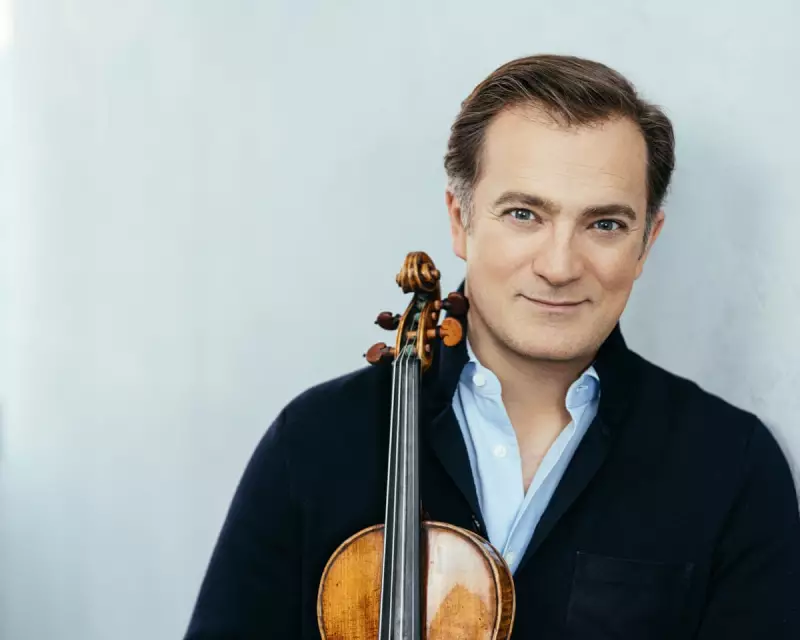
Renaud Capuçon's Reflective Bach Recording Celebrates a Milestone Birthday
To commemorate his 50th birthday, acclaimed French violinist Renaud Capuçon has released a significant new recording of Johann Sebastian Bach's complete solo sonatas and partitas on the prestigious Deutsche Grammophon label. These are works that Capuçon has known intimately since his earliest musical studies, and his mature interpretations reveal both deep familiarity and fresh insight.
Balancing Modern Sensibility with Historical Awareness
Capuçon's performances strike a remarkable balance between contemporary violin tone and an alert understanding of period performance practice. His sound possesses a generous, warm body, illuminated from within by a measured use of vibrato that caresses the ear without overwhelming Bach's intricate counterpoint. This approach demonstrates a thoughtful engagement with current scholarly perspectives on how this music might originally have been heard.
The violinist maintains steady tempi throughout the recording, adopting a occasionally leisurely pace in slower movements that allows the music's architecture to breathe. His phrasing feels instinctual and natural, with particularly clear articulation in Bach's complex fugal passages. Capuçon handles the technical demands of the various doubles and prestos with sure-footed confidence, yet he consistently avoids any sense of showy virtuosity for its own sake.

Intimacy and Lightness in the Mighty Chaconne
One of the recording's highlights is Capuçon's interpretation of the monumental chaconne that concludes the D minor partita. Here, he finds a reflective lightness and intimacy that draws the listener in, revealing the movement's profound emotional depth without heavy-handed drama. It is a performance that feels both personal and universally communicative.
When Capuçon does engage with more dramatic elements—such as in the bourrée of the first partita or the concluding allegro of the second sonata—he digs deep into the strings, producing a richer, more robust sound than historical instruments might typically yield. Yet even in these moments, his musical approach remains tastefully restrained, with delicate touches that leaven the cut and thrust of Bach's writing.
A Persuasive and Elegant Musical Statement
Throughout these performances, Capuçon demonstrates a persuasive musical intelligence. His decoration is always tasteful, his sound consistently elegant, and his emotional engagement feels entirely earnest. These are readings that manage to hit all the right expressive buttons while maintaining intellectual integrity.
This recording stands as a significant milestone in Capuçon's distinguished career, offering both longtime admirers and new listeners a chance to experience Bach's solo violin masterworks through the lens of a mature artist at the height of his powers. The album serves not only as a birthday celebration but as a substantial contribution to the Bach discography, one that will likely be appreciated for its warmth, restraint, and reflective depth.






