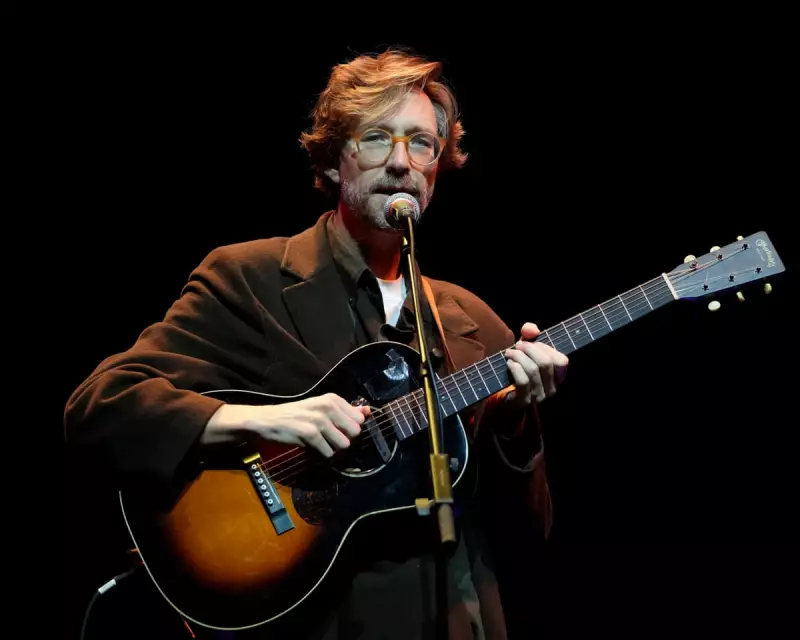
Erlend Øye: The Cosmopolitan Sound of a Norwegian Wanderer
If you were to chart the evolution of European music over the past few decades, one lanky, bespectacled figure would consistently appear across the map. Erlend Øye, the Norwegian musician, has woven his way through diverse scenes, from London's indie circles to Berlin's electronic clubs and Sicily's chamber pop revival. His journey is a testament to artistic restlessness and cross-cultural connection.
A Career Forged Across Continents
Øye first emerged in the mid-90s with his band Peachfuzz, handing out flyers in London. By the early 2000s, he was fronting the folk duo Kings of Convenience, helping to spearhead the new acoustic movement. However, when his bandmate Eirik Glambek Bøe opted to study psychology in Bergen, Øye's path diverged. "Eirik was never into music as a way of living," Øye explains via video call from a beach cabin in Mexico. "He was just into it as a nice thing to be doing. I was into making it a career."
This drive led him to Berlin, a city he describes as a "wasteland for actual played music" at the time, where many turned to DJing rather than performance. There, he connected with Polish DJ Marcin Öz, keyboardist Daniel Nentwig, and drummer Sebastian Maschat, forming The Whitest Boy Alive. Their 2006 debut album, Dreams, blended melancholy indie pop with deep house rhythms, creating a sound that resonated deeply with audiences.

The Whitest Boy Alive's Global Resonance
Despite a lukewarm reception from some Anglophone critics—The Guardian compared them to "Jamiroquai's most soulless moments"—the band found fervent fans elsewhere. "It's Mexico, for sure," Øye says, recalling a 2021 festival where 8,000 fans sang every word. Their music, often infused with non-European rhythms like Brazilian bossa nova and reggaeton, transcended borders.
The band's name, born from a self-effacing quip, ironically hindered their early US success due to racial sensitivities. Yet, their track 1517, a love song about the Reformation featured in a FIFA video game, showcases their unique blend of historical themes and danceable beats.
Challenges and Reunion
The Whitest Boy Alive disbanded in 2014, citing internal strife and creative constraints. Øye reflects on their "too much democracy" approach as a "golden cage." Additionally, he developed tinnitus and hyperacusis, making loud environments like rehearsal studios challenging. "It's a constant peep," he says stoically, half-jokingly blaming a 1997 Swervedriver gig in Bergen.
Now, the band is reuniting for a tour celebrating Dreams' 20th anniversary, with stops in Potsdam, Paris, and Copenhagen. Øye notes, "The main reason is no one else can play our music. It's still only The Whitest Boy Alive who can do The Whitest Boy Alive."
Norway: A Complex Homeland
Øye's relationship with his native Norway is nuanced. He criticises its "barren, lifeless, grey" landscapes, quipping, "If you grow up in Norway, almost any other country is an improvement." Yet, he praises Norwegian egalitarianism, citing the Law of Jante—a cultural code emphasising humility—while celebrating exceptions like footballer Erling Haaland. "Finally we have a good team, because we're allowing people to be a bit different," he says.
Living part-time in Syracuse, Sicily, since the early 2010s, Øye has found a greener, more vibrant environment. His career, marked by constant movement, reflects a desire to escape Norway's constraints and connect globally. As The Whitest Boy Alive returns to the stage, Øye's journey underscores the power of music to bridge continents and cultures, proving that sometimes, leaving home is the key to finding your sound.