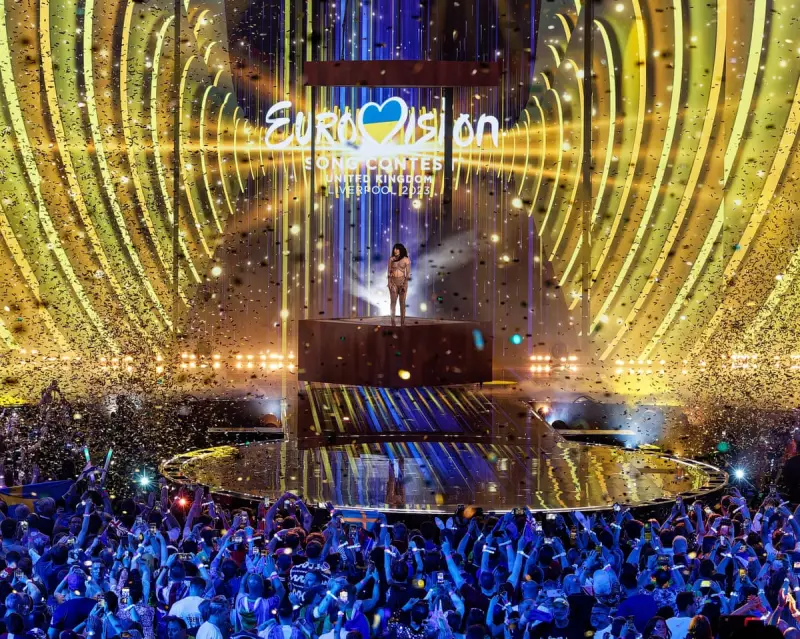
The Eurovision Song Contest will embark on its first-ever live tour this summer to celebrate its landmark 70th anniversary, organisers have announced. The celebratory tour comes as the iconic music competition grapples with significant political fallout, with five national broadcasters boycotting next year's event over Israel's inclusion.
A Tour Celebrating Seven Decades of Music
The European Broadcasting Union (EBU) confirmed the historic tour on Thursday. The event will see "iconic Eurovision performers" join artists set to compete in the 2026 contest for a series of concerts across ten European cities. The tour is scheduled to run from 15 June to 2 July, following the 2026 contest final in Vienna on 16 May.
London and Paris are among the confirmed host cities for the tour, which the EBU hailed as a major celebration. "Artists will perform their own Eurovision song contest entries plus cover versions of their favourite songs from the contest’s 70-year history," the union stated, promising a show dedicated to the contest's legacy and its global fan community.

Political Boycott Shadows the Celebration
The announcement of the anniversary tour is set against a backdrop of controversy. The upcoming 2026 contest in Vienna will proceed with only 35 participating countries, the lowest number since the format was expanded in 2004. This follows a coordinated boycott announced in December by public broadcasters from Ireland, Spain, Iceland, the Netherlands, and Slovenia.
The boycott is a direct response to Israel's ongoing military actions in Gaza. Irish broadcaster RTÉ cited "the appalling loss of lives in Gaza and the humanitarian crisis there" as its reason for withdrawing. The political tension was further highlighted on Monday when the draw placed Israel in the first semi-final on 12 May.
The controversy has also drawn in past winners. The 2024 champion, Nemo, returned their trophy in protest. More recently, 2014 winner Conchita Wurst stated they would not participate in future Eurovision events, calling it a "personal decision." Meanwhile, the 2025 winner, Austria's JJ (Johannes Pietsch), previously called for a contest "without Israel" before apologising for the ensuing uproar.
Mixed Signals for the Contest's Future
Despite the political storm and a notable drop in online viewership for the semi-final draw, the EBU reports strong commercial interest. The union rejoiced over a "record sellout of tickets" for the 2026 contest following the launch of online sales. Israeli broadcaster Kan has welcomed its continued inclusion, a stance supported by Israel's President, Isaac Herzog, who asserted Israel "deserves to be represented on every stage around the world."
The inaugural 70th-anniversary tour represents a bold new venture for Eurovision, aiming to unite fans through music while the institution itself navigates one of its most politically charged periods in decades.