Rhiannon Giddens and Francesco Turrisi Deliver a Genre-Defying Performance at London's Wigmore Hall
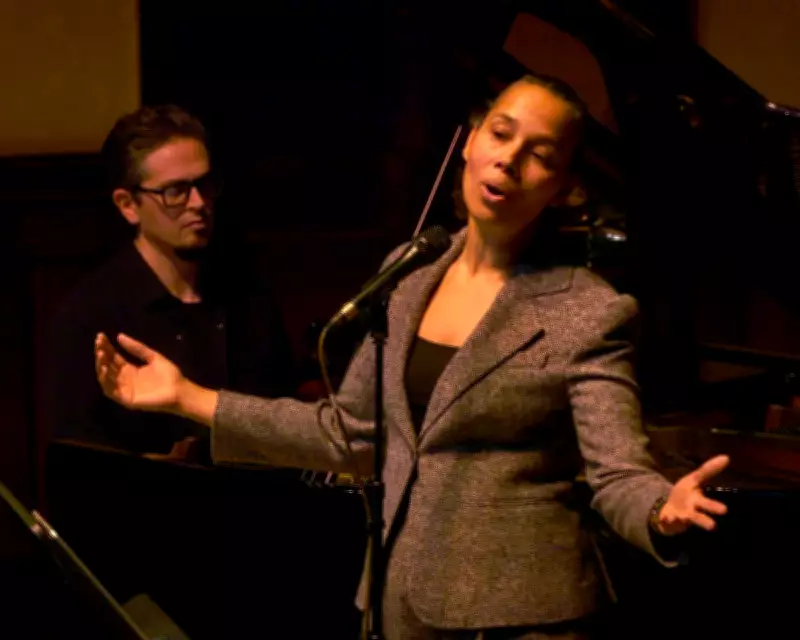
In a sold-out concert at London's prestigious Wigmore Hall, Grammy-winning artist Rhiannon Giddens and pianist Francesco Turrisi presented a recital that challenged traditional boundaries. The duo, known for their innovative collaborations, explored a provocative question: what might a contemporary recital look like when reimagined through their unique musical lens?
An Eclectic Fusion of Musical Styles
The performance was a masterful blend of diverse genres, seamlessly weaving together folk, opera, jazz, pop, and classical elements. Giddens, a multi-award-winning singer and instrumentalist who has received both a MacArthur genius grant and a Pulitzer Prize, described the evening as honouring composers who don't often get called composers. This theme resonated throughout the programme, which celebrated overlooked and anonymous voices alongside established masters.
Turrisi set the tone early with a playful remark: Hopefully you didn't come for banjos and guitars, eliciting laughter from the audience. The concert hall had filled to capacity based solely on the artists' reputations, with no prior indication of the repertoire, underscoring the duo's drawing power.

A Journey Through Musical History and Emotion
The recital took listeners on a global journey, moving from 1930s Harlem to 1960s Italy, with stops for Gaelic lullabies and original compositions. Giddens demonstrated her remarkable versatility, transforming her delivery for each piece. Her stage presence, marked by a palpable tension that contrasted with Turrisi's fluid ease, highlighted her status as the ultimate performer.
Highlights included a deeply emotional rendition of Isolina Carrillo's Dos Gardenias, where Giddens' voice took on a raw, textured quality, followed by the pure, flowing lines of The Trees on the Mountains from Carlisle Floyd's opera Susannah. In Ethel Waters' politically charged Underneath the Harlem Moon, Giddens pushed aside her microphone stand, her body contorting as her voice became gritty and powerful, evoking themes of whiskey and rage.
Intelligent Accompaniment and Musical Dialogue
Turrisi's piano accompaniments were equally inventive, incorporating jazz and baroque influences to create a rich musical tapestry. Their co-written piece, Non c'e Niente da Fare, reimagined a Purcell or Strozzi lament in modern guise, while Bruno Martino's Estate transformed bossa nova with echoes of Chopin's Raindrop Prelude, linking its summer-sad narrator to Schubert's Winterreise.
This was big, generous, provocative music-making on a small stage, raising thoughtful questions about authorship and context in music. By placing balladeers, anonymous authors, and forgotten voices alongside Beethoven and Bach, Giddens and Turrisi made a compelling case for a more inclusive musical canon.
The residency continues at Wigmore Hall, with the next concert scheduled for 27 May, promising further explorations of their innovative artistic vision.