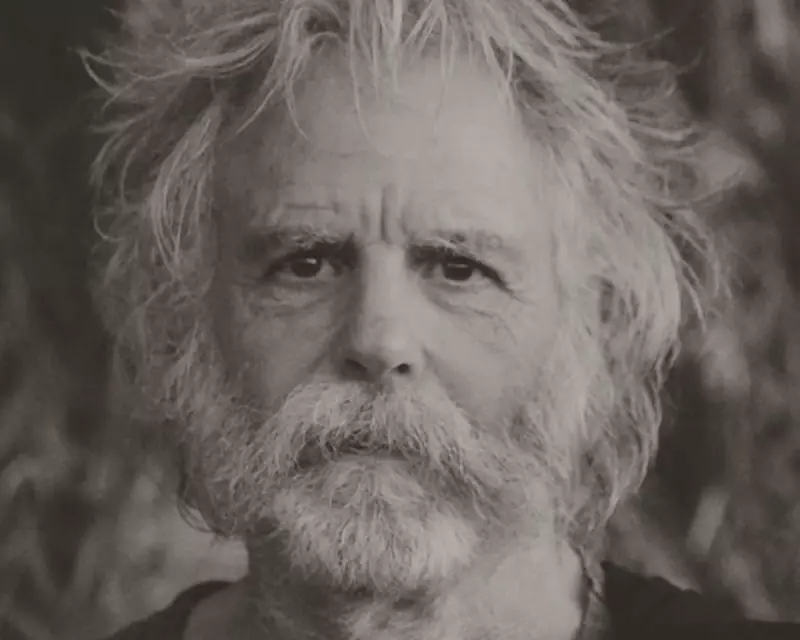
The music world is mourning the loss of Bob Weir, the co-founder and rhythm guitarist of the legendary rock band the Grateful Dead, who has died at the age of 78. Known affectionately as "the Kid" for his youthful entry into the band at just 16, Weir evolved into a songwriting powerhouse and the chief custodian of the Dead's immense musical legacy.
The Kid's Integral Role in the Dead's Sound
Weir's contribution to the Grateful Dead's unique sound was foundational, though it was not always immediately recognised. In 1968, bandmates Jerry Garcia and Phil Lesh even attempted to dismiss him, criticising his playing. He simply kept showing up to gigs, and the idea was dropped. History proved his indispensability. His jazz-influenced rhythm guitar, inspired by pianist McCoy Tyner, was a complex tapestry of alternate chords and contrapuntal lines that formed the essential bedrock for the band's legendary improvisations. This, combined with his unusually large hands that could form chords others couldn't, made him utterly unique.
Beyond his playing, Weir rapidly became the band's second major songwriter after Garcia. He contributed key early tracks like Born Cross-Eyed and the improvisational cornerstone The Other One. Embracing the band's shift towards Americana in the early 70s, he penned a prolific run of classics, often with lyricist John Perry Barlow. His portfolio ranged from weary ballads like Jack Straw and Looks Like Rain to the warped funk of The Music Never Stopped and driving, deceptively complex rock anthems such as Playing in the Band and Sugar Magnolia.

An Anomalous Figure and a Devastating Loss
Despite being integral, Weir often stood apart within the Grateful Dead. He was the band's sole heart-throb in a group famously indifferent to image. He stopped using LSD in 1966, unlike many of his peers, and was the member most theoretically interested in commercial success, as heard on his 1978 solo album Heaven Help the Fool. His role became even more critical in the 1980s as Garcia battled heroin addiction.
Garcia's death in 1995 hit Weir exceptionally hard. Biographer Dennis McNally noted "shock was written all over his face for a long time." The loss was compounded by infighting among surviving members. Weir's own health suffered, with a compulsive touring schedule and issues with alcohol and a chronic back injury leading to a collapse on stage in 2013.
Reinvention as the Legacy's Chief Custodian
Weir remarkably pulled himself together, addressing his health and spearheading the Grateful Dead's final chapter as its legacy keeper. He was instrumental in the band's acclaimed 50th-anniversary Fare Thee Well shows in 2015. Just prior, he helped facilitate the monumental tribute compilation Day of the Dead, curated by The National's Dessner brothers, which showcased the Dead's vast influence on modern alternative rock, featuring artists from Courtney Barnett to The Flaming Lips.
His most significant post-Dead venture began with a chance meeting with John Mayer, leading to the formation of Dead & Company in 2015. The band, featuring Dead drummers Bill Kreutzmann and Mickey Hart, became a stadium-filling phenomenon, grossing $115 million on their 2023 tour and launching a historic residency at Las Vegas's Sphere. Alongside this, Weir's Wolf Bros project reimagined the Dead's catalogue with orchestral arrangements, performing at London's Royal Albert Hall with the Royal Philharmonic Concert Orchestra in June 2023.
Weir's final performance was for the Grateful Dead's 60th Anniversary in San Francisco's Golden Gate Park in late 2023. Though appearing frail, he closed the shows with poignant finality, choosing songs like Knocking on Heaven's Door and Brokedown Palace. He had previously envisioned Dead & Company as an eternal entity, playing on for centuries. Through his relentless dedication, Bob Weir ensured the music never stopped, solidifying his place not just as "the Kid," but as the enduring guardian of one of rock's most beloved catalogs.