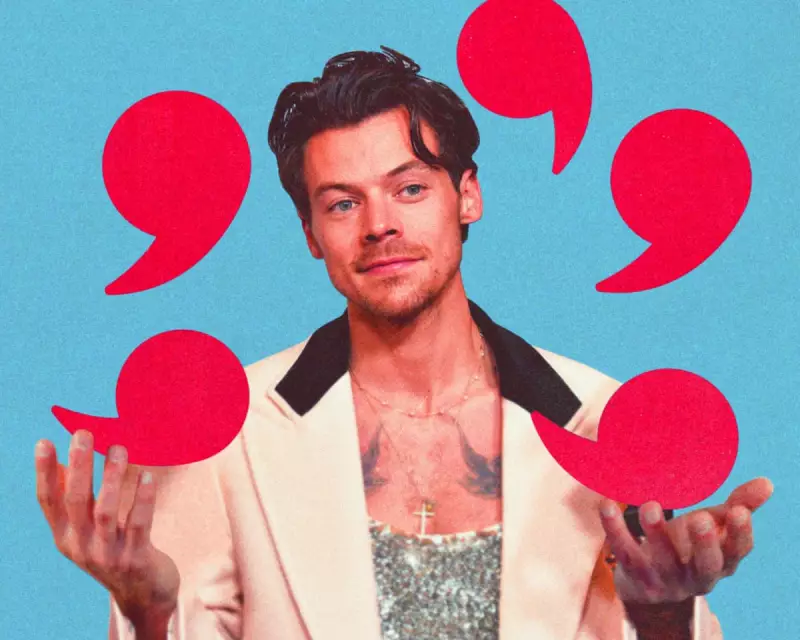
Grammarians Divided Over Harry Styles' Punctuation Choice
The announcement of Harry Styles' first solo album in four years has sparked an unexpected debate in linguistic circles, with experts and fans alike scrutinising the punctuation in the unconventional title: Kiss All the Time. Disco, Occasionally. The follow-up to 2022's Grammy-winning Harry's House presents what some are calling a grammatical puzzle that has divided opinion across social media and academic forums.
The Comma Conundrum That Captured Public Attention
Within hours of the album announcement, linguistic enthusiasts began dissecting the title's structure, particularly focusing on the placement of the comma in the second sentence. The central question emerged: is the comma grammatically correct, or has Styles intentionally broken conventional rules for artistic effect? One viral social media post from a PhD candidate in English at Duke University highlighted how the comma transforms the second sentence from what might be expected as a parallel imperative construction into something more fragmentary and ambiguous.
Ellen Jovin, author of several grammar books and star of the documentary Rebel With a Clause, suggests the comma creates "a little bit of a mental break" that changes how we interpret the phrase. "When I see 'disco, comma', it's giving me pause to reconsider the relationship between the words," she explains. The punctuation appears to shift "disco" from potentially being a verb to functioning as a noun, creating what experts describe as a playful departure from standard grammatical expectations.

Creative Punctuation in Contemporary Music
This grammatical discussion occurs within a broader context of artists increasingly experimenting with typography and punctuation in their work. Streaming platforms have created new opportunities for creative expression through song and album titles, with artists like Billie Eilish and Dijon using unconventional capitalisation and punctuation in recent releases. What might appear as grammatical errors to traditionalists could instead represent deliberate artistic choices in an era where digital presentation matters more than ever.
Britt Edelen, the PhD candidate whose analysis went viral, notes that Styles' title "fits into a larger scheme of people trying to articulate things via commas that aren't actually how we use them." He cites literary precedents including Virginia Woolf's experimental punctuation and contemporary film titles that similarly challenge conventional comma usage.
The Fluid Nature of Grammatical Rules
Experts emphasise that grammar rules are not as rigid as many people assume, particularly when applied to artistic contexts like album titles. Unlike academic papers or legal documents where clarity is paramount, creative works often benefit from ambiguity and unconventional expression. Jovin points out that even in literature, readers encounter commas that might seem technically "wrong" but serve important stylistic purposes.
"This is just creativity, and I think it's perfect," Jovin states regarding Styles' title. She contrasts this artistic context with situations where precise punctuation genuinely matters, such as the classic example where a missing comma could suggest someone's parents are famous authors rather than dedicating a book to multiple parties.
Styles' History with Grammar
The grammatical debate takes on additional interest given Styles' demonstrated attention to language details. At a 2015 concert, he famously corrected a fan's sign that read "your so nice" by adding an apostrophe and "e" to create "you're so nice," then signing it with a thank you note. This suggests the controversial comma in his album title is likely intentional rather than accidental.
As the discussion continues across social media platforms and academic circles, what emerges is a fascinating intersection between pop culture and linguistic analysis. The album title serves as a case study in how artistic expression interacts with grammatical conventions, reminding us that language rules evolve and adapt across different contexts and creative mediums.