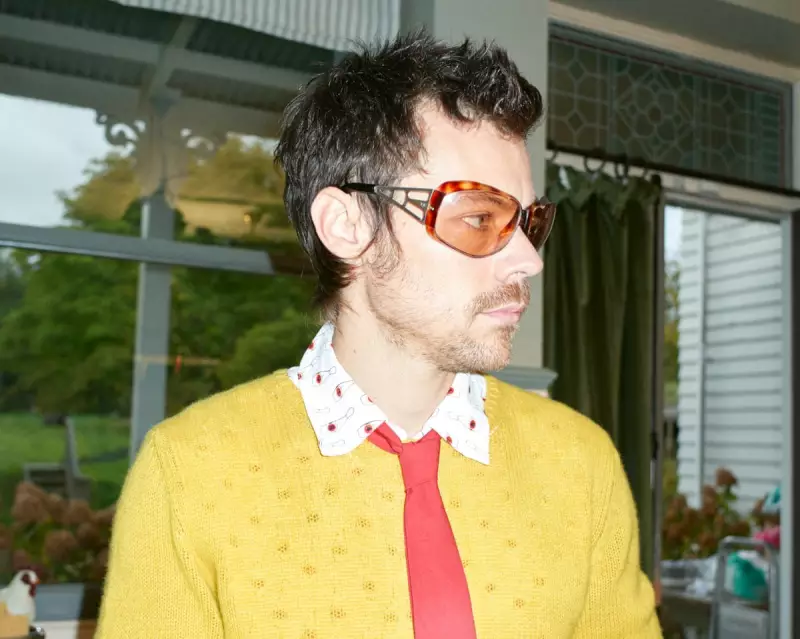
Harry Styles Returns with Aperture: A Bold Dancefloor Statement
Harry Styles has once again demonstrated his unique position in contemporary pop music with the release of Aperture, the lead single from his forthcoming album Kiss All the Time. Disco, Occasionally. The track represents a significant departure from current mainstream trends while maintaining the artist's signature charm and musical confidence.
A Deliberate Departure from Modern Pop Conventions
Following his remarkable success with six Brit Awards, three Grammys, and seven UK Top 10 singles, Styles has continued to navigate his post-One Direction career with remarkable grace and intentionality. Rather than filling the gap between 2022's Harry's House and his new album announcement with the typical content-driven releases that dominate today's music industry, Styles opted for a period of relative quiet. This absence feels particularly deliberate given his experience with One Direction during the peak of content-obsessed music marketing.
Aperture immediately establishes its unconventional nature through its extended runtime of 5 minutes and 11 seconds - a duration that deliberately challenges the shortened attention spans cultivated by social media platforms. This structural choice alone positions the track as a bold statement against contemporary pop's preference for brevity and instant gratification.

Musical Evolution and Nostalgic Influences
While Styles has consistently positioned himself as a cross-generational artist with retro sensibilities, Aperture represents a subtle shift in his musical references. The track opens with a minimalist electronic pulse and oscillating riff that gradually builds atmospheric layers, creating a sense of emerging from nightclub smoke. This approach marks a departure from the tightly wound, metronomic quality of his previous comeback single As It Was.
The musical landscape of Aperture evokes the early 2010s era of bands like Vampire Weekend, Yeasayer, and MGMT, where electronic elements blended seamlessly with psych, prog, and pop influences. There are also distinct echoes of the 2000s techno-pop sound associated with Cologne's Kompakt label. Notably absent are the softly stroked guitars that characterised much of Styles' earlier work, replaced instead by evolving electronic textures that bleed in from the song's edges.
Lyrical Themes and Emotional Resonance
Lyrically, Styles explores themes of connection and disorientation with characteristic sincerity. The chant of "We belong together" in the chorus serves as a unifying call that feels particularly resonant in today's fragmented social landscape. Styles has revealed that he spent his time between albums immersing himself in club culture, experiencing crowds as a participant rather than a performer, and this perspective informs the track's atmospheric quality.
The song's emotional core emerges most powerfully during its bridge section, where lovely house-influenced pianos accompany Styles' vulnerable admission: "I wanna know what safe is... I don't know these spaces." This moment of uncertainty adds depth to the track's otherwise joyous exterior, creating a compelling tension between celebration and introspection.
A Confident Step Forward
What makes Aperture particularly remarkable is how it manages to feel both familiar and innovative. While maintaining enough accessibility to satisfy Styles' substantial fanbase, the track represents a genuine artistic risk for one of pop's few consistently interesting male stars. The confidence that has characterised Styles' solo career remains undented, even as he ventures into new musical territory.
The track's structure - building from skeletal beginnings to a sunlit chorus - suggests a musical journey that mirrors Styles' own evolution as an artist. It's a track designed for communal experience, destined to sound magnificent echoing through stadiums while retaining enough intimacy for personal listening.

As pop music continues to grapple with the demands of algorithm-driven platforms and shortened attention spans, Aperture stands as a quietly radical statement. It demonstrates that there remains space in the mainstream for ambitious, thoughtfully crafted music that prioritises artistic vision over commercial convenience. Styles continues to prove that the most interesting path forward sometimes involves looking thoughtfully at the past while stepping confidently into new creative territory.