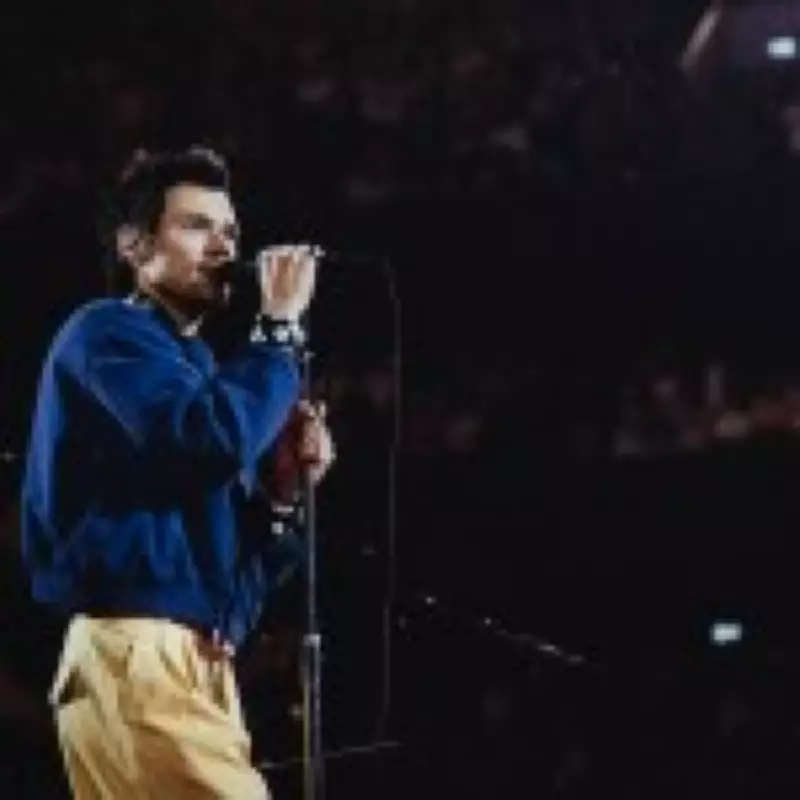
Harry Styles' Phone-Free Concert Ignites Fiery Debate Among Music Fans
The announcement that Harry Styles would implement a phone ban at his exclusive Manchester concert has sparked a passionate debate among concertgoers about the role of mobile devices at live music events. While some fans celebrated the move as a return to authentic concert experiences, others expressed frustration at being restricted from documenting their memories.
The Great Divide: Preservation vs. Presence
When rumors first emerged about Styles' phone-free policy, the reaction was immediate and divided. "Phones have ruined concerts" has become a common complaint among seasoned gig attendees, yet many fans were outraged at the prospect of being unable to record their experiences. The Manchester show, which was later confirmed to be completely phone-free and filmed by Netflix for streaming, exposed a fundamental tension in modern concert culture.
Metro readers weighed in enthusiastically on the controversy. Some called the fight against phones at concerts a "losing battle," with one disillusioned fan declaring he had "given up going to concerts" entirely, tired of watching performances through strangers' screens. Others argued passionately that when spending hundreds of pounds on tickets, they have every right to "record their own experiences" as they see fit.

Artists Taking a Stand Against Mobile Distraction
Harry Styles isn't the first artist to address the phone issue. Florence Welch of Florence and the Machine has incorporated a dramatic moment into her performances where she stops during her hit "Dog Days Are Over" to demand that audience members put away their devices. The singer urges crowds to live completely in the moment, free from technological burdens, encouraging them to dance and jump with abandon.
Welch's approach comes with a playful threat—she will call out and point at anyone she spots using a camera until they comply. Remarkably adept at spotting phones in large crowds, she creates a rare spectacle: entire arenas with arms raised in the air, completely phone-free. As one concertgoer noted, "You don't even realize what you're missing until you see it."
The Social Psychology Behind Concert Behavior
Dr. Roberta Katz, speaking to the New York Times, explained how the fear of being perceived as "cringe"—including dancing freely without inhibition—has made younger generations hesitant to fully engage in live experiences. "There was gossip, there was bullying, but it was never at scale," she noted. "Today, that behavior and responses to behavior can be at scale, so the significance of what happens changes."
The result is what some describe as a self-imposed surveillance state where even spontaneous dancing at a concert could lead to widespread online embarrassment. This psychological dynamic creates a powerful incentive for concertgoers to remain behind their screens, documenting rather than participating.
The Practical Consequences of Phone Use
Beyond the philosophical debate, there are practical considerations. Reader Ian Speed argued that "people don't use them in a discreet manner and thus block other people's views." Warren James expanded on this concern, describing his recent concert experience: "The last gig I went to was pretty much a solid wall of people in front holding their phones up high enough to see over everyone else holding their phones up in the air."
He painted a bleak picture of modern concert-going: "These days unless you're right at the front crushed against the barrier, you barely have a chance of even seeing the stage through the sea of glowing phone screens surrounding you. It is a truly, truly awful experience."
Counterarguments: Memory Preservation and Shared Moments
Not all perspectives are anti-phone. Peter Glass defended recording as "part of making memories," arguing that when fans invest hundreds or even thousands of pounds in concert tickets, they have a right to document the experience. Others pointed to beautiful moments that phones enable, such as during slow songs when audiences create seas of swaying phone lights—a modern replacement for the lighters of previous generations.

Debs Wright described these moments as "beautiful," noting that removing phones entirely might eliminate these shared visual experiences that have become part of concert culture. There's even a safety consideration—without phones providing light, audiences might return to using actual lighters or torches, potentially creating fire hazards.
Historical Context and Industry Solutions
This debate isn't new. In 2016, Alicia Keys implemented Yondr pouches at her shows—sealed bags that lock phones away while allowing fans to keep their devices with them. Yondr founder Graham Dugoni started the company in 2012 after witnessing a disturbing incident at a festival: "I saw a man drunk and dancing and a stranger filmed him and immediately posted it online."
"It kind of shocked me," Dugoni shared with the BBC. "I wondered what the implications might be for him, but I also started questioning what our expectations of privacy should be in the modern world." He described phones as a "crutch" that might ultimately "undermine what it means to be a productive person" if we're constantly connected.
Yondr has since worked with numerous high-profile artists including Madonna and Childish Gambino to create phone-free environments that balance security with accessibility.
The Manchester Experiment and Fan Response
When the initial rumor about Styles' phone-free policy emerged—sparked by a mysterious job listing—fan reaction was intense. Influencer Rachel Lord's TikTok video discussing the potential ban garnered nearly 150,000 views overnight, with hundreds of comments expressing resistance to going phoneless.
Concerns ranged from practical (access to medical information) to logistical (Manchester being the "wrong city" for such an experiment) to simply wanting to film the experience. The backlash was somewhat mitigated by the announcement that Netflix would stream the entire concert, providing professional documentation for those who attended.
Attendees at the Manchester show placed their phones in thin plastic bags that obscured cameras while keeping devices accessible—a compromise solution that proved less disruptive than complete lockaway systems.
Finding Middle Ground: Self-Control Over Bans
Ultimately, the debate may point toward a middle path. As one reader suggested, "People just need some self-control." For those without medical necessities requiring device access, the real solution might not be complete phone bans but rather more mindful usage.
As concertgoers consider their habits, they might ask themselves: Are they really going to re-watch those shaky concert videos, or are they just clogging phone storage? The suggestion from many in the debate is to take some photos or record favorite moments, but otherwise try to be more present.
Reader Sally Buckby offered an unexpected perspective that highlights how individual needs vary: "Tbh I see the artist better while recording & taking photos zooming in." Her comment suggests that for some, phones might actually enhance rather than detract from the experience.
The Harry Styles experiment has brought this ongoing conversation to the forefront, challenging both artists and audiences to reconsider what makes a meaningful concert experience in the digital age.