Mandy, Indiana's 'Urgh': A Cathartic Industrial Assault on Injustice
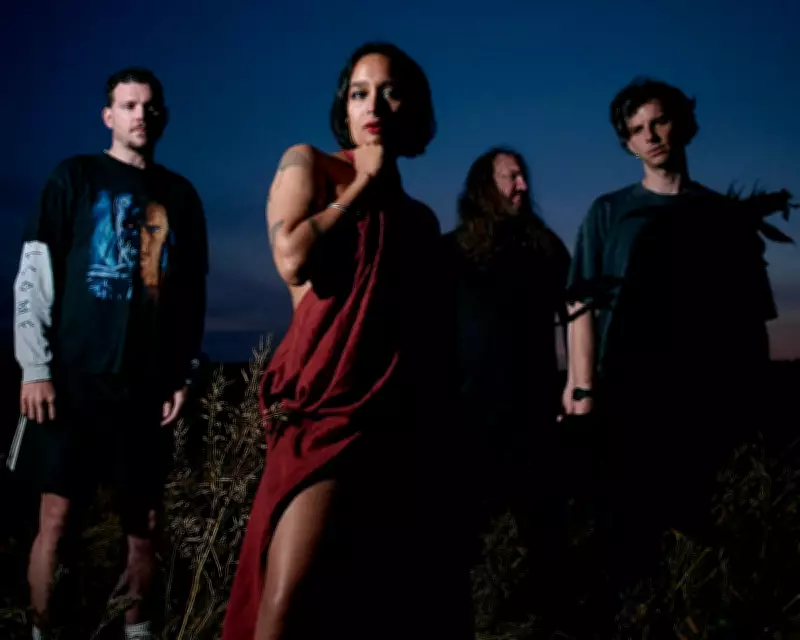
The Manchester/Berlin-based quartet Mandy, Indiana have never been a band to take the easy path. Their second album, Urgh, released on the Sacred Bones label, represents a refined yet relentless evolution of their industrial-club sound. It is a record that feels as physical and hyper-detailed as being dragged under by a powerful wave, only to find yourself admiring the swirling flotsam caught in its turbulent swell.
Embracing Extremes in Sound and Setting
Mandy, Indiana seem to operate under a moral and artistic imperative to embrace extremes. For their 2023 debut, I've Seen a Way, they initially aimed to record in the Peak District cave known as the Devil's Arse, eventually settling for a day in Somerset's Wookey Hole caverns due to budget constraints. Urgh was conceived during what the band described as an intense residency at an eerie studio house near Leeds, a period during which both singer Valentine Caulfield and drummer Alex Macdougall were undergoing multiple rounds of surgery.
This backdrop of physical and environmental intensity feeds directly into the music. The album is a short-circuiting assault, siren-like in its industrial intensity, with Caulfield chanting about personal and societal horrors in her native French. For some listeners, it may hold as much appeal as sticking fingers into a live socket, but for those seeking catharsis, it offers a powerful, purgative experience.

A Sound Forged in Grimy, Purgative Company
The band places themselves within a compelling lineage of artists who dismantle rock to its mechanical core, Frankenstein-ing it with elements of techno and trap to create something shockingly new. They stand alongside acts like:
- Model/Actriz
- YHWH Nailgun
- Moin
- Kim Gordon
- Gilla Band
Gilla Band, in particular, serve as clear forebears, with the band's Daniel Fox having mixed Mandy, Indiana's debut and co-producing Urgh. In this grimy, purgative company, Mandy, Indiana's distinctiveness emerges from their limber, addictively free rhythms, powered by Macdougall's incredible versatility and Caulfield's staccato vocal delivery. These rhythms often lope with a bodily freedom before being stalled by squalling winds and thrashing noise, creating a sense of threat lurking around every corner.
The Evolution of a Harder, Thicker Sound
Urgh marks several evolutions from their debut. The track Cursive sees its percussive churn redirect into rudimentary electro, appealingly reminiscent of Paul Hardcastle's 19. On Sicko!, US rapper and kindred spirit Billy Woods adds guest verses, sounding characteristically unruffled as the track lurches queasily between gargled fuzz and pointillist artillery fire.
The primary evolution, however, is into a harder, thicker, more physically imposing sound. It becomes impressively difficult to discern where guitarist Scott Fair ends and synth player Simon Catling begins. Tracks like Magazine hit with pile-driver force, pausing only to recharge before renewing their obliterating attack. Macdougall's drumming evokes everything from shuddering glass jars to booming Japanese taiko drums.
The standout Ist Halt So – the title a shrugging German phrase meaning that's just how it is – packs about four different movements into as many minutes, shifting from taunting to staticky, howling to blizzard-like chill. It possesses a Nine Inch Nails-worthy ability to make the mechanical sound both sleazy and eerily earwormy.
Lyrical Intent and Thematic Fury
Valentine Caulfield has often reiterated her accurate stance that if you're not angry, then you're not paying attention. Her lyrics on Urgh indict complacency in the face of a burning world. She has expressed enjoyment that most listeners don't understand her French lyrics, allowing her to subvert the language's perceived beauty, as on early single Nike of Samothrace, where she sneaks in lines about stabbing rapists.

The intention, she says, is to pass her meaning through her performance and her use of words. Regardless of one's Duolingo level, the impression is unmistakable. Try Saying conveys a feeling of being trapped amid smashed mirror sounds and ricocheting percussion, a song about wishing for a life of ease. A Brighter Tomorrow weds a slow siren to a heavy slither of bass, creating a suffocating effect even before one realises Caulfield – at a disembodied remove – appears to be singing about a faltering, real-time effort to process sexual assault.
For the final song, I'll Ask Her, Caulfield sings in English for the first time on the album, evidently intent on being heard as widely as possible. They're all fucking crazy, man, she repeats in a frenzy, convincingly parroting the way men casually dismiss sexual assault allegations against their friends. Laced with barking dogs, incredible splintered sound design, and an angle grinder's unrelenting moan, the track overheats until it sounds like a panic attack.
A Necessary Rage for the Current Moment
In a cultural moment where #MeToo can sometimes feel like it's vanishing in the rear-view window, and songs explicitly confronting rape culture have become less headline-grabbing, Urgh feels vitally necessary. It brings to mind cases like Dominique Pelicot and former Conservative councillor Philip Young – who spent years drugging and raping their wives – and every individual complicit in such cultures, whether on a global scale or closer to home.
Mandy, Indiana's album is a raging, cathartic attack on injustice, embodying its head-spinning force rather than merely observing it. In doing so, they have created one of the year's first truly great albums – a grimy, thrashing, and purgative work that understands the imperative to push beyond complacency. For those inclined to listen, it offers a visceral and powerful form of release.