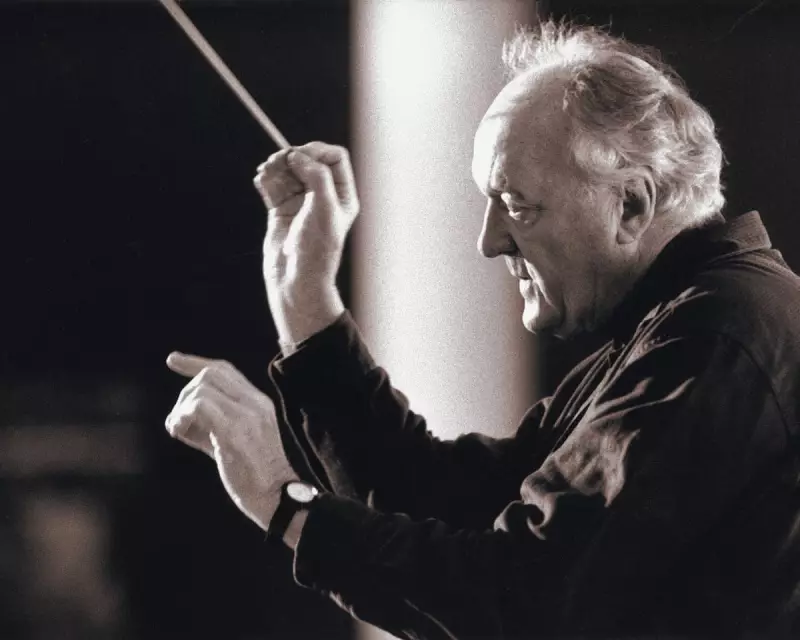
A significant archival release has emerged to commemorate the 150th anniversary of Havergal Brian's birth, bringing renewed attention to one of the most colossal works in 20th-century British music. The Heritage label has reissued a 1980 BBC live broadcast from the Royal Albert Hall, featuring the London Symphony Orchestra under the baton of Danish conductor and composer Ole Schmidt. This recording represents the fourth complete version of Brian's Gothic Symphony to enter the catalogue, offering a fresh perspective on a piece often regarded with a mix of awe and scepticism.
A Monumental Composition Revisited
Havergal Brian's Gothic Symphony, completed in 1927 after eight years of labour, stands as a towering achievement inspired by the grandeur and peculiarities of the gothic era. The work spans a vast emotional and technical range, from simple, heartfelt melodies to intensely complex polyphonic structures. It has frequently been approached more as a daunting challenge—akin to scaling Everest—than as a serious musical milestone, a perception this reissue aims to challenge.
Structural Brilliance and Demanding Artistry
The symphony is divided into two substantial parts. The first part, lasting thirty-five minutes, functions as a compelling three-movement symphony in its own right, demonstrating Brian's architectural clarity. However, it is the second part, a demanding hour-long setting of the Te Deum, that truly tests the listener's focus and the performers' skill. Influences from composers such as Bruckner, Berlioz, and Sibelius weave through the score, adding layers of depth and complexity.

Ole Schmidt's Commanding Leadership
In this 1980 performance, Ole Schmidt exhibits a ringmaster's assurance in marshalling the enormous forces required: 158 orchestral players and a chorus of 560 voices. His conducting is noted for its stimulating choices, balancing architectural precision with gothic extravagance. Schmidt goes beyond merely keeping the vast ensemble under control; he actively shapes the piece, drawing out its dramatic nuances and emotional weight.
The solo quartet is highlighted by the late Jane Manning's soaring soprano, adding a poignant touch to the recording. While the sound quality occasionally feels congested, a common issue in live broadcasts of such scale, Schmidt's interpretative insights make this version a fine alternative to other accounts, such as Ondrej Lenárd's Slovak recording.
Critical Acclaim and Legacy
Schmidt's approach has been compared favourably to that of Martyn Brabbins, who remains a benchmark for performances of this work. The conductor's ability to "do" something meaningful with the score, rather than just navigating its challenges, has been praised by critics. John Pickard's sleeve notes provide illuminating context, enhancing the listener's appreciation of both the music and this specific performance.
This reissue not only celebrates Havergal Brian's legacy but also underscores Ole Schmidt's significant contribution to classical music. It serves as a testament to the enduring power of live recordings to capture moments of artistic brilliance, offering audiences a chance to experience a masterwork through the lens of a assured and imaginative conductor.