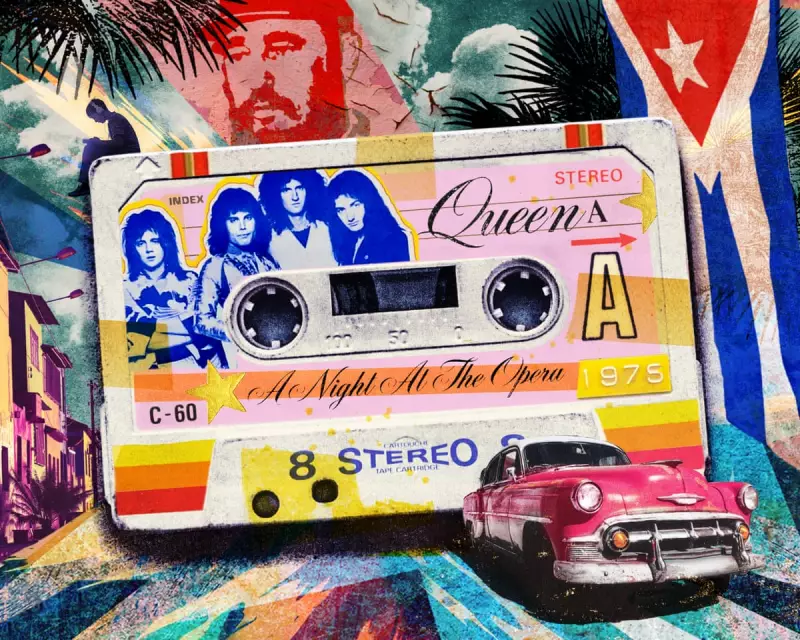
How a Queen Song Became My Anthem of Liberation in Communist Cuba
Growing up in 1980s Cuba under Fidel Castro's regime meant living in a world where politics permeated every aspect of daily life. From ubiquitous propaganda posters to marathon speeches that could stretch for hours, the atmosphere of political and personal confinement was inescapable. I was raised to believe in communism and even attempted to join the Young Communist League twice, only to be rejected for not being sufficiently "combative" – a euphemism for refusing to inform on others.
The Stifling Reality of Life Under Surveillance
The consequences of non-conformity were severe and immediate. Friends faced university expulsion or imprisonment for speaking too freely, while my own family included military and police personnel, forcing me to navigate carefully to avoid endangering them. In this environment of constant surveillance and restriction, Western music represented more than entertainment – it became an act of quiet rebellion that carried genuine risk.
People faced jail time simply for listening to the Beatles or Rolling Stones, while long hair, bracelets, or any suggestion of "western proclivities" could result in overnight detention. Music arrived years late through a clandestine network of hand-copied cassette tapes, creating a black market for cultural exchange that operated in the shadows of state control.

The Transformative Power of a Battered Cassette Player
My musical awakening began at thirteen when my first girlfriend's father, a sailor, brought LPs from abroad. By secondary school, rock'n'roll had become an obsession shared by a small group of friends who made an unspoken pact to seek out music wherever possible. We organized secret listening sessions in each other's homes and gathered weekly at an arts centre where local bands performed or recorded rock music played through speakers.
The pivotal moment arrived in 1986 when I was fifteen, living in a cramped one-bedroom Havana flat shared with my mother, grandmother, aunt, and cousin. A friend had managed to source Queen's A Night at the Opera, complete with a photocopied lyric sheet. I listened on a battered mono cassette player with a single speaker – hardly ideal equipment for such meticulously produced music, yet perfectly suited for my circumstances.
The Prophet's Song: An Eight-Minute Revelation
From the opening notes of The Prophet's Song, everything changed. The track begins with gentle guitar chords before building into something more frenetic, then Freddie Mercury's voice arrives – possessed, prophetic, as if rallying an unseen congregation. His delivery carried a beautiful urgency as he sang about visionary experiences.
Then came the transformative section where Brian May's delay effect multiplies Mercury's voice, creating ghostly echoes of "Now I know" that seemed to reverberate into infinity. Even through that tinny speaker, the effect was otherworldly. For eight minutes, the noise of Havana faded away, and in that overcrowded flat surrounded by family and surveillance, a psychological crack opened.
Beyond Sound: The Symbolism of Creative Freedom
What moved me wasn't merely the sound but what it represented. A Night at the Opera marked Queen's first album after gaining creative freedom from their management. In a world bounded by the slogan "socialism or death" still painted on Havana's walls, this music suddenly made me feel free to imagine alternatives. The song's inspiration – drawn from Brian May's fever dream during illness recovery – became my own personal convalescence from ideological confinement.
This experience didn't immediately transform me into a dissident, but it planted a kernel of rebellion that sustained me through difficult years. Rock music helped me navigate the late 80s fear of conscription and the brutal 90s when friends drowned attempting to escape Cuba on homemade rafts.
From Black Market to New Life
I eventually studied English and operated a risky black-market translation business that could have resulted in imprisonment without bribery. The enterprise expanded to include city tours conducted in English, French, and German. Meeting my British wife in Havana created an opportunity, and our marriage facilitated my relocation to the UK in 1997 during New Labour's early years.

Now living in London as a writer, teacher, and cycling instructor with grown children, I still return to The Prophet's Song. The track opened my ears not just to rock but to jazz and other genres, while fundamentally spurring my curiosity about living life beyond conformity. In the midst of political noise and restriction, Queen's music became the one thing that truly cut through, demonstrating how art can inspire personal liberation even under the most repressive circumstances.