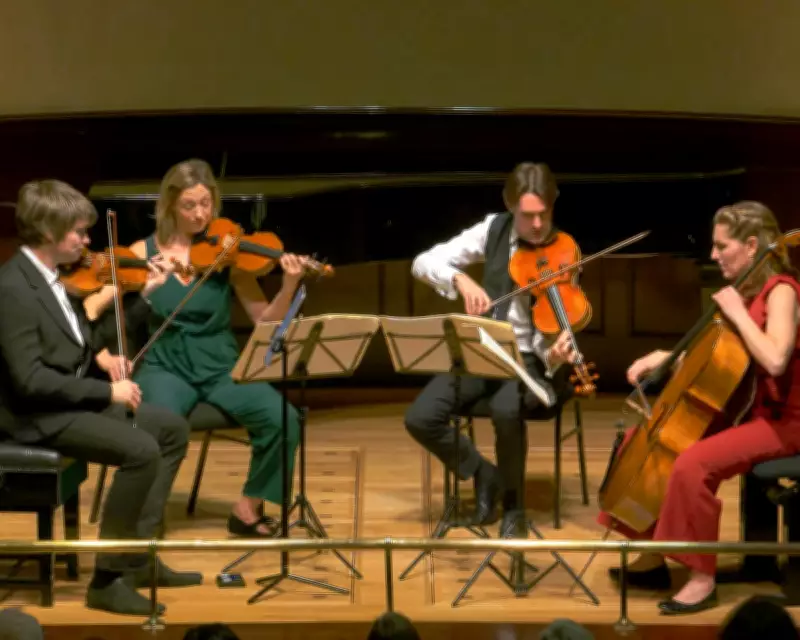
Sacconi Quartet Marks Silver Jubilee with Premier Performance at Wigmore Hall
The esteemed Sacconi Quartet commemorated their twenty-fifth anniversary with a forward-looking concert at London's prestigious Wigmore Hall, blending classical foundations with contemporary innovation. Founded at the Royal College of Music in 2001, the ensemble demonstrated their artistic evolution through a program that honored tradition while embracing new musical horizons.
Freya Waley-Cohen's Commissioned Work Steals the Spotlight
The centerpiece of the evening was the world premiere of Dances, Songs & Hymns for Friendship, a six-movement string quartet specially composed by Freya Waley-Cohen to celebrate the quartet's silver jubilee. This meticulously crafted work emerged from the composer's intimate observations of the four musicians during rehearsals and even casual moments like tea-making, resulting in a piece that perfectly captured their collective spirit.
The composition opened with Spin, featuring bold unison passages that gracefully fragmented into individual solos. Waley-Cohen's musical language, while spiced with contemporary elements, remained accessible within a framework that masters like Bartók would recognize. This approach beautifully complemented the Sacconi Quartet's renowned ensemble tightness and their characteristically muscular tone, particularly evident in the lower instruments.

Six Movements of Emotional and Technical Range
Subsequent movements showcased remarkable diversity:
- Sing presented a pensive, aching melody reminiscent of deconstructed folk traditions
- Play featured dancing syncopations with subtle Eastern European influences
- Step offered hypnotic, skirling passages that built rhythmic intensity
- Pray emerged as a luminous meditation with exquisitely finessed violin lines floating over hushed chords, concluding with delicate pizzicato
- The final movement, Be, saw lyrical fragments passed between instruments before intricate textures resolved into gentle simplicity
This striking new work represents a significant addition to contemporary chamber music repertoire that other ensembles will undoubtedly wish to explore.
Classical Foundations with Modern Sensibilities
The program's classical selections revealed interesting contrasts with the new commission. Haydn's carefree C major String Quartet, Op. 33 No. 3 (subtitled The Bird), felt somewhat restrained as the Sacconis prioritized textural precision and blend over playful chirruping. Conversely, Beethoven's late A minor quartet (No. 15) aligned perfectly with their artistic temperament, its brooding melancholy receiving an admirably organic interpretation.
Despite occasional intonation lapses, the performance maintained impressive sonic weight throughout. The famous Heiliger Dankgesang movement unfolded with unhurried nobility, building emotional intensity through finely sustained phrasing.
Folk-Inspired Encore Provides Perfect Conclusion
The evening concluded with a delightful encore featuring Jon Boden's handsome arrangements of two folk tunes: Old Molly Oxford and Christchurch Bells. This folk-inspired digestif provided the perfect counterpoint to the program's serious classical works, demonstrating the quartet's versatility across musical traditions.
The Sacconi Quartet's silver jubilee celebration at Wigmore Hall successfully balanced reverence for their classical foundations with enthusiastic embrace of contemporary composition, proving that after twenty-five years, they remain at the forefront of British chamber music.