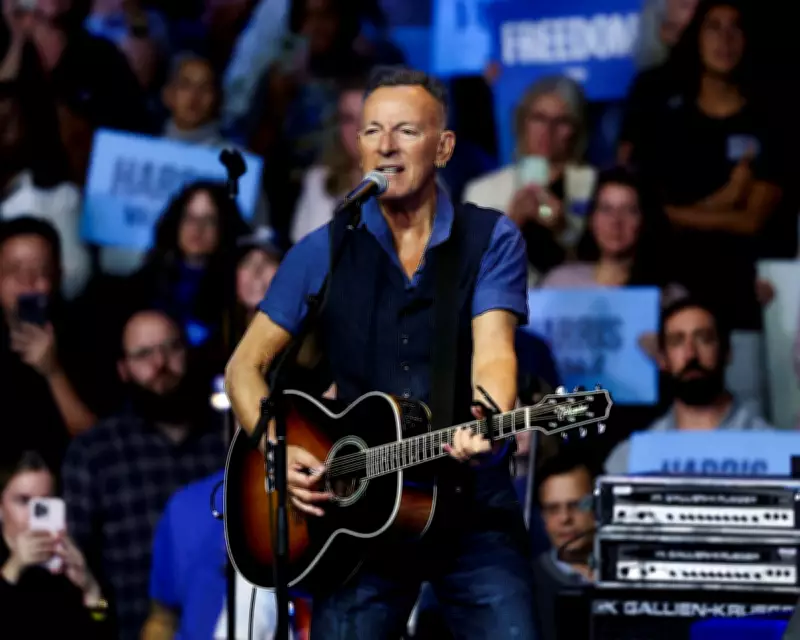
Bruce Springsteen's Unflinching Protest Anthem Targets ICE in Raw Minneapolis Tribute
In a powerful musical intervention, Bruce Springsteen has released a new protest song that delivers an urgent and unsubtle condemnation of US Immigration and Customs Enforcement (ICE) operations. Streets of Minneapolis represents a direct confrontation with what the artist describes as "King Trump's private army from the DHS," marking a significant moment in contemporary protest music.
A Song of Immediate Fury and Political Clarity
The track, written and recorded over a single weekend according to Springsteen, leaves absolutely no room for ambiguity in its political messaging. Unlike the metaphorical protest songs of the 1960s that Springsteen's work echoes in structure, this composition names names and targets specific policies with raw, unfiltered anger. The song references Renee Good and Alex Pretti, both killed by federal agents during protests, and condemns "Miller and Noem's dirty lies" in a direct attack on Trump administration immigration officials.
This approach represents a deliberate artistic choice that sacrifices timelessness for immediate impact. While future generations may not sing Streets of Minneapolis around campfires fifty years from now, the song's power lies in its present urgency and genuine fury. Springsteen has crafted what might be described as musical journalism - a document of a specific moment in American political history that refuses to soften its edges for broader appeal.

Rooted in Folk Tradition with Contemporary Bite
Despite its contemporary political focus, the song remains deeply connected to American folk traditions. The structure features chords accessible to beginner musicians and employs familiar verse-chorus patterns that make it highly singable - an essential quality for effective protest music. The recording even includes crowd voices chanting "ICE out!" during the performance, creating a communal atmosphere of resistance.
Lyrically, Springsteen weaves together multiple traditions:
- References to the US national anthem with lines like "Against smoke and rubber bullets/In the dawn's early light"
- Biblical echoes in phrases such as "We'll take our stand for this land/And the stranger in our midst"
- A title that consciously recalls his own earlier protest work Streets of Philadelphia
- The essential harmonica solo that anchors the song in 1960s protest anthem style
Unexpected Hope Amidst Political Darkness
Remarkably, for a song that documents bloodshed and tyranny, Streets of Minneapolis contains elements of genuine hope and celebration. Springsteen honors the city's unity and resistance, singing about how "Our city's heart and soul persists/Through broken glass and bloody tears." By situating events in "the winter of '26," he employs a folk-song trope that positions current struggles within historical context, suggesting humanity has faced and overcome similar challenges before.
The song arrives during what appears to be a renaissance of political music. Other artists have recently joined this movement, including musician and activist Billy Bragg, who wrote City of Heroes celebrating Minneapolis resistance. Like Springsteen, Bragg created his song in a matter of hours, suggesting a new urgency in artistic responses to political crises.
The Earnestness of Contemporary Protest
In an era when being perceived as "cringe" represents a cultural sin, Springsteen's earnest approach might seem risky. Yet the song's effectiveness stems precisely from its refusal to pretend to be anything other than what it is: a raw, urgent protest against specific policies and actions. The artist has remained politically outspoken in recent years, condemning Donald Trump in onstage speeches that prompted the former president to dismiss him as a "dried-up prune of a rocker" - an insult that notably ignores Trump's own advanced age.

As political music continues to evolve sixty years after the 1960s protest song heyday, Springsteen's latest work demonstrates that directness and specificity can sometimes serve artistic purposes better than metaphor and ambiguity. When the subject demands immediate attention and clear condemnation, sometimes the most effective approach is simply to name what's happening - and Springsteen has done exactly that with unflinching clarity.