The Shaggs: How a Forced Sister Band Became Rock's Most Polarizing Cult Phenomenon
When Austin Wiggin Jr was a young boy, his mother read his palm and made three startling predictions. She foretold that Austin would have two sons she wouldn't live to see, that he would marry a strawberry blonde woman, and that his daughters would form a popular musical band. By 1965, the first two prophecies had remarkably come true. Convinced the third must follow, Austin made the fateful decision to pull his daughters Dorothy, Betty, and Helen Wiggin from their New Hampshire school to pursue musical superstardom, whether they wanted it or not.
A Father's Domineering Vision
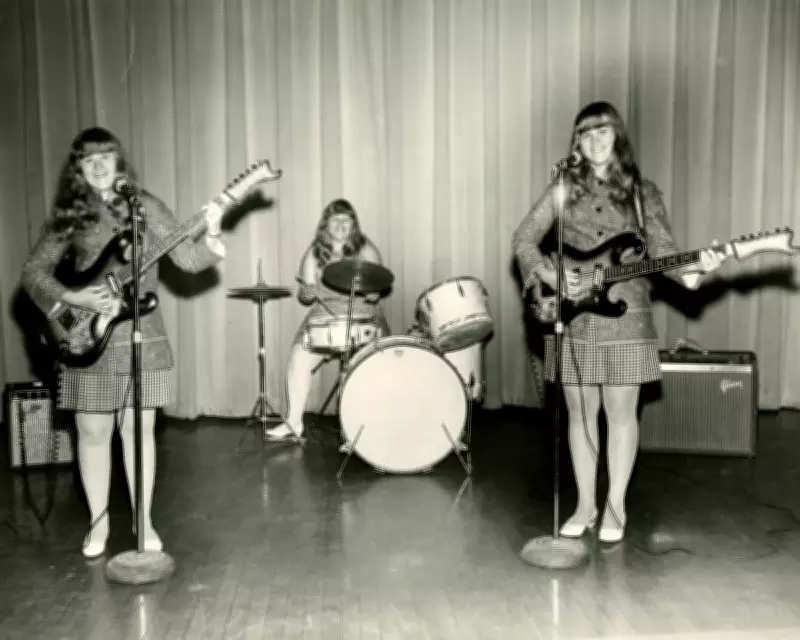
Austin Wiggin's rigorous daily regime began immediately. The sisters faced mail-order homework assignments, calisthenics exercises, and constant band practice under their father's watchful eye. Whether they liked it or not, the sisters were now officially the Shaggs – and barred from pursuing any other path in life. They were rarely permitted to leave their home except for church services, essential shopping trips, and their weekly Saturday night gig at the Fremont, New Hampshire town hall, where for five years they played to peers they never got to know personally.
"We missed out on a lot," reflects rhythm guitarist and vocalist Betty Wiggin, now 75. "I grieve that a little bit. When you hear people talk about high school experiences – 'You know how it was in gym class,' this and that – well, I have no idea, you know?" Regarding their mother's role, Dorothy "Dot" Wiggin notes: "She supported what our father wanted and went along with it." Betty adds significantly: "She never really said how she felt."

The Accidental Avant-Garde
The final prophecy did eventually come to pass, but as the new documentary film We Are the Shaggs explores, not in the way anyone expected. With their accidentally avant-garde style and seeming naivety about fundamental musical principles like tuning and timing, the Shaggs became one of the most divisive bands in rock history, provoking wonder and horror in equal measure.
Their sole studio album, 1969's Philosophy of the World, packed with perplexing beats and motifs, sounds as if the sisters are playing completely different songs simultaneously. "We thought our guitars were in tune," admits lead guitarist, singer and songwriter Dorothy "Dot" Wiggin, 77. "I guess that shows how much we didn't know."
Yet this very musical innocence created something remarkable. "The Shaggs were doing all these crazy, interlocking things – they just weren't conscious of it," explains musician Jesse Krakow, a self-described "Shaggs purist" who has painstakingly covered the band's work. According to Krakow, Philosophy of the World contains sophisticated musical elements like hemiola, decrescendos and ritardandos, creating strange forms reminiscent of Frank Zappa, Captain Beefheart and Igor Stravinsky.
From Obscurity to Cult Status
The Shaggs never really wanted to make music, so when Austin died of a heart attack in 1975, they immediately disbanded. Helen, who had already been kicked out of the band for marrying behind Austin's back when she was 28, passed away in 2006. "She was stronger than most of us because she's the one that went out and found a boyfriend," says Betty.
Though the sisters express respect toward their father for "what he did for our music," Betty adds it was only after his death that they truly felt free. "We could do whatever we wanted, then," she says. "We couldn't do much before." The sisters sold most of their musical equipment and rarely discussed their time in the band, taking on cleaning and caretaker work while building families of their own.
If fate hadn't intervened, the Shaggs might have remained completely obscure. Remarkably, 900 of the 1,000 copies of Philosophy of the World had disappeared soon after its initial release. But Boston's WBCN radio station possessed one copy, and when Frank Zappa visited for a session while on tour, he took the album with him and famously declared the Shaggs "better than the Beatles."

They remained largely unknown until saxophonist Keith Spring of blues-rock group NRBQ discovered the album at the record store where he worked. He introduced it to his bandmates, who reissued the record on their Red Rooster label in 1980, followed by a compilation of unreleased recordings called Shaggs' Own Thing, featuring Betty's one and only song, Painful Memories.
Critical Reception and Lasting Legacy
The critical response to the Shaggs proved as polarized as their music. The Village Voice labeled Philosophy of the World a "landmark of rock'n'roll history," while Rolling Stone called it "the most stunningly awful wonderful record." Patti Smith admired the Shaggs so much that she and bandmate Lenny Kaye called each other Foot Foot, after Dorothy's cat referenced in My Pal Foot Foot. Kurt Cobain named the album among his five favorites, and Jesse Krakow notes that Cobain's guitar solo on Come As You Are echoes the Shaggs' approach by repeating the song's melody.
"It's amazing, really," says Betty of the Shaggs' many admirers. "We wouldn't have expected that – we didn't even know until years later."
The Documentary and Reflections
Dot and Betty now share their extraordinary story in We Are the Shaggs, where director Ken Kwapis aims to "humanise and dignify" the sisters while musicologists and collaborators reflect on their unique legacy. "When I first heard the Shaggs in 1980, it was an odd experience," says Kwapis. "It came from such a sincere place." He compares their lyrics to Brian Wilson's for being "heartfelt and personal," yet notes "the musical texture was so unusual. Making the film taught me to check my prejudices at the door. And not just when it comes to the arts."
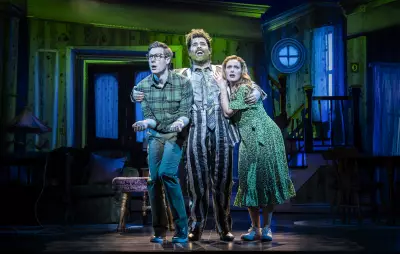
Dot and Betty reunited twice for special performances, playing their songs together again for the first time in years. In 1999 they shared billing with space-jazz master Sun Ra, where to their surprise they were mobbed by enthusiastic fans, and they appeared at Wilco's Solid Sound festival in 2017. Today, their songs attract millions of listens on Spotify, and their unusual origin story has inspired an off-Broadway play.
Yet when asked if she would choose to repeat her musical career given the chance, Betty responds honestly: "Truthfully, I don't think I would have done any of it." If they hadn't been forced into music by their father, she believes, "we would have just had a normal life."
"I might have still wrote lyrics but I'm not sure I would have wrote music," adds Dorothy. "We probably would have gone to high school and socialised. But I feel proud as to what it's become and all the followers and fans that we have."
The Shaggs' story remains one of rock's most compelling paradoxes – a band created through coercion that accidentally pioneered an avant-garde sound, hated by some critics but loved by musical innovators, and ultimately achieving the cult status their father predicted but through a path nobody could have imagined.