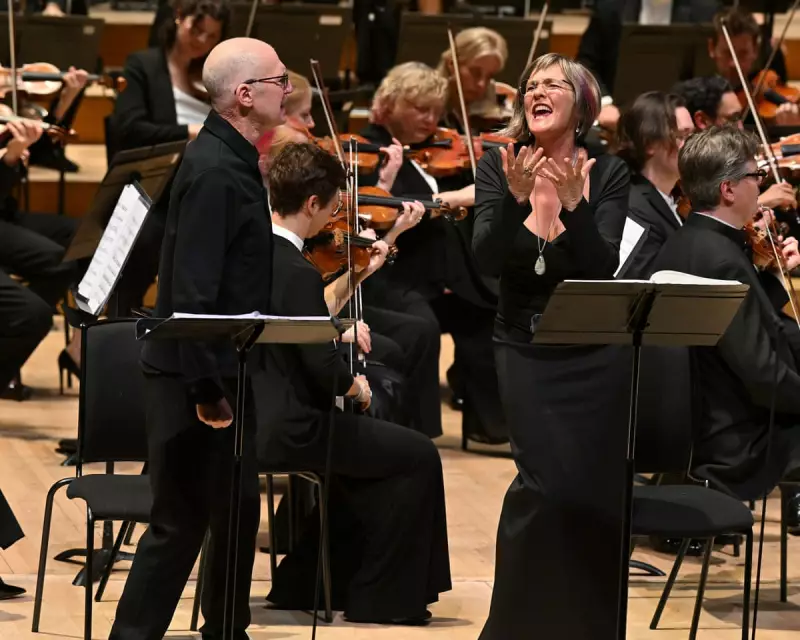
In a remarkable musical coincidence, London has been treated to a second major production of Leoš Janáček's profound opera in just two months. Following a celebrated run at the Royal Opera House, Sir Simon Rattle led the London Symphony Orchestra in a concert performance of The Makropulos Affair at the Barbican Hall, delivering an evening of fierce intensity and thrilling musicianship.
A Manic and Thrilling Orchestral Force
From the very first bars of the compelling prelude, Rattle set a breakneck, almost manic pace. The tension barely let up for the full two hours of this uninterrupted performance. While this relentless drive occasionally sacrificed some of the lighter, more beguiling touches heard in other interpretations, it never came at the expense of Janáček's intricate orchestral detail. The LSO responded with playing of breathtaking precision and power, from the haunting bassoon solo that heralds the protagonist's entrance to the score's most tumultuous climaxes.
A Commanding Cast Led by Marlis Petersen
The success of Janáček's opera hinges on a commanding performance in the central role of Emilia Marty, the 337-year-old diva. German soprano Marlis Petersen provided exactly that. Facing some of the composer's most cruelly exposed vocal writing, Petersen combined emotional intelligence with vocal grandeur, making her character's final, transformative renunciation of eternal life genuinely uplifting. Her performance stands among the most memorable interpretations of this formidable role.

The supporting cast was uniformly excellent, adding depth and authenticity. The presence of native Czech singers in several roles, including Aleš Briscein as Albert Gregor and Svatopluk Sem as Baron Prus, brought a vital layer of linguistic and stylistic truth. Alan Oke provided a standout character turn, effortlessly stealing his scenes as the elderly, nostalgic Count Hauk-Šendorf.
Contemporary Relevance and Dramatic Power
Strikingly, this concert staging achieved greater dramatic coherence and emotional impact than some fully-staged versions. Under Rattle's baton, the story of a woman weary of immortality emerged as a profound and humane meditation on mortality. Written in the shadow of World War I, the opera's themes felt frighteningly relevant today, echoing in an era where modern autocrats and megalomaniacs might crave their own version of the Makropulos elixir for personal immortality.
This sensational account by Rattle and the LSO, performed on 14 January with a repeat on 15 January, proved that Janáček's masterpiece loses none of its vital, unsettling power in a concert setting. It was a stark reminder of the opera's enduring ability to thrill and provoke, a century after its premiere.