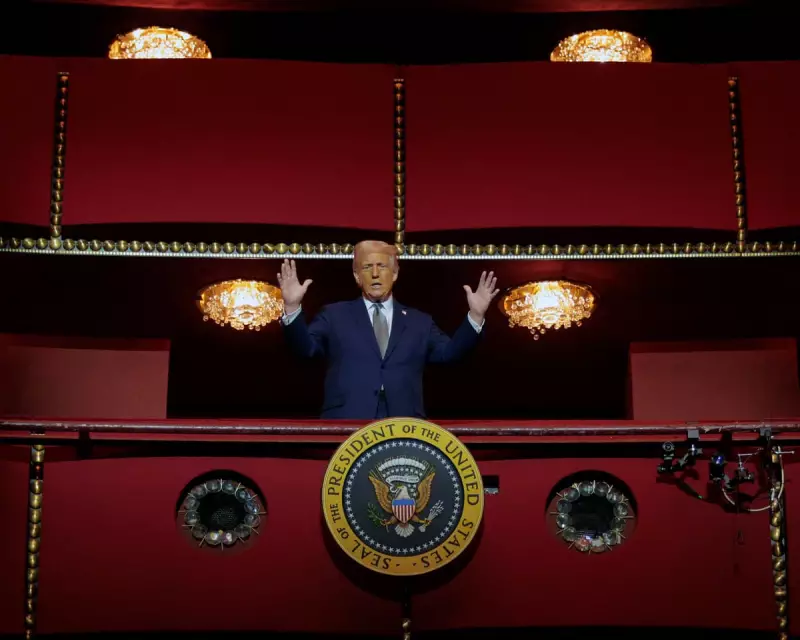
In a dramatic exodus that underscores a deepening cultural rift, the Washington National Opera has formally severed ties with the Trump-Kennedy Center for the Performing Arts. This move marks a profound crisis for the once-venerated Washington DC institution, which has been transformed beyond recognition since Donald Trump assumed its chairmanship following his 20 January 2025 inauguration.
A Prestigious Venue Unravels
The centre, formerly known simply as the Kennedy Center, was until recently a world-class hub for the performing arts. It boasted a respected resident opera company, acclaimed artistic leadership, and a much-anticipated run of the hit musical Hamilton. Its bipartisan board upheld the dignity of an organisation that had enjoyed consistent support from successive governments for decades.
That stability evaporated swiftly. Soon after taking the helm, Trump ousted the centre's highly experienced executive director and installed his loyalist, former ambassador to Germany Richard Grenell, to run the organisation. Lacking arts management experience, Grenell has struggled, and the consequences have been severe. Artists have departed in droves, Hamilton pulled its production, and audiences have stayed away in alarming numbers.

Francesca Zambello, the artistic director of the Washington National Opera, revealed in November that ticket sales had collapsed. Analysis by The Washington Post confirmed the trend was centre-wide. Zambello described receiving daily protests from former patrons, including shredded season brochures mailed back with notes vowing never to return while the "orange menace" remained. The financial blow was so severe the company considered leaving.
The Final Straw and a Costly Divorce
Grenell's insistence that all productions be "net neutral"—fully funded in advance—proved an insurmountable obstacle for the capital-intensive art form of opera. This week, the WNO made its departure official, launching a new website and attracting a flood of donations and messages of solidarity.
The separation, however, will be complex. The Kennedy Center holds the WNO's endowment, and lawyers are now preparing for difficult negotiations. The centre's management has claimed it was they who decided to "part ways" with the opera, a statement many see as an attempt to save face.
The opera's board acted just in time to preserve its dignity. Shortly before Christmas, after months of presidential hints, the building's facade was amended. The words "The Donald J Trump and" were affixed above "The John F Kennedy Memorial Center for the Performing Arts", a legally contentious rebranding. The new lettering, described by some as looking like it came from a garden centre, completed the venue's transformation into the Trump-Kennedy Center.
A 'Deathly Pall' and a Symphony's Silence
With the opera gone, an insider described the centre as resembling a funeral parlour, with a "deathly pall over the place". Cancellations continue to mount; during the reporting of this story, the annual Martin Luther King Day "Let Freedom Ring" concert, a 23-year tradition once headlined by Aretha Franklin, was pulled from the venue.
Seating plans on the centre's website tell a stark story: events are selling poorly across the board, with few exceptions. The venue risks becoming a tomb-like convention centre, its cultural purpose diminished—save for the premiere of a Trump-approved film about Melania Trump on 29 January.
The departure leaves the National Symphony Orchestra as the sole remaining resident company. Its music director, Gianandrea Noseda, issued a nebulous statement titled "Music Belongs to Everyone", asserting the NSO was part of the community's family and awaited audiences to make music. The statement was widely interpreted as a veiled, politically cautious response to the opera's exit.
A Wider Battle for America's Cultural Soul
The crisis at the Trump-Kennedy Center is not isolated. It represents a front in a broader battle over American cultural institutions. In the same week, the Smithsonian's National Portrait Gallery replaced its portrait of Trump and its label, removing any mention of his two impeachments—a clear act of appeasement.

The Smithsonian also faced a White House deadline to submit vast documentation on its programmes and labelling, with a directive that museums must convey a "positive view of American history" without "diffidence".
A year into Trump's second term, the struggle for America's soul is being fought not only on city streets but within its galleries, museums, and performance halls. The exodus from the Trump-Kennedy Center reveals which institutions are willing to fight for their artistic integrity, and which are prepared to fold under pressure.