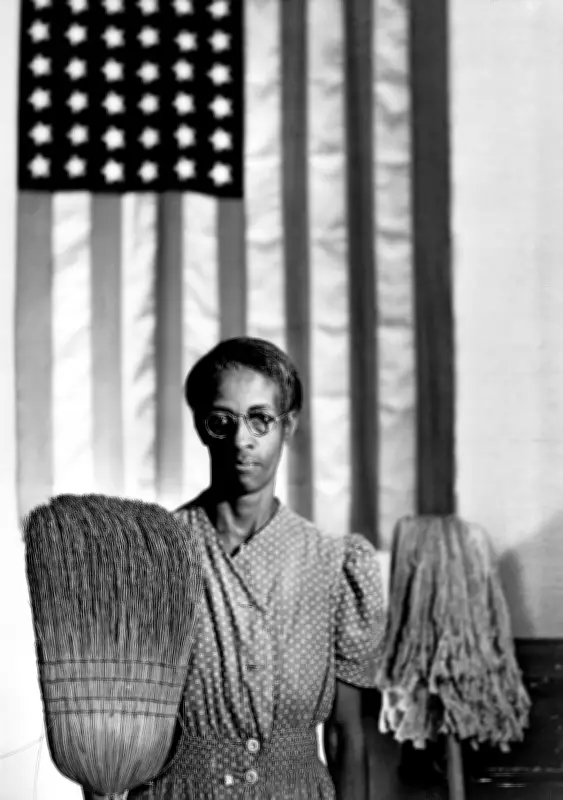
Gordon Parks' Era-Defining Photographs of American Segregation
In the summer of 1956, Life magazine made history by sending its first Black staff photographer, Gordon Parks, to Alabama. His mission was to document racial segregation following the Montgomery bus boycott. Parks, then in his early forties, embarked on a perilous journey that would produce some of the most consequential photographic work of his generation.
Intimate Portraits of Jim Crow America
The images Parks captured in Alabama were remarkable for their intimacy and vividness, depicting the daily realities of the Jim Crow South with startling clarity. These photographs now form the backbone of a new exhibition opening this week at the Alison Jacques gallery in London, curated by renowned civil rights attorney Bryan Stevenson.
Stevenson, who founded a museum and memorial in Montgomery dedicated to Black victims of lynchings, selected images taken between 1942 and 1967. This period represents Parks' most active years as a photographer and coincides with a particularly acute phase of unrest in American society.

Color Photography as Revolutionary Tool
Parks' Alabama assignment focused partly on the Thornton family in Mobile, capturing their dignity in the face of everyday brutality. Shot in color at a time when most news photography was black and white, these images used striking contrasts and soft pastels to elevate the narrative to another level entirely.
"Most people only saw this community fighting segregation in this very two-dimensional way," Stevenson explains. "Parks understood that it was much more dynamic, much more artistic. The use of color really animated the harm in ways that had been missed previously."
Beyond Alabama: A National Story
The exhibition extends well beyond the Alabama photographs, encompassing Parks' documentation of poverty in Harlem, his time with Malcolm X and the Nation of Islam, his jail photography across the country, and his images from the historic March on Washington in 1963.
Parks' photographs from the March on Washington maintain a unique intimacy despite the event's massive scale. Martin Luther King Jr., delivering his famous "I Have a Dream" speech, is captured from a distance at the lectern, framed by a rippling American flag. Another powerful image shows an onlooker shouting across the masses from an elevated position.
From Humble Beginnings to Artistic Legacy
Born in 1912 in Fort Scott, Kansas, during the era of segregation and mass lynchings, Parks was the youngest of fifteen children. He attended segregated elementary school and experienced racial violence firsthand. After his parents' deaths, he moved to Minnesota at age fourteen.
Parks didn't turn to photography until his late twenties, having worked various jobs including brothel pianist and railway waiter. His breakthrough came in 1942 when he was hired as a documentary photographer by the Farm Security Administration in Washington DC.
American Gothic: The Iconic Image
It was during this period that Parks created perhaps his most famous photograph: American Gothic, a portrait of Ella Watson, a part-time cleaner raising her grandchildren alone in poverty. The image shows Watson standing in the corridors of power, holding a broom and mop before the American flag.
The photograph was deemed too confronting for publication at the time but now stands as a powerful manifestation of Parks' artistic vision. Stevenson describes it as "a story of trial and tribulation, but also triumph and dignity."
Later Career and Lasting Impact
Parks would go on to become the first Black director to lead a major Hollywood production with his 1969 film adaptation of his semi-autobiographical novel The Learning Tree. Two years later, he directed the influential crime thriller Shaft, which helped bring blaxploitation cinema into the mainstream.
In 2007, a year after his death, a school in St. Paul was renamed in his honor. The building stands just miles from where George Floyd was murdered in 2020 and where other recent incidents of violence have occurred.

The Camera as Weapon in the Digital Age
Parks famously described his camera as his "weapon of choice" against social injustice. Stevenson reflects on how Parks might approach today's challenges, including the proliferation of AI-manipulated images and digital propaganda.
"I think technology and social media create new challenges for truth telling," Stevenson acknowledges. "But I still think a camera can be a powerful weapon—in the hands of a gifted storyteller, which is what I saw Gordon Parks as. It was his vision—creating a story around the image—that allowed viewers to experience something they may never have experienced before."
The exhibition Gordon Parks: We Shall Not Be Moved runs at Alison Jacques gallery in London from March 5 to April 11, offering contemporary audiences a powerful reminder of photography's enduring capacity to document injustice and inspire change.