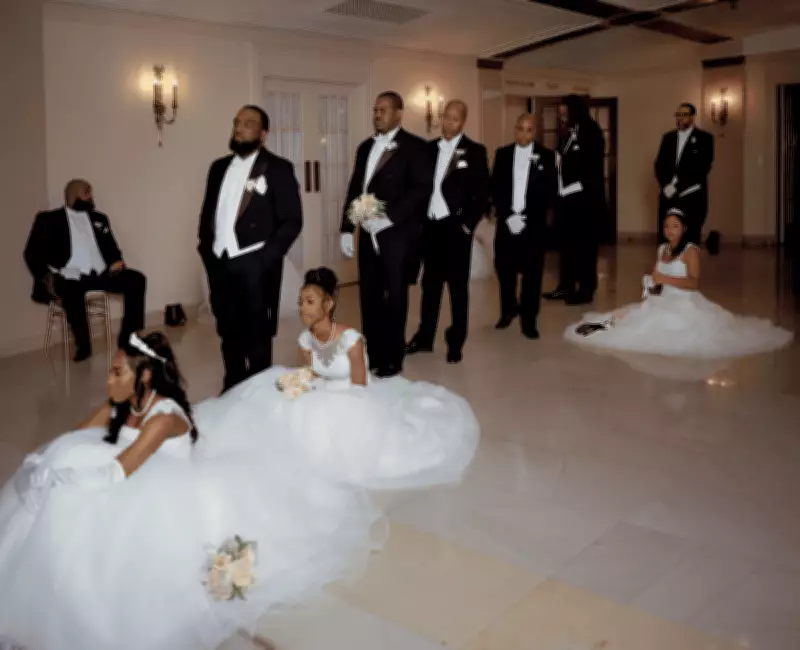
In a striking image from Miranda Barnes' new book, Social Season, young ladies at a Black debutante ball are seen sitting on the ground, exhausted after hours of waiting. Barnes explains, "The girls wait for two or three hours to be introduced. The reason they're sitting on the ground is because there weren't any chairs in the waiting room." This moment encapsulates the blend of tradition and modern reality in these events, which have deep roots in African American history.
Historical Context and Modern Relevance
Barnes' book opens with a poem set in the mid-1800s, a period of growing financial prosperity for some African Americans. Cotillion dances, with European origins, were adapted by Black New Yorkers who performed waltzes and quadrilles in fine attire. These debutante balls have long served as a means for African Americans to strive for a better life, today continuing to introduce young women into society while emphasising education. Barnes notes, "These Black debutante balls go back a long way, and are one example of African Americans trying to create a better life."
From Broader Project to Focused Series
Initially, Barnes aimed to document various Black subcultures, photographing cheerleaders, churches, and traditional rodeos. However, after attending a debutante ball in Detroit in 2022, she realised it deserved its own project. "I wanted to include a debutante ball in a post-industrial city, and Detroit has a very rich Black history," she says. What began as a one-time visit turned into a four-year commitment, capturing consecutive balls at the Detroit Masonic Temple.

Challenges and Collaboration
The venue posed a challenge for Barnes, who relies on natural light in her photography. "The Detroit Masonic Temple, where the cotillions take place, is an incredible venue, but it doesn't provide any natural light," she explains. She spent six to eight hours per event, arriving as participants prepared. Months of etiquette lessons and choreography practice precede the ball, with a live orchestra playing classical, jazz, and even Bridgerton-themed songs.
Barnes emphasises the collaborative spirit with the young participants. "There was a sense of collaboration – I would say: 'Listen, if you see the camera, try to ignore me – the flash will be going off, but I'll stay out of the way.'" She credits this connection and her preparatory work, including Zoom calls with families, for the success of the photos.
Key Moments and Unexpected Variety
Each debutante is escorted by a father figure, with introductions highlighting their achievements and college plans. Barnes reflects on the waiting periods, saying, "After two or three hours, it gets pretty tiring standing up in one of those dresses." She appreciates the relaxed moment in her photograph, where girls sit while fathers stand firm.
Another image features a boy on crutches in formal wear, spotted near a shoeshine area. "I didn't find out why, but I really like those pictures that add a bit of unexpected variety," Barnes remarks. She also values the strict dress code, noting that if anyone left the dancefloor, they couldn't return without proper attire, preserving the event's magic.
The Gen Z Twist
As the evening progresses, traditional string instruments give way to contemporary party music. Barnes observes, "After the cotillion dances are over and everybody has had their sit-down meal, the string instruments give way to contemporary party music and you get to see that these future community leaders are still gen Z kids just finishing high school." This shift highlights how these events bridge generational gaps, blending historic rituals with youthful energy.
Miranda Barnes, born in Brooklyn in 1994, sees Social Season as a high point in her career. Her top tip? "Reading is fundamental!" The book, published by Mack, offers a poignant look at Detroit's Black debutante balls, celebrating their enduring significance in today's world.