Liss Fenwick's 'The Colony': Termites as Co-Authors in a Photographic Dialogue
In a striking fusion of art and nature, Liss Fenwick's photobook The Colony, published by Perimeter Editions, delves into the transformative power of termites as they consume and reshape books. This project, set on Larrakia land in the Northern Territory, Australia, challenges the authority of written narratives, particularly those rooted in colonial myths, by surrendering them to the organic intelligence of insects.
Termites as Architects of Alternative Knowledge
Fenwick's work centers on a colony of Mastotermes darwiniensis, or giant northern termites, which had already devoured a shed near their childhood home. Fearing the house might be next, the artist began feeding the insects a collection of books, including volumes from The Australians series by Vivian Stuart. These novels, penned under the pseudonym William Stuart Long between 1979 and 1990, promoted heroic tales of exploration and nation-building, which Fenwick describes as 'settler fan fiction' that reinforced colonial fantasies.
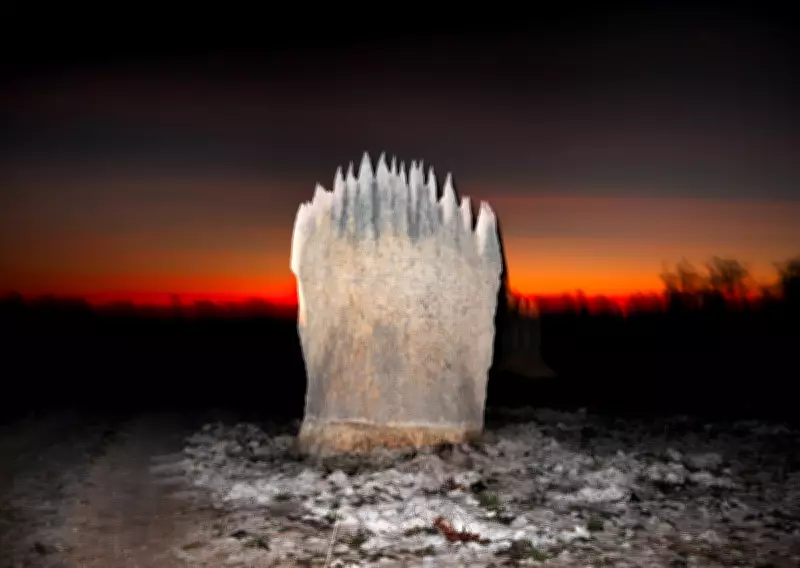
Over several years, the termites consumed these books, carrying pages underground to nourish the colony and leaving behind intricate external structures. Fenwick photographed the remains, revealing hollowed-out forms, tunnels, and clay scaffolds that mirror the precision of termite mounds—often called 'compass' mounds for their north-south alignment to regulate temperature. This process transforms the books from cultural artifacts into organic shapes, suggesting a dialogue between human and nonhuman forms of knowledge.

Critiquing Colonial Histories Through Organic Processes
The Colony interrogates the book as a vessel of human authority, often imposing hierarchies from distant power centers. Fenwick recalls growing up in Humpty Doo surrounded by such books, which carried ready-made notions of Australia, while Aboriginal systems of knowledge endured through story, memory, and land. By feeding these volumes to termites, the artist collaborates with a local intelligence long marginalized, allowing collapse and digestion to reshape narratives.
The termites' act of destruction becomes generative, dismantling certainty and returning knowledge to the soil in an unfinished state. This mirrors the uneasy persistence of colonial histories that continue to 'eat away' at the present, as seen in references like the Borroloola library, where a copy of The Imitation of Christ was consumed by termites by the time David Attenborough visited. Established in 1919 with funding from the Carnegie Corporation, the library's classical collection was part of a 'civilising' drive, later devoured by insects.
Photography as Witness and Collaborator
Fenwick's photographs prioritize organic process over control, capturing how colonial fantasies are hollowed out from within. The images reveal vulnerability and transformation, with termite mounds and hollowed books echoing each other as architectures shaped by collective intelligence. This artistic approach highlights the poetic potential in decay, where what appears as annihilation fosters new possibilities for understanding and resistance.
Through The Colony, Fenwick offers a counterpoint to heroic narratives, using termites to rewrite stories in void and scaffold. The photobook serves as a testament to the resilience of alternative knowledge systems and the power of nature to challenge human constructs, making it a profound exploration of art, ecology, and history.