While flicking through an old family album at her grandmother's house, journalist Isabel Brooks noticed something unsettling. A photo she took of a childhood picture of her mother appeared brighter and more vivid on her phone screen than the original print in her hands. This simple observation sparked a deeper investigation into a widespread but rarely discussed phenomenon: our smartphones are secretly editing our photographs.
The Shocking Side-by-Side Comparison
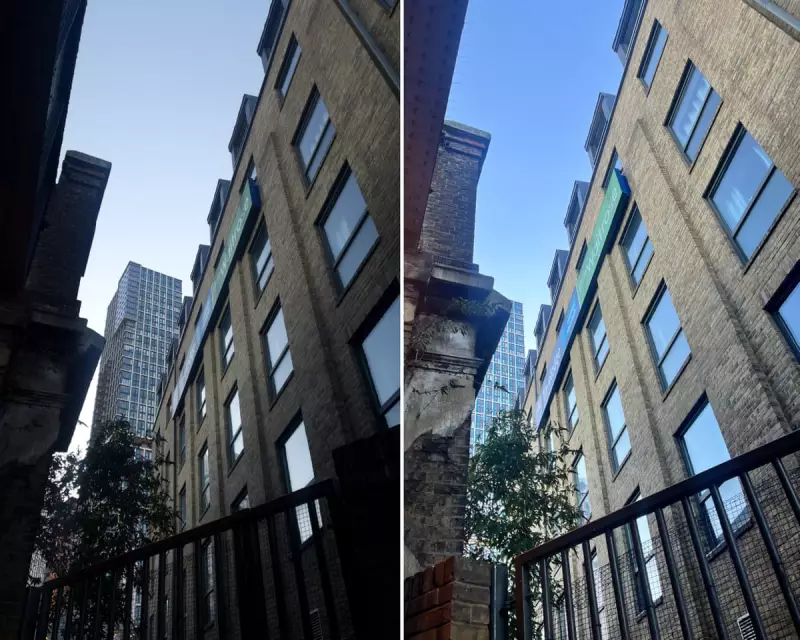
To uncover the truth, Brooks downloaded a specialised app featuring a "zero-processing" mode, which promises to capture images without any software alterations. The difference between these raw photos and those taken with her phone's standard camera app was stark. The unprocessed images were subtle, with muted colours and softer, slightly grainy edges. In contrast, the phone's automatically processed versions were "gorgeous and crisp like the inside of a marble".
This dramatic transformation is driven by machine learning algorithms, employed by virtually every major smartphone manufacturer. While photography enthusiasts in forums like Aurora-Hunters UK debate the ethics of such automatic brightening, the general public remains largely unaware. We communicate and curate our identities through these images, yet they are being heavily manipulated without our consent.

The Invisible Hand of Tech Companies
This automatic enhancement isn't about hardware breakthroughs. Due to the relentless pursuit of thinner phones—"thinnovation"—the physical camera components cannot improve dramatically. Instead, the upgrades come from sophisticated software that decides how our photos should look. Tech companies employ expert teams who religiously study consumer preferences to design these systems. They aim to deliver bright, vivid, and instantly shareable images that satisfy the desire for quick, non-blurry captures that make us look good—but not so edited as to seem fake.
The control exerted is profound. People routinely disable face-smoothing effects in settings, and one user, Brooks' sister, was alarmed to find a "jawline enhancer" automatically activated on her front-facing camera. This push for more appealing, "magpie-shiny" images keeps users engaged with their devices, a dynamic that can start to feel like a trap, prioritising short-term satisfaction over long-term authenticity.
What Are We Losing? A Personal and Photographic Legacy
The issue extends beyond mere aesthetics to the very nature of memory and personal expression. Reflecting on old family photos, such as one from the 1960s of her mother as a toddler with a huge tennis racket, Brooks notes their unique charm. Her grandfather, who preferred shooting landscapes over portraits, nonetheless imbued his photos with personality—even the blurry or poorly composed ones revealed his enthusiasms and eccentricities.
Today, with embedded auto-processing that often cannot be switched off, our scope for personal expression narrows. The tech designer's vision increasingly becomes our own. While the processed results may feel closer to the vibrant reality we perceive, they raise a critical question: What if that's not what we want from our photographs? If her grandfather had a modern smartphone, he might have captured stunning, ultra-HD images of birds and planes, but something genuinely human would have been lost in the process.
The core dilemma remains. As tech companies decide what the "majority" prefers through consumer research and data collection, we cede control over our visual narratives. The consequence is a homogenised photographic record, where the quirky, the muted, and the authentically flawed are algorithmically erased before we even press the shutter.