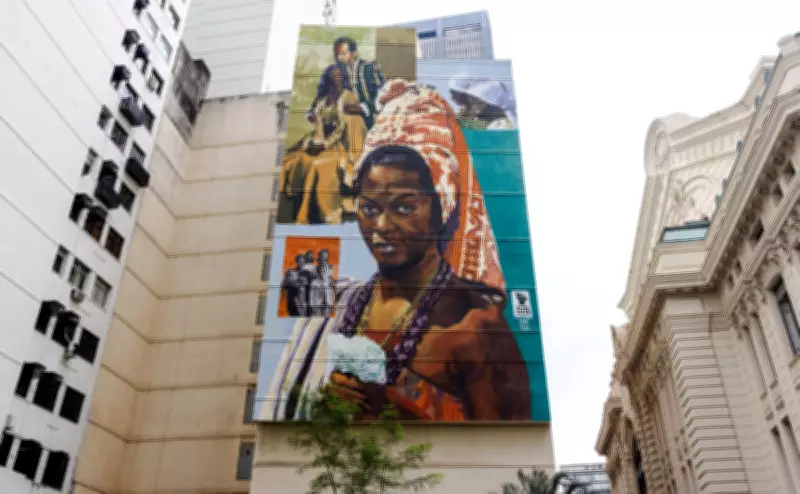
A mural of actress Ruth de Souza, the first Afro-Brazilian actress to perform in the Municipal Theatre in Rio de Janeiro, highlights a project addressing the lack of Black representation in public monuments. Despite the city's majority Afro-descendant population, fewer than 10% of Rio's 360 statues and busts commemorate Black people, with only 29 men and three women. Photographer María Magdalena Arréllaga chronicles the NegroMuro project, which seeks to redress this balance.
The NegroMuro Project
Created in 2018 by researcher Pedro Rajão and visual artist Fernando Sawaya, NegroMuro now comprises 80 murals across Rio, portraying about 120 people. The murals depict prominent Black figures such as writer Machado de Assis, activist Lélia Gonzalez, and singer Luiz Melodia. The project aims to create a cartography of Black memory, focusing on areas like the north zone that receive less investment and attention.
Origins and Expansion
The project began with a mural of Nigerian superstar Fela Kuti, despite him never visiting Brazil. Rajão and Sawaya realized the lack of Black figures in city monuments and decided to fill the gap with large, beautiful murals. The project has since been recognized by law as part of Rio's intangible cultural heritage. Funding comes from government bodies, private companies, or crowdfunding, and the duo also run workshops and guided tours.

Notable Works
One of their most famous murals honors councilwoman Marielle Franco, painted the morning after her assassination in 2018. Another 20-meter-long mural of writer Conceição Evaristo stands in Little Africa, near Valongo Wharf, where over a million enslaved Africans arrived in the 19th century. Sawaya emphasizes that the murals portray beauty rather than pain, telling Black history in a lighter way.
The project continues to expand, with commissions in Brasília and São Paulo, and a recently published coloring book. Through their work, Rajão and Sawaya are transforming Rio's urban landscape and celebrating the contributions of Black figures to the city's history.