The Enduring Legacy of Southbank's Undercroft Skate Park
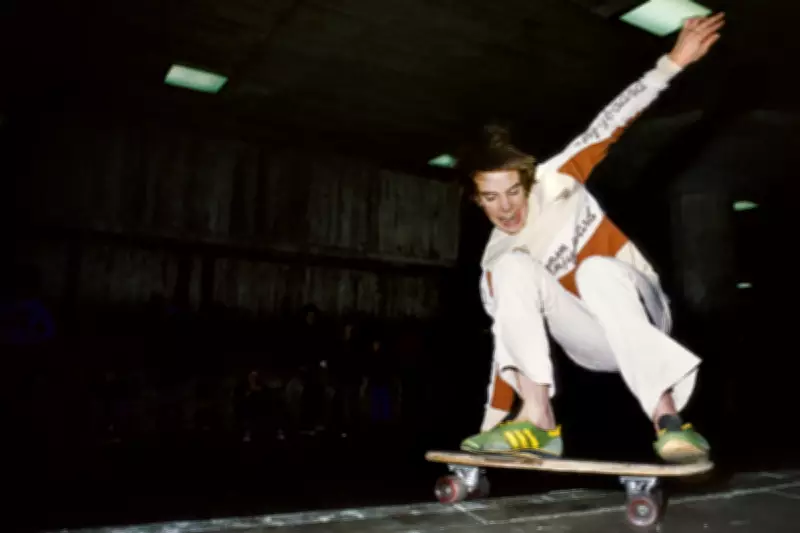
Originally constructed as part of the Royal Festival Hall in 1951, the Southbank Centre reached its current architectural form in 1968. The addition of the Queen Elizabeth Hall in 1967 created an undercroft space beneath its walkway, initially intended as a serene viewing area overlooking the River Thames. By 1976, however, this utilitarian space underwent a remarkable transformation, becoming adopted by London's burgeoning skateboard community. This year marks the 50th anniversary of that pivotal moment, cementing the Undercroft's status as one of the world's oldest and most iconic skateboarding locations.
A Multimedia Celebration of Skate Culture
To commemorate this golden anniversary, the Southbank Centre has launched Skate 50, an immersive multimedia exhibition that delves deep into the location's profound cultural impact. Spearheading the curatorial team is writer and urban art commentator Cedar Lewisohn, who emphasizes the broader significance of the space. "What's so amazing about the Undercroft – and skating in general – is that it's about so much more than skating," Lewisohn explains. "Skateboarding really is all about having a creative life."
As the skateboarding craze migrated from America to the United Kingdom in the early 1970s, enthusiasts were irresistibly drawn to the Undercroft's smooth concrete surfaces, steps, and ramps. The site rapidly evolved into a hallowed ground for the sport and its surrounding culture, encompassing graffiti, music, zines, and fashion. It functioned as a vital gathering point for like-minded individuals to connect, socialize, and exchange innovative ideas.

The Undercroft as a Creative Incubator
The influence of the Undercroft extends far beyond skateboarding, serving as a fertile breeding ground for artistic and entrepreneurial ventures:
- The globally recognized streetwear label and board-making brand Palace originated from the shared vision of the skate crew Palace Wayward Boys Choir (PWBC) within the Undercroft.
- Acclaimed filmmaker Spike Jonze collaborated with British director Winstan Whitter to produce short skate videos featuring the location early in his career.
- UK graffiti artist D*Face, a regular from childhood, famously attached spray cans to his skateboard in 2013, creating abstract paint trails across the concrete as a tribute to the space.
- Photographer James Edson, an original PWBC member, honed his craft in the Undercroft, documenting its skaters from the late 1980s to early 2000s in his 2023 book Rabbit Hole.
- The site's iconic status was acknowledged in popular video games, including Thrasher: Skate and Destroy (1999) and Tony Hawk's Pro Skater 4 (2002).
The Skate 50 exhibition aims to capture this vibrant cultural energy. Contributions include artworks and artifacts from Palace founder Lev Tanju, alongside films curated by Winstan Whitter. Whitter conducted extensive workshops, consulting multiple generations of Undercroft users to shape the exhibition's content. "At the start of the project, we did a series of workshops and spoke to skaters, listened to their stories and heard what they think is important," Cedar Lewisohn notes.
The exhibition will showcase films by Whitter, alongside footage from UK skate video makers Dan Magee and Jack Brooks. Additional participants include animator Sofia Negri, the skate collective Keep Rolling Project, and sound artist Beatrice Dillon. "I skated the Undercroft many times, and every time it was a different experience because of its ever-changing nature," Negri reflects. "To be asked to depict its history and energy is definitely a great honour for me."
A Community Forged in Concrete
Winstan Whitter, who began skateboarding at the Undercroft in the 1980s, highlights the unique sense of inclusivity fostered there. "I call it a sort of self-policed environment because we'd always look out for each other," he says. "People are calm, safe and respectful. Kids aged ten could be skating and having conversations with people who are in their sixties."

He describes the space as a peaceful refuge from London's bustle, noting its riverside location, absence of roads, covered and dry conditions, and lighting. "It's just like the perfect place to go, whatever the weather. It brings people together. It's a spot where you can become a local."
The Battle for Preservation
The depth of London's attachment to the Undercroft was starkly revealed in 2013. When the Southbank Centre announced a £120 million redevelopment plan to replace the skate park with restaurants and shops, the skateboarding community mobilized powerfully. They formed the non-profit organization Long Live Southbank (LLSB) to campaign against the destruction.
LLSB successfully lobbied Lambeth Council to designate the Undercroft as an 'asset of community value', legally protecting it from development. "I'm pleased that Lambeth council was able to work with both sides and find an imaginative solution to resolve this," stated Lambeth Council leader Lib Peck at the time. "Shared public space in London is precious, and the Southbank Centre is a great asset to the country's cultural life."
Even then-Mayor of London Boris Johnson voiced his support, declaring in a City Hall statement: "The skate park is the epicentre of UK skateboarding and is part of the cultural fabric of London. It helps to make London the great city it is."
Animator Sofia Negri echoes this sentiment, observing: "The Undercroft's development into the biggest stage of skate culture in the UK has been determined by skaters themselves. And it's this fierce opposition to established authority and its symbiotic relationship with the city that helps make it so unique."
Following the resolution, LLSB continued its guardianship role. In 2017, the organization collaborated with the Southbank Centre's management on a crowdfunding campaign that raised over £850,000 to restore sections of the space that had been boarded up or fallen into disrepair.
From Local Hangout to Global Influence
The Skate 50 exhibition's curatorial team has incorporated feedback from diverse stakeholders, including Skateboard GB, the organization behind Britain's Olympic skateboarders. The exhibition will feature an essay by Iain Borden, a Professor of Architecture and Urban Culture and a staunch advocate for the Undercroft.
Professor Borden's research connects the Southbank Centre's brutalist architecture with skaters' unique ability to appropriate and repurpose urban landscapes. This phenomenon is observed globally, with locations like Charles Daudelin's L'embacle Fountain sculpture in Paris, The Hook housing development in San Francisco, and the voids beneath New York's Brooklyn Bridge all being adopted as impromptu skate spaces.
Today, the Undercroft continues to function as a vital playground, safe space, and informal education center. It nurtures both casual skaters and aspiring professionals hoping to emulate international stars like Olympians Sky Brown and Bombette Martin. "How cool is it that you might have come to the Undercroft when you were, say, 12 years old and started skating?" Cedar Lewisohn muses. "Eight years later, you're a professional skateboarder, travelling around the world and making your living through skateboarding. I've spoken to several skaters, and that's their story. The Undercroft is important because it's a place that has made so many people's dreams come true."
The Skate 50 exhibition will be hosted at the Undercroft, Southbank Centre, Belvedere Road, SE1 8XX, from 30 April to 21 June 2026.