

Friday 30 January 2026 4:40 pm | Updated: Friday 30 January 2026 4:41 pm
Ballad Lines review: A muddled musical with moments of brilliance
By: Anna Moloney, Deputy Comment and Features Editor
Ballad Lines | Southwark Playhouse Elephant | ★★★☆☆

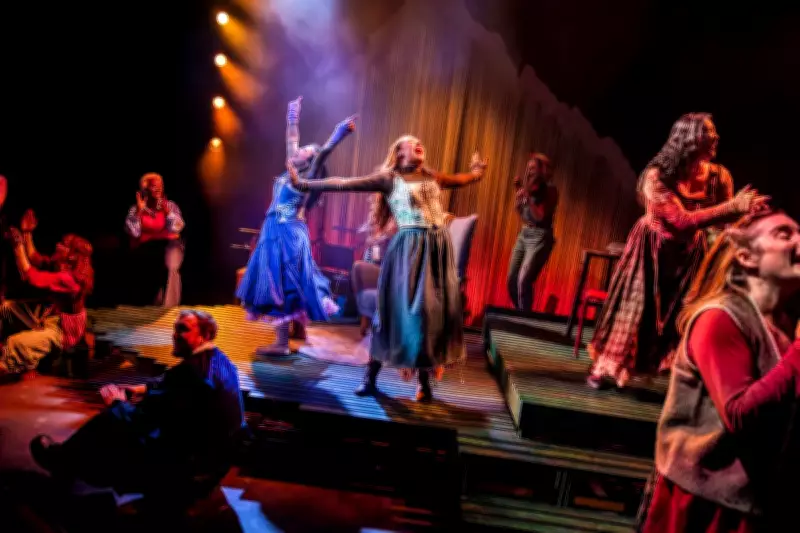
A Jacobean vicar’s wife, a pregnant Presbyterian teenager, and a 21st-century New York lesbian walk into a bar – this is not a joke, but rather the intriguing premise of the new musical Ballad Lines. Co-written by Finn Anderson and Tania Azevedo, this production ambitiously explores the lives of three women from the same bloodline but vastly different eras: 17th-century Scotland, 18th-century Ireland, and contemporary America. Connected by heritage, womanhood, and the profound power of song, the score beautifully blends Scottish, Irish, and Appalachian folk ballads to create a unique auditory experience.
An Ambitious Narrative Structure
Structurally, the show brings these characters together through a box of tape recordings left to Sarah, the millennial protagonist, by her estranged aunt. While this setup promises depth, the sheer scale of weaving three storylines across different countries and centuries proves challenging. The production occasionally falters under its own ambition, leaving audiences to navigate yawning gaps in connectivity. Without prior knowledge from press materials, it can be difficult to discern which century is being portrayed at any given moment, as the transitions feel somewhat whimsical and lack clear markers.
Nevertheless, there is much to admire. The cast delivers near-faultless performances, particularly vocally, and the central theme of female bodily autonomy resonates with eerie pertinence. Kirsty Findlay’s portrayal of Cait, a 1600s Scotswoman desperate to terminate her pregnancy, is heart-wrenching and powerful. Meanwhile, Yna Tresvalles and Siân Louise Dowdalls bring a refreshing energy as the spirited Irish sisters Jean and Shona, who embark on a perilous Atlantic crossing.
Musical Highlights and Thematic Depth
The score, which evokes hints of Once, Come From Away, and Hadestown, features moments of genuine power, such as the stirring numbers The Water Deep and Red Red River. These musical interludes underscore the show’s exploration of heritage and resilience, offering glimpses of brilliance amidst the narrative complexity.
However, the production’s span sometimes results in characters feeling more like tropes than fully realised individuals. Betty, Sarah’s aunt who communicates through tape recordings with arm-swinging aphorisms like “a ballad ain’t worth singing if it ain’t true to life,” comes across as an All-American stereotype. Additionally, the gravity of the ancestors’ stories – involving treacherous boat crossings and life-altering decisions – can make Sarah’s modern conflicts, such as an all-consuming housewarming party, seem comparatively shallow. This contrast may be intentional, but it risks diminishing the emotional weight of Sarah’s own struggles.
Staging and Visual Elements
The relatively small stage at Southwark Playhouse necessitates creative choices, some of which add to the muddled feel. Intentionally anachronistic props, like a Le Creuset pot in Carolean Scotland, and confused costuming – such as Jean’s polyester long sleeve under her corset, which gives a Victoriana-punk vibe despite neither era being represented – can distract from the narrative. These elements, while perhaps aiming for stylistic flair, occasionally undermine the historical authenticity the story strives to convey.
Moreover, in a musical deeply concerned with motherhood, the omission of details about Sarah’s parents feels like a significant oversight. It is implied she was largely raised by Aunt Betty, but the lack of clarity leaves a gap in her character development.

Potential for Refinement and Future Success
Despite these issues, Ballad Lines possesses an affecting quality that shines through in its second act. The first half may benefit from acceleration, but the pace picks up rapidly later, building to a compelling crescendo. One cannot help but think that a device similar to the expository opener of Hamilton – a single song to set the scene – could enhance clarity for such an expansive story. A Shakespearean-type prologue might help audiences engage more quickly with the action.
This is a show that could truly flourish on a larger scale. With potential for grand set pieces and gorgeous ensemble numbers, Ballad Lines feels like a hit in waiting, brimming with untapped potential. For now, however, it would benefit from further refinement to tighten its narrative and visual coherence.
Ballad Lines is playing at the Southwark Playhouse until 21 March, offering audiences a chance to witness its ambitious blend of history, music, and female resilience, even as it navigates its own complexities.





