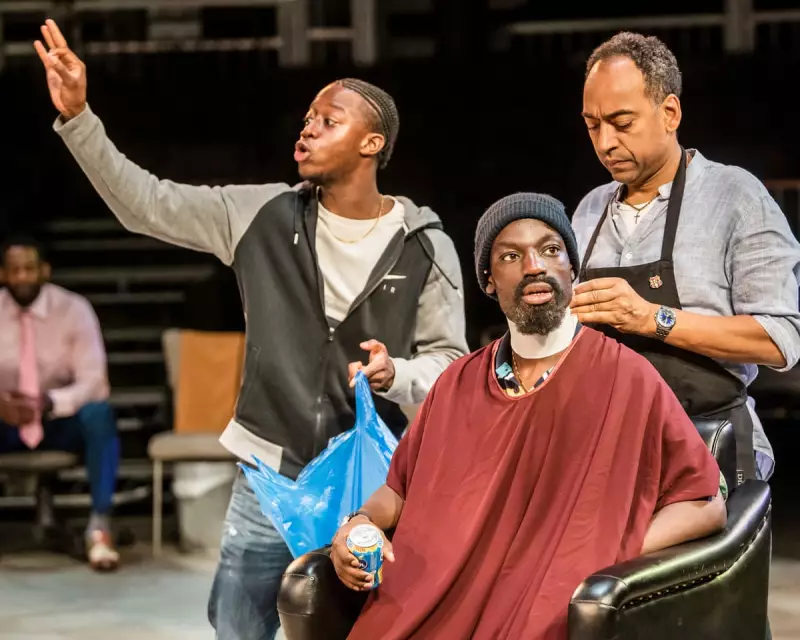
For many, a single piece of art can act as a catalyst, unlocking creativity and confidence. For writer Gayathiri Kamalakanthan, that transformative moment came during the first UK lockdown in 2020, while watching a recorded performance of Inua Ellams' celebrated play, Barber Shop Chronicles, on National Theatre at Home.
A Theatrical Revelation During Lockdown
Furloughed and seeking entertainment, the 26-year-old, who had limited prior experience of theatre, was drawn to the production by its reputation on social media. What she encountered was far more than mere distraction. The play begins with the audience immersed in the barber shop setting, blurring the lines between performer and spectator, creating an immediate sense of camaraderie and inclusion.
The production, which originally featured at London's Roundhouse in 2019, presents a vibrant tapestry of life across six global cities: London, Johannesburg, Kampala, Lagos, Harare, and Accra. Through 33 characters portrayed by 12 actors, all Black men, the play delves into intimate, sprawling conversations about topics from sex, marriage, and queerness to capitalism and football.

"It did the human detail so well, I really believed in every single one of the characters," Kamalakanthan recalls. The experience was revelatory, proving that theatre could authentically transport an audience to distinct, specific worlds without centring or over-explaining to a presumed white audience.
From Spectator to Storyteller
For Kamalakanthan, who identifies as queer and non-binary and was navigating her own gender identity, the play's tender and intimate portrayal of a wide spectrum of masculinity was profoundly affirming. The dynamic staging, where scenes transitioned as barber chairs on wheels spun to music and choreography, left a powerful impression.
Learning that playwright Inua Ellams had based the dialogue on hours of real-life interviews conducted in those cities, focusing on authentic expression, tone, and vocabulary, was a key insight. It connected directly to Kamalakanthan's own life. "It reminded me of conversations I would have at home with my aunties, with my mum," she says.
This sparked a pivotal thought: "Oh, I could write about my Tamil-ness, and bring in the Tamil language and our customs and food and rituals, and it could be interesting and rich."
Inspiring a New Generation of Voices
Inspired, Kamalakanthan began conducting her own research, starting with Zoom interviews with her mother and elders. She recorded 20 hours of conversation that would become the foundation of her first play, Period Parrrty. This process gently broke a family silence, allowing her to ask her mother about her migration from Jaffna during the Sri Lankan civil war and the Tamil genocide, often during intimate moments like having her hair oiled in the kitchen.
Following Ellams' method, Kamalakanthan wove verbatim dialogue into her work. "I’d never thought someone could put that on stage," she admits, "and I wouldn’t have had the confidence to do so without seeing this play."
This chain of inspiration underscores the vital role of diverse storytelling in theatre. Barber Shop Chronicles did not just offer representation; it actively empowered a new writer to share her own unique cultural narrative, demonstrating how one powerful artistic work can ignite another.
Gayathiri Kamalakanthan's YA novel, Bad Queer, illustrated by Chi Nwosu, is published by Faber on 26 March.