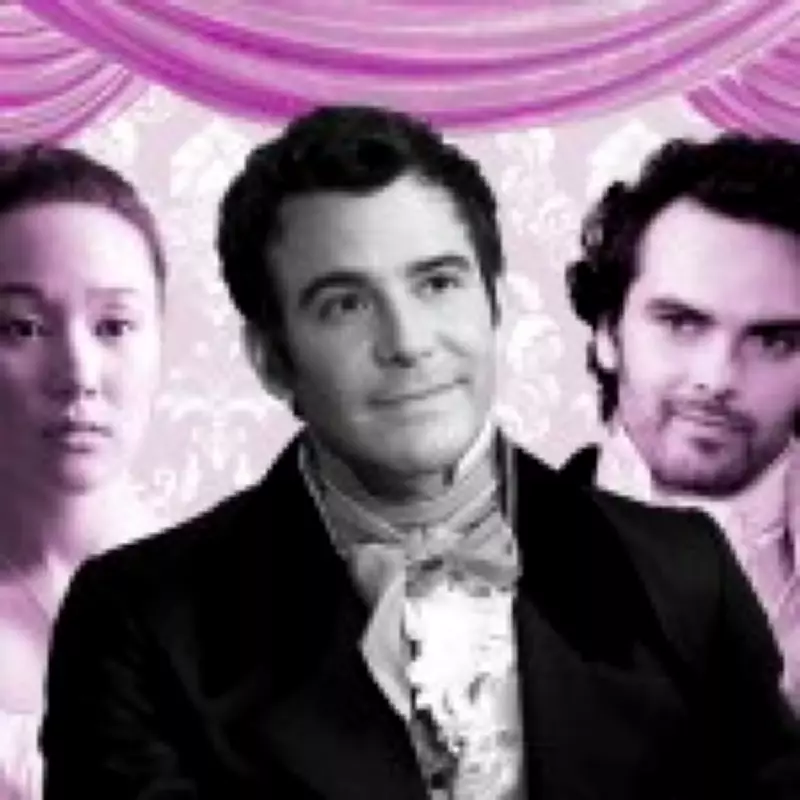
As Lady Bridgerton frantically searches for her son at the opening of Netflix's fourth season of the Regency-era drama, audiences immediately anticipate where he will be discovered. True to form, Benedict Bridgerton is found hungover in bed, accompanied by one or more individuals, flashing a cheeky grin to placate his mother over his chaotic bachelor lifestyle.
The 'Messy Bisexual' Trope: A Cause for Concern?
The show's third season officially confirmed Benedict as the first queer character in the Bridgerton family, addressing earlier criticisms regarding representation. However, his depiction as a 'messy bisexual' during what fans term his 'chaos era' has sparked debate among viewers and academics alike.
Dr Helen Bowes-Catton, a Senior Lecturer at the Open University who is currently editing the Routledge International Handbook of Bisexuality, expresses reservations about this characterisation. 'I am a little bit wary that it feels like an old trope that Benedict's bisexuality is part of his rebellion,' she tells Metro ahead of the season's second part. Rather than presenting his bisexuality as incidental to his personality, the show associates it with his rakish, rebellious behaviour. Dr Bowes-Catton hopes this does not foreshadow an 'it's just a phase' narrative resolution, which would undermine authentic representation.

Historical Accuracy Versus Modern Interpretation
While the 'debauched bisexual' archetype might elicit eye rolls from knowledgeable viewers, Dr Julia Shaw, author of Bi: The Hidden Culture, History and Science of Bisexuality, offers a different perspective. She highlights the realism of Benedict's behaviour in the various brothels, clubs, and bars depicted in the series.
'He's going into these spaces where it's obviously implied that queerness is happening around him and he is around people who are having sex, who are exchanging glances,' Dr Shaw explains. In a show that prioritises foreplay and sexual tension over explicit scenes, she identifies these exchanged glances as a crucial element of non-explicit sensuality.
'Men exchanging glances is a real theme throughout the show and that's very much in the tradition of queer cinema, to have the queer be in the in-between moments, rather than as explicit as the straight moments,' she continues. 'Whether we like doing things in the tradition of quite oppressive structures for queer people is always a big question. But you could also say they're paying homage to that tradition of the queerness lurking in the in between.'
Period Drama Constraints and Progressive Potential
Bridgerton famously plays fast and loose with historical accuracy, incorporating modern music covers and diverse casting into its Regency setting. This creative liberty raises questions about why the show has not extended this alternate history to normalised LGBTQ+ representation until recently.
Dr Bowes-Catton describes this as a 'frustrating' aspect of the series, though she acknowledges the constraints of the Regency romance genre. 'I would like to see Bridgerton become a bit more radical, but I'm not sure to what extent it's possible to do that and still be a Regency romance,' she admits. 'I see the quandary that they're in.'
Interestingly, Benedict's eventual relationship with Sophie might represent one of the most period-accurate elements for a bisexual man in the 1800s. 'Historically, there were probably quite a lot of bi men who were getting married to women because of compulsory monogamy and compulsory heterosexuality,' Dr Shaw explains.
The Significance of Benedict's Queer Identity
Much depends on how the series handles Benedict's queerness in the season's concluding episodes as he inevitably settles with Sophie. Dr Bowes-Catton emphasises that a heterosexual-presenting relationship does not negate his bisexuality. 'He gets to be all of the different parts of himself,' she says. 'If he ends up in a heterosexual-presenting relationship, of course, that's still a queer relationship, because it's got a queer person in it.'

The most disappointing outcome would be reducing his sexuality to a mere phase. Instead, Dr Shaw envisions a more nuanced representation if Benedict shares his bisexuality with Sophie. 'What would be amazing is that she saw him for who he really was, and accepted him and loved him anyway, or because of it even, rather than despite it,' she suggests.
Real-World Implications and Future Representation
Showrunner Jess Brownell has reassured fans that Benedict's queerness 'will always be a piece of his identity' throughout the final episodes. She told Variety: 'It felt fresh and important to see a bisexual man ending up in a heterosexual-presenting relationship and still owning the fact that he is still queer.'
This portrayal could have significant real-world implications, challenging discrimination against bisexual men. 'It's showcasing that bi men aren't just gay men in disguise or gay men who are lying,' Dr Shaw observes. 'I think that's really, really helpful to show to a wide audience. Benedict very much counteracts that notion, because it's very clear how attracted he is to Sophie, and yet he's also bi.'
Looking ahead, the series has numerous opportunities to develop non-heterosexual storylines. Dr Shaw notes the potential for Francesca's season to explore the rarely seen 'quiet bisexual' character, while Dr Bowes-Catton suggests Eloise's resistance to social norms might yield asexual or aromantic representation.
Ultimately, as Dr Bowes-Catton reminds us, 'We can't put it all on poor Benedict. He's got enough going on.' The weight of queer representation should not rest solely on one character's shoulders, but Benedict's journey represents a significant step forward for LGBTQ+ visibility in mainstream period drama.