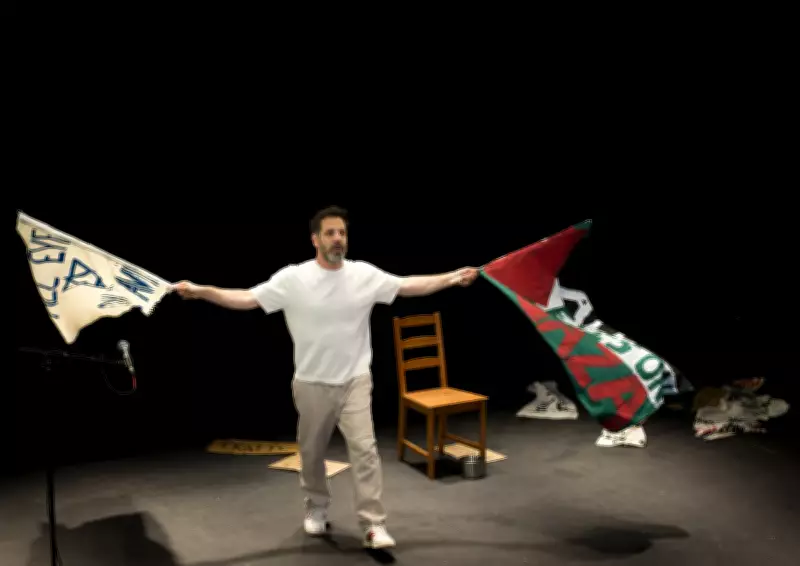
Between the River and the Sea: A Playful Yet Poignant Exploration of Identity
In the solo show Between the River and the Sea, actor Yousef Sweid delivers an autobiographical monologue that navigates the absurdities and complexities of life as a secular Arab Israeli. Co-written with director Isabella Sedlak, this production at the Royal Court Theatre in Sloane Square runs from April 21 to May 9, 2026, offering audiences a unique perspective on a rarely platformed experience.
Avoiding Controversy with Centrist Dad Energy
As Sweid admits early in the performance, the title Between the River and the Sea hints at potential controversy—a promise that remains largely unfulfilled. Instead, Sweid presents himself as what he humorously terms a "centrist dad," blending a lighthearted meme about 2010s Labour moderates with the intricate reality of his identity. This approach allows the show to sidestep fiery political condemnation, focusing instead on personal narrative.
The monologue details Sweid's half-century journey of trying to live an unremarkable life in a region marked by constant remarkable events. Now residing in Berlin and grappling with a divorce from his second wife—who plans to move their daughter to Israel—Sweid confesses to seeking companionship among the city's international elite rather than its Arab and Palestinian diaspora. This choice reflects his self-described status as a middle-aged Euro hipster, adding layers to his exploration of belonging.

Childhood Memories and Subjective Realities
Growing up in Haifa and attending a Jewish school, Sweid recounts a pivotal moment when a four-year-old classmate called him a "stinky Arab," marking his first awareness of difference. However, he emphasizes the subjectivity of such experiences, noting that the classmate later admitted ignorance about what an Arab or Jew truly was. This anecdote underscores the show's theme of navigating identity in a world where perceptions often lack depth.
Throughout the hour-long performance, Sweid avoids deep dives into historical conflicts like the Nakba or the intifadas he lived through. Instead, he shares relatable stories, such as attending a beer festival in Ramallah and traveling through Hamas-controlled neighborhoods where speaking Hebrew was discouraged. These moments highlight his attempts to steer clear of trouble while living in a politically charged environment.
Moderation as a Narrative Choice
Is Sweid's avoidance of overt political stance a cop-out, or is it a noble effort to envision a harmonious Middle East that could exist if more people desired it? The show leaves this question open, inviting audiences to ponder the value of moderation. In one particularly intriguing segment, Sweid addresses the October 7 attacks without grand speeches. He acknowledges Hamas's wrongdoing but struggles to explain to his Jewish-Israeli friends why he doesn't share their public lust for vengeance, showcasing the nuanced tensions in his relationships.
Originally commissioned by Berlin's Maxim Gorki Theatre—where Germany's complex relationship with Israel sparks debate over artistic responses to Gaza—the production now finds a home at the Royal Court Theatre, a venue with its own history of antisemitism controversies. This context adds depth to the show's appeal as an authentic yet moderate take on Middle Eastern realities.
Authenticity in the Everyday
Between the River and the Sea shines in its authenticity, offering a platform for Arab Israelis whose stories of normal, boring lives are seldom heard. Sweid reveals that he once called himself Yoni to fit in, only interrogating this choice later in life. Even the details of his divorce within the Berlin diaspora prove fascinating, adding a layer of universal relatability to his specific experiences.
Ultimately, this is a moderate and modest show, but it provides a genuine pleasure to spend time in Sweid's garrulous company. By focusing on personal reflection over political rhetoric, it invites audiences to consider the lived experiences behind headlines, making it a noteworthy addition to London's theatre scene.