For many Londoners, a night out in the West End is a familiar ritual. The glowing lights of Chinatown, the bustling crowds, and the anticipation of entering historic venues like the Lyceum or the Palladium all contribute to a unique sense of occasion. Home to long-running spectacles like The Phantom of the Opera and The Lion King, the West End is also known for its cramped seating and notoriously poor mobile signal.
But how does it compare to its famous American counterpart? After years of attending London productions, I finally made the trip to experience a Broadway musical in New York – and the contrasts were more striking than I ever imagined.
Stepping into the Bright Lights of Times Square
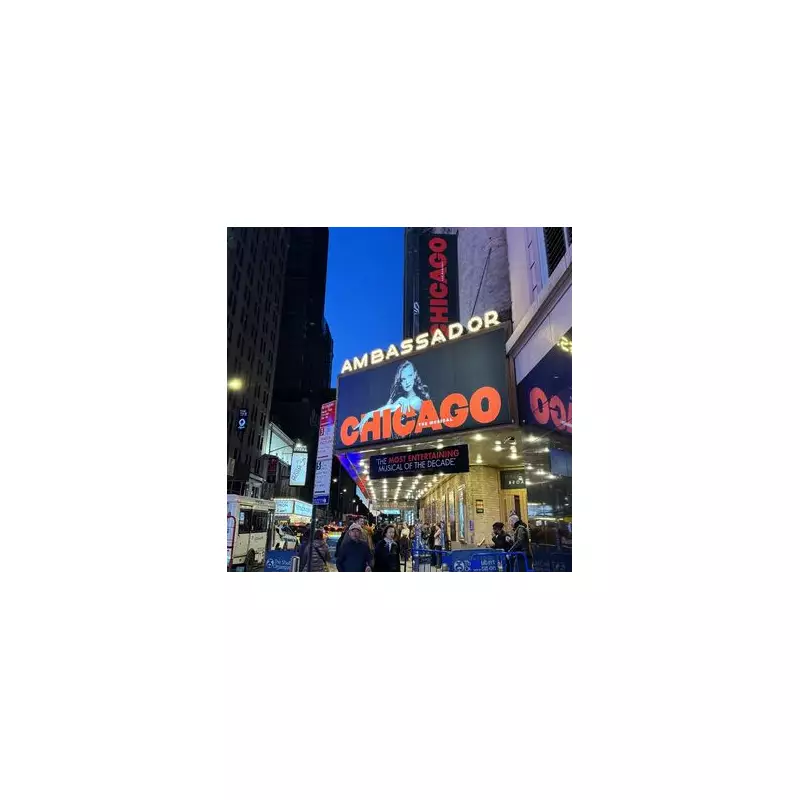
The experience begins in a similarly bustling environment, but the energy in New York is immediately distinct. The atmosphere around Times Square is louder, brighter, and feels even busier, with grand theatres nestled amongst enormous, flashing digital billboards.

I went to see the renowned production of Chicago at the Ambassador Theatre, where it has been running since 2003. This particular revival first opened in 1996, making it the longest-running American musical in Broadway history and the second-longest-running show overall.
The queues moved efficiently, but one immediate difference was the persistence of paper tickets. While London audiences are now accustomed to scanning e-tickets on their phones, Broadway-goers still proudly present glossy, printed stubs for entry. Another surprise was the strict policy of not allowing any food or drinks inside the auditorium.
Inside the Ambassador Theatre
Upon entering the venue, the differences became even more apparent. The Ambassador Theatre is remarkably intimate, arguably the smallest I have ever visited, which was unexpected for a show of such stature.
The interior has a distinct, old-school charm, but I was taken aback to discover it offered Wi-Fi for attendees. This was a world away from most West End houses, where your phone signal typically vanishes the moment you take your seat, leaving you completely disconnected.
Value, Performance, and Interval Prices
My seat was in the Orchestra section, very close to the stage. Tickets in this prime location start at $104 (approximately £79) each when purchased through The Broadway Collection.
A delightful touch was the complimentary Playbill booklet, handed out by ushers. This publication includes cast biographies, interesting facts, and theatre history. In London, a comparable souvenir programme would typically cost extra, so this felt like a generous inclusion.
However, the issue of cramped seating persists on Broadway. Taller members of the audience visibly struggled to get comfortable. The trade-off, however, is an unparalleled sense of proximity to the performers, making every number feel intensely personal and vibrant.
The performance itself was masterful. Chicago, with its sultry jazz score and sharp choreography, has been dazzling audiences since 1975. The Broadway cast delivered with immense charisma and raw talent. While the production featured film star Mira Sorvino, it was top-tier Broadway performer Sophie Carmen-Jones as Velma Kelly who truly stole the show for me.
Unlike the often spectacle-heavy productions found in the West End, Broadway's Chicago thrives on its powerful minimalism. There are no elaborate sets or dramatic special effects; the focus remains squarely on the sheer power of the performance.
At the interval, drinks were served in reusable cups branded with the show's logo, which double as free merchandise. However, the beverages themselves come at a premium. A single glass of wine cost $33 (around £26), which is noticeably steeper than standard West End bar prices. Yet, the electric atmosphere made it feel like part of the unique Broadway experience.

The Final Verdict: London or New York?
Both the West End and Broadway possess their own unique magic. Broadway offers a more intimate and high-energy feel, with a focus on the raw performance. The West End, however, wins on grandeur and historical consistency.
For this Londoner, the crown still rests at home. There is an irreplaceable charm in walking through Covent Garden, hearing street performers belt out show tunes, and stepping into a theatre that has witnessed a century of performance history. That unique atmosphere is something Broadway's bright lights simply cannot replicate.