

Broken Glass Revival at Young Vic: Miller's 1994 Drama Gains New Political Resonance
Arthur Miller's 1994 play Broken Glass, now revived at London's Young Vic under Jordan Fein's direction, emerges as a hypnotic and horrifyingly resonant production that chills with new political relevance. Starring Pearl Chanda and Eli Gelb, this staging brings haunting emotional force to Miller's exploration of paralysis, denial, and societal inaction.
A Shattering Drama of Personal and Political Paralysis
Set in 1938 Brooklyn, Broken Glass centers on Sylvia Gellburg (Pearl Chanda), a Jewish American housewife whose legs mysteriously stop functioning after she reads about Kristallnacht in newspapers. Her husband Phillip (Eli Gelb), a typical Miller man outwardly capable but nursing secret wounds, dismisses her as hysterical, while a doctor (Alex Waldmann) labels her condition psychosomatic.
Miller weaves together the unhappy marriage's domestic tyranny with America's inaction toward rising Nazi terror, creating a strained yet powerful narrative. The play's psychological exploration of Sylvia's paralysis, reminiscent of Freudian or Charcotian analysis, expands into broader political symbolism, likening personal oppression to larger societal forces.

Fein's Production: Embracing Messiness with Emotive Power
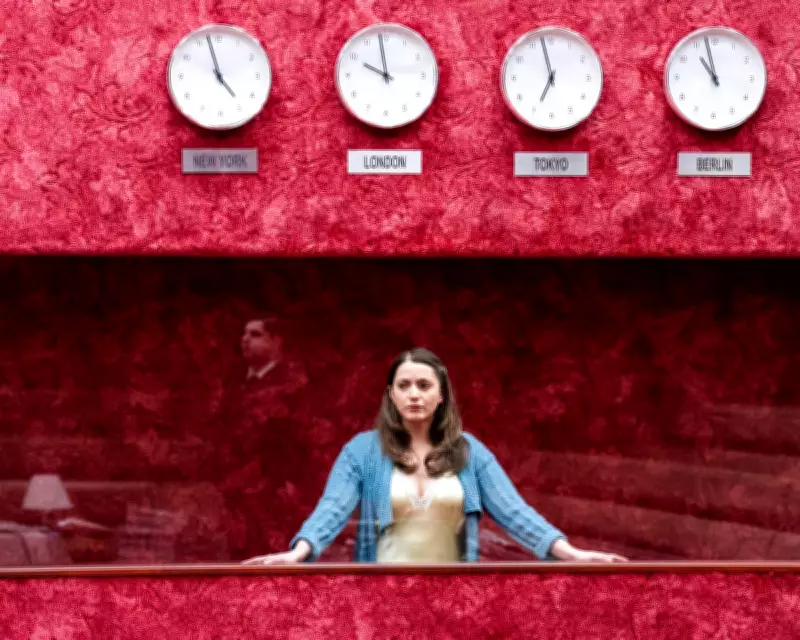
Director Jordan Fein leans into the play's inherent messiness through flamboyant non-naturalism. A glass screen allows characters to glower at the onstage drama, while a central bed strewn with 1938 and contemporary newspapers, designed by Rosanna Vize, suggests a bedroom, waiting room, and parliamentary chamber simultaneously. This set echoes Cornelia Parker's Left Right & Centre, enhancing the production's layered symbolism.
Despite the interweaving of personal, political, social, and sexual themes appearing inchoate, Fein's production delivers immense emotive power. Gelb and Chanda's extraordinary performances elevate the material, with Gelb particularly deepening Phillip's pain and self-loathing. Sylvia's paralysis becomes a metaphor for a world numb to fascist horror, and Phillip's looking away symbolizes complicity.
Chilling Parallels to Contemporary Indifference
The revival draws stark parallels to current political indifference toward global horrors. Fein mixes 1938 headlines on Nazi terror with modern ones, such as "Gaza or gaga?" referencing Donald Trump's vision to rebuild destroyed regions into tourist havens. This blending underscores the characters' desensitization to horrifying news reports, mirroring our own contemporary apathy.
Tom Gibbons' minimalist sound design adds dramatic effects, though the production occasionally suffers from symbolism overload, such as four airport-style clocks on the wall suggesting tyranny's global reach. Riveting scenes implicate both characters and audience, even if the decision to keep lights mostly undimmed feels heavy-handed.
Miller's Timely Warning Against Tribal Devolution
In a 1994 interview, Miller expressed disbelief that humankind would "devolve into this tribalism again," citing the war in Bosnia and Herzegovina. Today, his warning feels eerily prescient. Broken Glass at the Young Vic, running until 18 April, serves as a stark reminder of the consequences of inaction and denial, both personally and politically.
This revival proves that Miller's lesser-staged work retains vital urgency, with Fein's direction and the cast's powerful performances ensuring its themes resonate deeply in our current climate of global indifference and rising tensions.






